
Vector Optimization Tips for High-Quality Embroidery Results
Embroidery is an art form that combines creativity with precision. Achieving high-quality results in embroidery hinges significantly on how finely detailed and well-prepared your vector artwork is. Vectors form the blueprint for machines to follow, ensuring every stitch is meticulously placed to form the desired pattern. Understanding and optimizing your vector process can lead to exceptional embroidery products.
Understanding Vectors in Embroidery
Vector graphics are crucial for digitizing embroidery patterns. Unlike raster images, vectors use mathematics to ensure images can be infinitely scaled, ensuring clarity and detail at any size. For embroidery, this means that converting your artwork to vectors ensures the stitching maintains its integrity and quality regardless of the resizing.
Selecting the Right Vector Conversion Service
Choosing the right vector conversion service is vital for embroidery success. A good service can convert intricate designs into vectors that retain all necessary details for embroidery machines. Look for services with experience in raster to vector conversion, as they can smoothly transform any image, from logos to complex designs, into layers suitable for embroidery.
Importance of Detail in Vectors
Details make all the difference in embroidery. When digitizing, ensure your vectors are detailed and free from unnecessary elements that might complicate stitching. It's essential to refine before converting for embroidery; this step involves cleaning up the vector by removing or minimizing unnecessary nodes that could disrupt the stitch flow.
Choosing the Right Software
Using appropriate vector software is crucial for high-quality output. Adobe Illustrator and Corel Draw are examples of industry-standard software that provide extensive tools for creating and editing vectors specifically for embroidery purposes. These applications offer features like node editing, layering, and path tools that are invaluable for preparing artwork for embroidery.
Layering for Complex Designs
Complex designs require careful layering in vectors to ensure clarity in the embroidered result. Each layer should correspond to a color or stitching path in the final product. This layering allows embroidery machines to properly sequence the stitching process, making it essential to work with vector conversion services that offer expert handling of complex design elements.
Attributes of a Quality Vector Service
When assessing the quality of a vectorizing service, consider its ability to handle diverse designs and formats, speed of delivery, and accuracy of the final vector output. Reliable services ensure that your embroidery design is precise and ready for a seamless production process. Essentially, a good service provider should provide clean lines, vibrant colors, and an overall stunning effect of the vector graphics.
Incorporating Eagle Digitizing Services
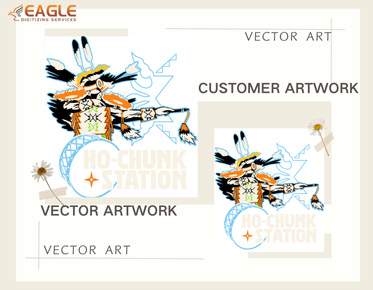
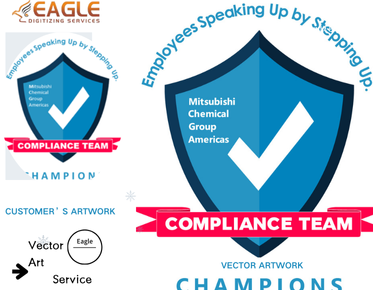
Eagle Digitizing offers state-of-the-art services for both vector and embroidery digitizing. Their expertise allows for seamless conversion of images into high-quality vectors, ready to be used in a variety of printing and embroidery applications. The skilled team at Eagle Digitizing can perform intricate design transformations with efficiency, providing detailed and flawless vector files that meet the high demands of embroidery crafting.
Preparing Your Design for Digitizing
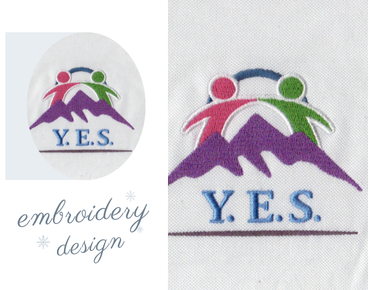
Preparation involves more than creating the vector; it includes planning how the design will be stitched. Think about color separations, stitch patterns, and the texture of threads when setting up your vector. A well-prepared vector considers all these factors, ensuring a streamlined process during machine embroidery. Use advanced vector tools to make the artwork compatible with your embroidery machine’s requirements.
Maximizing the Quality and Consistency
Consistency in embroidery output is fundamental. This is achieved by ensuring your vectors translate perfectly to the stitching machine, maintaining uniformity across multiple items. Quality vectors prevent issues such as gaps, overlaps, or misalignment in stitching, promoting consistency in every embroidery piece produced.
Future Trends in Vector for Embroidery
As technology evolves, so too does the approach to vectorizing for embroidery. Automation and AI-driven adjustments are being integrated into modern vector software, offering more intuitive design capabilities and faster processing times. Staying attuned to these advancements can enhance productivity and innovation in your embroidery work, opening up new possibilities in designing more complex and dynamic artworks.