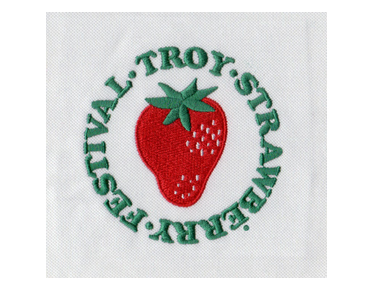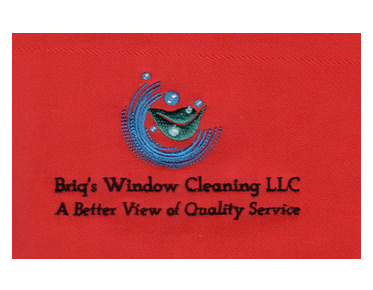

Illustrative Before & After: Simplifying a Detailed Emblem into Spot-Color Vector Art
When a detailed emblem has too many tiny shapes, the smartest fix is a spot color vector artwork cleanup that keeps the brand recognizable while making it easier to print, resize, and reproduce. A professional vector conversion service can rebuild the design into clean spot colors instead of relying on fuzzy bitmap detail that falls apart in production.
Why detailed emblems become a production problem
Emblems often look strong on a screen because the artwork is being viewed at one size, with one background, and usually from a comfortable distance. Production is less forgiving. The more textures, gradients, thin outlines, and tiny internal shapes a design contains, the more likely it is to lose clarity when scaled down or separated for printing. What feels rich in a mockup can turn into a crowded mess once it is used on apparel, promotional items, signage, or packaging.
The issue is not that detail is bad. The issue is that not every detail survives every production method. A detailed emblem may contain too many tones for spot-color output, or too many small features to remain readable on a cap, sleeve, patch, tag, or product insert. That is where cleanup becomes less about decoration and more about function.
What changes in the before-and-after process
In a true before-and-after conversion, the goal is not to redraw the emblem into something generic. It is to keep the brand’s identity while removing the pieces that create technical problems. A strong cleanup usually simplifies linework, reduces unnecessary color transitions, and converts soft edges into defined shapes that hold up at production size.
- Before: Too many gradients, shadows, or texture effects that do not separate cleanly
- Before: Small lettering or internal marks that disappear when the file is reduced
- Before: Raster artwork that becomes pixelated when enlarged
- After: Solid spot colors that reproduce consistently
- After: Cleaner outlines and balanced spacing between elements
- After: Scalable art that stays sharp at multiple sizes
This is why cleanup is often the right move when the artwork is destined for real-world use rather than just online display. The finished file should communicate the same idea, but with fewer chances for distortion, blur, or production surprises.
Why spot colors work better than decorative complexity
Spot colors are useful because they make the design easier to control. Instead of asking a printer or decorator to interpret dozens of subtle transitions, the art is broken into deliberate color areas that are easier to separate and reproduce. That can make a big difference when the emblem needs to appear on different materials, different sizes, or different equipment.
For many brands, the strongest version of the artwork is not the most detailed one. It is the version that keeps the important visual cues while stripping away anything that does not help the final output. That is especially true when a logo or emblem must remain legible in quick-view situations, such as uniforms, trade show graphics, packaging, or branded merchandise.
Vector structure is what keeps the cleanup usable
A spot-color design only performs well if the underlying vector structure is clean. That means the shapes need to be built with proper geometry, smooth curves, and controlled joins rather than with a pile of accidental points. If you have ever zoomed into vector paths and anchor points, you already know how much difference the path structure makes. Clean paths help the artwork scale without getting lumpy, jagged, or difficult to edit later.
Even when two files look similar at first glance, one may be far easier to work with in production because its construction is tighter. Fewer unnecessary nodes can mean cleaner edges, easier color separation, and better long-term usability. This matters whether the file is being prepared for print, engraving, signage, or another decorated application.
Before-and-after value for product decoration and branding
Many customers look for vector artwork for product decoration because the end use is not limited to one item. The same emblem may need to work on shirts, hats, stickers, packaging, banners, or client gifts. If the art is too complex, each application becomes a compromise. Simplifying the design into spot colors gives the artwork a wider useful range.
That flexibility is especially valuable when the same brand assets need to move across different departments or vendors. A cleaner vector file is easier to hand off, easier to inspect, and easier to place into layout systems without forcing constant adjustments. In practice, that saves time and reduces the risk of miscommunication between design and production teams.
- Cleaner file handoff: Better for teams that need editable, scalable artwork
- More consistent output: Better for repeat orders and multi-location branding
- Less artwork friction: Better when a logo must be adapted for different substrates
- More usable detail: Better when a complex emblem needs to stay readable at small sizes
How Eagle Digitizing handles the cleanup
Eagle Digitizing provides a vector conversion service built around practical output, not just visual imitation. The goal is to convert rough, low-resolution, or overly detailed artwork into a file that can actually be used in production. That may involve redrawing shapes, simplifying tiny details, cleaning edges, and organizing the artwork so the final vector version is ready for real applications.
For detailed emblems, the work often starts with identifying which parts are essential to the identity and which parts are only adding noise. Then the design is rebuilt with cleaner curves, better spacing, and more controlled color separation. The result is a file that behaves like professional vector art instead of a screen-only image that struggles the moment it has to scale.
What a strong cleanup usually preserves
A careful conversion should protect the recognizable pieces of the emblem. That may include the outer silhouette, key symbols, core typography, or signature color blocks. A good cleanup does not erase character; it makes the artwork more usable while keeping the design’s core message intact.
In many cases, the finished artwork becomes easier to edit later as well. If the client needs a revision, a size change, or a new production format, a clean vector foundation makes the update more manageable than trying to manipulate a flat image.
Helpful file types and source materials
Source quality still matters. A higher-resolution image, a crisp scan, or an existing editable file can all help speed up the cleanup process. If the artwork already exists in a vector-friendly format, it may be easier to refine than to rebuild from scratch. It also helps to know the vector file formats supported by Illustrator when a project needs to stay compatible with downstream editing or production workflows.
That said, a file format alone does not guarantee production readiness. A badly built vector file can still contain cluttered points, broken shapes, or weak color organization. The real measure is whether the artwork can be used confidently after cleanup.
A simple before-and-after checklist for detailed emblems
If you are deciding whether an emblem needs cleanup, these questions can help:
- Does the artwork still look clear when reduced to a smaller size?
- Are there details that disappear or blur when enlarged?
- Do the colors need to be simplified into usable spot colors?
- Will the design need to work across multiple products or materials?
- Does the file need to be editable and easy to hand off?
If the answer to several of those questions is yes, the artwork is probably a strong candidate for vector redraw or cleanup. The more complicated the emblem, the more important it becomes to control the structure of the file before it reaches production.
Why the simplified version often performs better
The after version is not just easier to print. It is also easier to trust. Clean vector artwork removes uncertainty from the process because the shapes are defined, the colors are intentional, and the file can be scaled without relying on image resolution. That is a big reason professional artwork prep matters so much in branding and product decoration.
In other words, the best after image is one that preserves the identity of the emblem while making it more reliable in the real world. Whether the artwork is going onto apparel, signs, packaging, or promotional items, a well-built vector file usually saves more time than it costs to create.
If you have a detailed emblem that needs to be simplified without losing its character, Eagle Digitizing can help with spot color vector artwork cleanup, vector conversion service, and production-ready redraw work. Send over the file, and we can help turn a busy design into clean, scalable art that is easier to use across print and decoration projects.