
Quick-Start Guide to Vector Graphic Design for Beginners
Vector graphic design is a fascinating and versatile field that offers endless creative possibilities. Whether you're a budding designer looking to expand your skillset or an enthusiast eager to explore new artistic arenas, vector graphics present the tools and techniques to bring your visions to life. In this comprehensive guide, we will delve into the essentials of vector graphic design, covering everything from basic concepts to advanced applications.
Understanding Vector Graphics
At its core, vector graphic design employs mathematical equations and geometric shapes—such as points, lines, and curves—to create images that are clear, scalable, and resolution-independent. This contrasts with raster images that consist of pixels and tend to lose quality when resized. The use of vectors ensures that images maintain their integrity across various sizes, making them ideal for a diverse range of projects, from logos to large-scale banners.
Key Tools and Software
One of the first steps in your vector graphic design journey is acquainting yourself with the necessary tools and software. Adobe Illustrator and CorelDRAW are two of the most popular vector graphic software programs. They offer robust functionality and the ability to create complex designs from scratch or convert raster images into vector formats. Both provide a range of features that cater to different levels of proficiency, from beginners to advanced designers.
Core Techniques in Vector Design
Creating and Modifying Shapes
The building blocks of vector graphics are shapes. Learning how to create, modify, and combine simple geometric shapes is fundamental. This includes understanding how to manipulate anchor points and handles to form more intricate designs. Over time, mastering these basic shapes can enable you to construct sophisticated artwork.
Working with Vector Paths
Vector paths are integral in defining the structure of your designs. These paths consist of multiple anchor points connected by straight or curved lines. Familiarity with tools like the Pen Tool can enhance your precision and control, allowing you to outline complex designs accurately.
Color and Gradient Utilities
Color and gradients bring vibrancy and depth to your vector artworks. Utilizing the right color schemes and understanding how to apply gradients effectively can significantly enhance your design's visual appeal. Differentiating between spot colors and process colors is also crucial, particularly for print design, where color accuracy is paramount.
Practical Applications of Vector Graphics
Branding and Logos
Vector graphics are the industry standard for logo design. The scalability of vectors ensures the logo maintains its quality on both business cards and billboards. If you're crafting a brand identity, using vector art services provides precision and consistency, key components to establishing a distinct, memorable visual presence.
Illustrations and Digital Art
Beyond logos, vectors shine in creating illustrations and digital art. Their adaptability makes them suitable for various platforms, including web and mobile applications. Artists can achieve clean lines and dynamic compositions by leveraging vector graphic capabilities, thereby enhancing storytelling through visuals.
Print Media
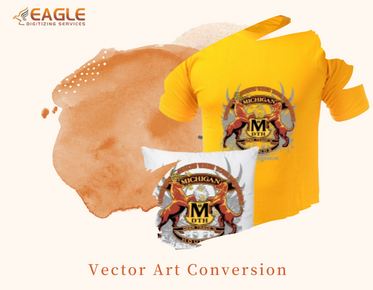
Vectors are indispensable in the print industry, from designing promotional materials to creating T-shirts or product packaging. The flexibility and scalability of vector files cater to different printing techniques, ensuring sharp, high-quality results. Additionally, vector conversion tools can aid in converting raster images to scalable vector graphics suitable for any print task.
Exploring Advanced Vector Techniques
Vector Image Tracing
Image tracing is a technique used to convert raster images to vector formats. This process, offered by professional services such as Eagle Digitizing, involves tracing over an existing image to create a clean, scalable vector. This method is particularly useful for designers aiming to preserve the look of an image while gaining the advantages of vector art.
Layering and Transparency
Layering techniques afford designers flexibility in arranging elements and adding depth to designs. Understanding how to effectively use layers and transparency can enhance the intricacies of your designs, making them visually compelling and multidimensional.
Resources to Further Your Skillset
There are numerous resources available to help advance your skills in vector graphic design. Online tutorials, courses, and communities can provide valuable support and inspiration. Additionally, taking advantage of online vector conversion tools can streamline certain processes, allowing you to focus on bringing your creative ideas to fruition.
Conclusion and Future Exploration
Embarking on the journey of vector graphic design opens up a world of creative opportunities. As you continue to refine your skills and experiment with new techniques, the evolving nature of digital design promises exciting developments. Whether you're interested in exploring high-quality vector converter tools or delving deeper into image vectorization services, the vector design landscape is rich with potential for learning and innovation. Consider the possibilities that new software advancements will bring to the table, potentially simplifying complex processes and expanding what creatives can accomplish in this dynamic field.