
Why Isn’t Vector Artwork Something That Can Simply Be Converted Automatically in One Click?
Vector artwork is a staple in the world of graphic design due to its scalability and precision, allowing for images that maintain quality no matter their size. However, many find themselves asking why this type of artwork cannot be converted automatically from raster images with just a single click. The answer, as it turns out, is deeply intertwined with the complexities and nuances of vector graphics versus raster graphics, as well as the limitations of current software solutions.
Understanding Vector and Raster Graphics
Before delving into the conversion process, it's essential to understand the fundamental differences between vector and raster graphics. Raster graphics are composed of pixels arranged in a grid, which means they are resolution-dependent. Upon enlargement, raster graphics can become pixelated and lose clarity. Conversely, vector graphics are made up of paths defined by mathematical equations, which can scale up or down infinitely without losing quality. This nature of vectors makes them incredibly useful for logos, illustrations, and other graphic elements where clarity at multiple sizes is necessary.
Software tools such as Adobe Illustrator or CorelDraw are industry standards for creating and managing vector graphics, offering complex features for precise detail and coloring that contribute to the superiority and flexibility of vector files for certain applications.
The Complexity of Vector Artwork Conversion
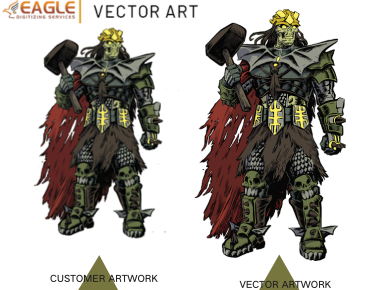
Converting raster images to vector isn't a cut-and-dry process due to several reasons. Firstly, raster images can include millions of colors and small, intricate details that a vector format cannot replicate with perfect fidelity. The conversion process involves tracing the pixelated image to create lines and shapes—which, when done manually, requires professional expertise and, of course, time. Tools designed for automating this task often struggle with balancing detail retention and simplification, leading to oversimplified or, alternatively, overly complex vector results.
Moreover, images with gradients, soft transitions, or blurred edges pose a significant challenge. Raster to vector conversion must approximate these effects, often through hundreds or thousands of individual vector shapes and color gradients, which complicates automation.
Services like those provided by vector art services online offer professional quality conversions by relying on skilled designers who can make judgment calls on details and effects that need to be preserved, adjusted, or omitted during vectorization.
Limitations of Automated Conversion Software
Several software programs offer built-in tools to convert raster images to vector automatically, yet they come with limitations. For instance, automated conversions may fail to correctly interpret complex geometries or subtle color variances found in photographs. Meanwhile, manually tracing these features for a complete conversion allows for a nuanced end result. Automated conversion tools can be handy for basic and straightforward designs but tend to produce inconsistent quality with complex images.
Companies like Eagle Digitizing offer professional raster to vector conversion services, which leverage the skills of experienced designers to produce high-quality vector files suitable for a wide range of applications, including high-end printing and marketing materials.
The Role of Expertise in Vector Conversion
The intricate work involved in converting raster to vector images underscores the indispensable role of expertise in the process. Skilled technicians not only bring technical precision but also artistic judgment, which software alone cannot replicate. This demand for manual oversight is why many people and businesses opt for professional services like Eagle Digitizing for their vector art needs. Their services are particularly useful for complex projects such as logo vectorization, where maintaining brand integrity across various scales is crucial.
Professional conversion services ensure attention to detail, where manual tracing complements digital tools to capture the essence of intricate designs. These services cater to a wide array of industries, emphasizing the importance of human input in achieving optimal results.
Potential for the Future and Trends in Vector Conversion
Looking ahead, continued advancements in artificial intelligence and machine learning could potentially streamline the vector conversion process, making it more efficient and accessible. However, the involvement of skilled designers will likely remain critical, particularly for high-stakes applications where precision and detail are paramount.
As technologies evolve, we may begin to see more sophisticated software that could handle complex conversions more autonomously. Yet, the need for manual oversight and interpretation in artistic contexts will persist, emphasizing the symbiosis between technology and human ingenuity. Perhaps we will also see the development of new standards in digital content creation that expand the capabilities of vector graphics tools further.
For those interested in vector artwork, exploring the range of vectorization services available today is an excellent starting point. These services not only offer technical conversion expertise but also provide creative solutions that align with unique project needs and artistic visions.