
Why Does Auto Vectorization Often Produce Poor Results?
Auto vectorization is a process aimed at converting raster images into vector graphics automatically, using specialized software. While it is a sophisticated technology driven by algorithms and machine learning, it frequently fails to deliver the quality of output that professionals expect. There are several reasons why auto vectorization often produces poor results, and understanding these can help in managing expectations and improving outcomes.
Complexity of Original Images
One of the most significant challenges with auto vectorization is dealing with complex images. Raster images, which are pixel-based, can have intricate details, subtle color variations, and delicate lines that are tough for algorithms to interpret accurately. This complexity often leads to vector outputs that are inaccurate or oversimplified, resulting in artwork that loses its essence.
Limitations of Algorithmic Interpretation
Auto vectorization software relies heavily on algorithms to distinguish between shapes and colors. However, these algorithms are limited by their programming and lack the intuition and precision of human judgment. They often fail to accurately capture the nuances present in hand-drawn or organically created images, leading to distortion and an overall lack of fidelity in the final vectorized image.
Issues with Color Management
Another common problem encountered is the improper handling of colors. Auto vectorization processes struggle with gradient fills and subtle color transitions, which are prevalent in raster images. This can result in vectors that incorrectly segment colors, creating abrupt transitions and a lack of depth. For artworks with complex coloring, this becomes a particularly challenging issue.
Software Limitations
The capabilities of auto vectorization software also vary. While some software might handle simpler images relatively well, they may fall short when it comes to intricate designs. The features provided by the software, such as the ability to handle different image formats or complexities, can be limited, making the process suboptimal for more detailed work.
Benefits of Manual Vectorization
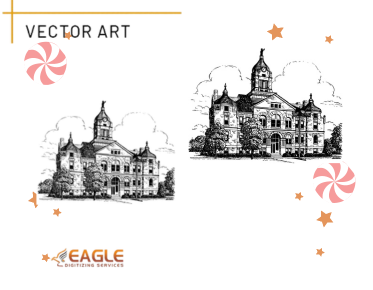
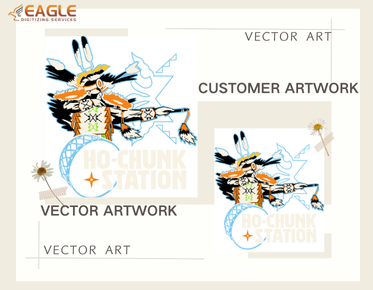
Despite these challenges, there are times when auto vectorization provides adequate results, particularly for simple shapes and clear-cut designs. However, when high precision is necessary, manual vectorization is often recommended. Skilled professionals, like those at Eagle Digitizing, who specialize in vector art services and digitization, provide meticulous attention to detail and deliver high-quality conversions by assessing each element of the image individually.
Role of Professional Vector Art Services
Professional services offer an edge over automatic solutions due to their ability to manually adjust and fine-tune the vectorization process. Companies like Eagle Digitizing excel because they employ seasoned artists who utilize both advanced software and their expertise to maintain the integrity of the original work while converting it to vector format. This ensures a much higher satisfaction rate as compared to fully automated processes.
Professional services are adept at managing complex details such as gradients, color separations, and intricate linework, which makes them ideal for businesses needing precise and high-quality raster to vector conversion services for printing and digital use. By pushing the boundaries of vector art services beyond what automated software offers, these professionals are able to consistently deliver reliable and precise results.
Choosing Between Auto and Manual Vectorization
Understanding the strengths and weaknesses of auto vectorization helps in deciding when to use it. For projects with tight budgets and less emphasis on perfection, auto vectorization can offer a quick fix. However, for projects demanding high fidelity and intricate detail, investing in professional services is advisable.
The Future of Auto Vectorization
As technology continues to evolve, so too does the field of vectorization. There is significant room for growth and improvement in auto vectorization algorithms, which could potentially enhance their effectiveness in handling more complex imagery. Future advancements might bridge the current gap, offering more reliable solutions that maintain the quality and detail of original designs.
For now, the choice between auto and manual vectorization largely depends on the specific requirements of a project. By weighing the options and understanding the limitations, businesses and artists can make informed decisions that best meet their needs and expectations.
Could advancements in AI and deep learning revolutionize the process of auto vectorization, making it as reliable as manual interventions in the years to come? Delving into these prospects might shape the next frontier of digital artwork conversion.