.png "vector art service")

Raster Cleanup vs Full Redraw: Which Produces Better Vector Results?
In the ever-evolving world of digital design, the transition from raster to vector art stands as a pivotal process for countless professionals. Whether for screen printing, branding, marketing, or large-format graphics, high-quality vector outputs are a must. But when faced with a raster source—whether a hand-drawn sketch, a low-resolution logo, or a treasured photo—creative teams face a crucial crossroad: should you opt for raster cleanup or a full redraw to achieve the most precise, professional results? Today, we’ll take a deep dive into these two technical pathways, weighing the strengths and limitations of each, and empowering you to make the best decision for your next vector art services project.
Understanding the Foundations: Raster vs. Vector Art
Before dissecting cleanup and redraw approaches, let’s ground ourselves in the basic distinction. Raster graphics, based on pixels, can look sharp at their native size but quickly degrade when scaled or edited. Common raster formats include JPEGs, PNGs, and BMPs. Vectors, by contrast, are composed of mathematically defined shapes, curves, and lines. This makes vector images infinitely scalable, crisp, and ideal for printing on anything from apparel to billboards. The leap from raster to vector is essential when top-notch clarity and editability are paramount.
Option One: Raster Cleanup
What Is Raster Cleanup?
Raster cleanup involves refining your original pixel-based artwork prior to vectorization. This can include manually erasing artifacts, correcting colors, enhancing line quality, and making sure the image is as clear as possible before any conversion takes place. It’s like giving your original art a digital shower and a bit of makeup so when it’s traced into vector, the results are as accurate as possible.
When to Choose Raster Cleanup
This method often works best when the original raster image is high resolution or only mildly flawed. If a logo is slightly fuzzy or a drawing has a few stray marks, a crisp cleanup can yield satisfactory vector results at a fraction of the time and cost of a full redraw. It’s particularly useful when you want to preserve as much of the authentic character of the original artwork as possible.
Key Advantages of Raster Cleanup
- Speed: Getting your image ready for conversion takes less time than creating it from scratch.
- Affordability: Lower labor intensity often means a lower project fee.
- Authenticity: Subtle nuances of the original—like natural brushstrokes—are more likely to remain intact.
Potential Drawbacks
- Limits on Quality: If your raster image is low-resolution or heavily degraded, even stellar cleanup can’t recover lost details or fuzzy edges. The resulting vectors may still show imperfections when scaled.
- Residual Flaws: Tiny errors and “noise” from the raster source could persist after vectorization, leading to less professional results.
Option Two: Full Redraw
What Is a Full Redraw?
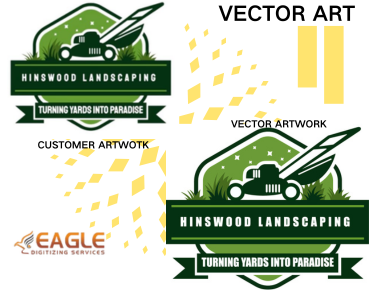
Full redraw means creating a new vector illustration that replicates the original raster artwork by hand or through digital means. This isn’t tracing in the automated sense—skilled artists or technicians meticulously construct vector shapes and lines to match the source, often improving upon it where necessary. The result? A crisp, scalable, and professional illustration that stands up to scrutiny at any size or application.
When to Choose Full Redraw
This approach truly shines when you need supreme quality. If your artwork is highly complex, requires flawless scaling, or needs to meet branding standards, full redraw is often the best choice. It’s also essential when the raster file is heavily compressed, pixelated, or simply not salvageable with touch-ups. Full redraws are the gold standard in vector conversion service, ensuring each piece of artwork is production-ready and pristine.
Key Advantages of Full Redraw
- Best-in-Class Quality: Every detail is recreated with intentionality, guaranteeing sharp lines and smooth gradients regardless of output size.
- Flexible Editing: Since every shape and color is constructed in vector, edits to colors, proportions, or elements are fast and non-destructive.
- Superior Compatibility: Seamlessly integrate your new vectors across applications, from embroidery to digital print, web use to signage.
Potential Drawbacks
- Time & Cost: Redrawing a complex logo or detailed illustration can be labor intensive, resulting in higher project pricing and extended turnaround times.
- Requires Artistic Judgment: It’s not just copying—interpretation is key. If the redrawer misunderstands the essence or style, the result may stray from the original intent.
Comparing Outcomes: Which Approach Delivers Superior Vector Results?
If your goal is a quick, affordable upgrade for fairly clean source files, raster cleanup and automated vector conversion online services might be sufficient. However, when branding consistency, ultimate clarity, or perfect scalability are non-negotiables, a hand-crafted full redraw rarely disappoints. For professional outputs like logos, apparel, and promotional merchandise, the investment in a true redraw is often justified by the flawless results.
In many real-world cases, a hybrid of both approaches is ideal. Designers may begin by cleaning up a raster image, followed by selective manual vector editing to refine troublesome areas—this can offer a sensible balance of efficiency and high standards.
The Role of Professional Vectorization Services
For marketing teams, print shops, and designers, relying on expert partners is the most reliable route to stellar results. Eagle Digitizing has built its reputation on delivering quick, precise, and custom-tailored artwork solutions to clients across industries. Their online vector art conversion services are suitable for uses ranging from apparel and banners to promotional items and large-scale signs.
What sets Eagle Digitizing apart is their ability to process orders rapidly—often within a few hours—while offering services from basic raster cleanup to complex full redraw for vectorization. The team is familiar with all common file types (AI, CDR, PDF, EPS, DXF, SVG) and embraces projects from simple logo reconstructions to intricate photo vectorizations. They offer transparent pricing, no hidden fees, and a customer satisfaction rate that consistently inspires loyalty from print businesses, designers, marketing agencies, and brands alike.
With more than a million orders and glowing testimonials, Eagle Digitizing is adept at working with clients ranging from small t-shirt shops to international promotional agencies. Their expertise covers not only vector conversion, but also specialties like vector logo design, color separation, and file optimization for specific printing techniques.
Key Factors to Consider in Your Workflow
- File Quality: Is your raster file high resolution and mostly clean? Cleanup may suffice. Are you working with blurry, pixelated, or incomplete source art? Time to budget for a thorough vector redraw.
- Project Budget: For high-stakes branding, a full redraw is a smart investment. For internal drafts or budget-restricted projects, a well-executed cleanup may be adequate.
- Usage: If you need your artwork at varied sizes or for different materials, opt for vectors constructed with flexibility and scalability in mind.
- Turnaround Time: Cleanup is faster. Full redraw, while longer, is worth the wait for marquee projects.
- Brand Consistency: Consider the repercussions of minor errors or inconsistent scaling—a full redraw assures visual alignment with company guidelines.
Expert Tips for Making the Right Choice
- Always examine your raster source at maximum zoom before deciding. Adjust expectations based on real pixel-level detail.
- When in doubt, consult a trusted vector specialist—many will evaluate your files free of charge and recommend the best course of action.
- Don’t underestimate the value of time and attention to detail; small flaws in your vector art can magnify when printed on large formats or high-visibility surfaces.
Embracing the Future: Technology and Human Expertise Combined
Automated vector conversion software is advancing rapidly, but human expertise remains irreplaceable for high-profile projects. The most innovative providers fuse the speed of modern algorithms with the skilled touch of artists and technicians, adapting uniquely to each project’s demands.
As digital art and branding evolve, the ability to convert ideas from raster to vector without compromise will only grow more essential. Whether you’re refreshing a legacy logo or preparing artwork for the next marketing campaign, understanding when to tidy up versus when to rebuild from the ground up is an invaluable competency.
For businesses, marketers, and designers aiming for professional impact, it’s wise to form partnerships with experienced vector art conversion service providers who understand the full spectrum of needs—from simple touch-ups to full-on creative reconstructions. The art and science of vectorization is only becoming more powerful and accessible, setting the stage for even more creative freedom in the years ahead.