
How Do You Prepare Vector Artwork for Bulk Production Orders?
Preparing vector artwork for bulk production orders is a crucial process that entails detailed planning and precision to ensure that the final products meet the desired quality standards. This task becomes particularly significant in industries like screen printing, digital printing, and manufacturing where high-volume production is common. In this guide, we'll delve into the step-by-step process to prepare vector artwork for large orders, emphasizing on key approaches and best practices.
Understanding the Basics of Vector Artwork
Vector artwork is fundamentally different from raster images. Unlike raster images composed of pixels, vector graphics are made up of paths, defined by a start and end point along with curves, angles, and shapes. This makes vectors scalable without losing clarity, which is instrumental in large scale production. Common vector file formats include AI, EPS, PDF, and SVG.
Benefits of Using Vector Art
Vector art is essential due to its scalability and versatility. It allows for easy adjustments, color separation, and editing without degradation of the image quality. This is why industries involved in printing and promotional product manufacturing frequently rely on vector conversion services to facilitate accuracy and precision in their designs.
Steps in Preparing Vector Artwork for Bulk Production
1. Initial Design and Creation
The process starts with creating or receiving a design concept. This can be a hand-drawn sketch, a raster image, or even an existing digital file. The designer’s role here is to ensure that every element is distinct and vector-compatible.
2. Vectorization Process
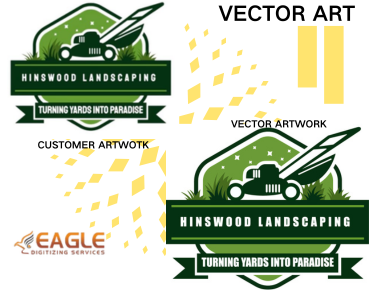
Once the design concept is finalized, the next step is vectorization. During this step, any raster image is converted into vectors. This is done using specialized software like Adobe Illustrator or CorelDraw. The vectorization process typically includes raster to vector conversion, which involves tracing the image line by line and curve by curve.
3. Quality Checks and Adjustments
After vectorization, it's crucial to conduct quality checks to ensure that the vector paths are smooth and error-free. This is where color accuracy, alignment, and detail sharpening come into play. Adjustments might be necessary to ensure the artwork fits the production requirements, such as proper alignment for multi-color screen printing.
4. Proofing and Approval
Proofing is an important step where the final vector files are prepared and reviewed by the stakeholders. This step helps catch any potential issues before they are printed in bulk. It also allows for client approval ensuring that the design meets their expectations before moving to production.
5. Preparation for Production
Finally, the vector file is prepared for mass production. This involves setting the file in the correct format required by the production equipment. Formats like AI or EPS are typically used for screen printing due to their compatibility with industry machinery. This step also includes setting up the file with appropriate bleed, cut lines, and additional production-specific settings.
The Role of Service Providers like Eagle Digitizing
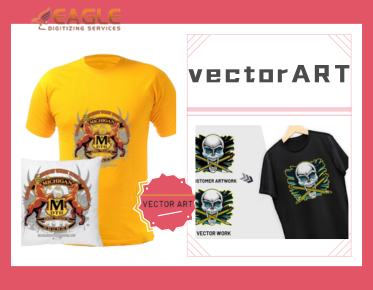
Service providers like Eagle Digitizing play a significant role in simplifying the vector preparation process for bulk orders. They offer comprehensive vector art services which include vector tracing, color separation, background removal, and even mock-ups on products. By leveraging their expertise, businesses can ensure quick turnaround times and high-quality outcomes suitable for large orders.
Looking Ahead: The Future of Vector Artwork in Bulk Production
As technology advances, the future of vector artwork in bulk production promises greater enhancements in terms of efficiency and creativity. Innovations such as AI-assisted design tools and automated vector conversion services are expected to make the process faster and more reliable, thus enabling businesses to deliver high-quality products to market more rapidly. As the demand for customized products grows, the importance of efficient vector artwork preparation will only increase, making this an exciting field to watch.