
Why Would You Want to Vectorize an Image?
In the modern era of digital art and design, vectorization of images has become not only popular but a necessity for those who seek precision and scalability in their graphics. But why is vectorization so important, and how does it benefit various industries? Let's explore the compelling reasons for converting images into vector formats.
What is Vectorization?
Vectorization is the process of converting raster graphics, which are made up of pixels, into vector graphics, composed of paths defined by mathematical equations. This transformation is valuable because vector images can be scaled infinitely without loss of quality, unlike raster images which can become pixelated when enlarged. This provides a clear and precise output for various use cases.
Scalability and Quality
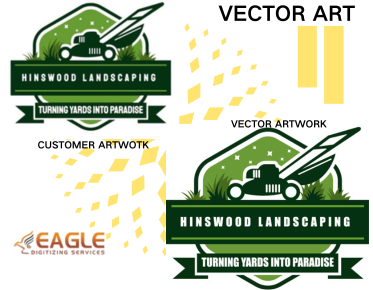
One of the primary advantages of vectorizing an image is its ability to be resized without sacrificing quality. Whether you need a tiny icon for a mobile app or a large banner for a billboard, vector graphics maintain clarity and detail. This makes vector conversion an essential process for printing industries where scalability is crucial. Converting a business logo into a vector format, for instance, ensures that it appears crisp and clear on both business cards and large storefront signs.
Efficient for Printing and Design
Vectorization plays a vital role in the printing industry. Designs prepared using raster images can often result in unsatisfactory results when printed, as pixelation and blurring are common issues. By utilizing vector art services, businesses can achieve high-quality prints with vivid colors and sharp lines. This is especially beneficial for promotional materials, merchandise, and apparel like t-shirts where the quality of print reflects the brand’s image.
Flexibility and Editability
Vector graphics provide an incredible level of flexibility. Designers can easily edit individual elements of a graphic without affecting the entire image. Colors can be changed, shapes altered, and elements rotated or moved, all while maintaining the overall design integrity. This is instrumental in creating mockups and modifying designs based on client feedback. For precise designs, such as vector logos, flexibility in editing is a major advantage.
Reduced File Size and Ease of Transfer
Vector files are generally smaller in size compared to their raster counterparts, which makes them easier to handle, store, and share. This is advantageous when working on collaborative projects that require frequent exchange of design files. This efficiency keeps workflows smooth and reduces load times for complex design projects, making vectorization a preferred choice for online and multimedia design environments.
Enhanced Animation and Special Effects
For those working in animation and multimedia, vectorized images offer enhanced capabilities. Vectors are ideal for creating animations as they are not affected by resolution constraints. This means animations can be scaled efficiently across different media formats. Moreover, the ability to apply transformations and effects without degrading the image quality makes vectors invaluable in dynamic graphic design.
Applications Across Diverse Industries
Vector graphics are widely used in many industries beyond design and printing. They find applications in technical fields such as engineering for CAD drawings, architecture for blueprints, and GIS for mapping. The precision and reliability of vector images make them indispensable in any domain that requires detailed and scalable illustrations.
The Role of Eagle Digitizing
Incorporating advanced conversion techniques, Eagle Digitizing offers comprehensive vectorization services catering to various needs such as promotional items, apparel, and large format printing. Their expertise in transforming intricate designs into clean, scalable vector files has been praised by numerous clients for its precision and high-quality outcomes. The company's commitment to excellent service delivery has positioned it as a trusted partner for businesses seeking reliable vector conversion solutions.
Looking Ahead
As technology continues to evolve, the importance and application of vectorization are likely to expand. From augmented reality applications to virtual simulations, vectors are poised to play a critical role in future innovation. Businesses and designers may seek new ways to integrate these scalable graphics into emerging digital experiences, heralding a new era of creative possibilities.