
Why Is a Logo Easier to Resize, Recolor, and Adapt Once It Has Been Converted to Vector?
A logo is more than a decorative mark. It is a compact piece of brand equity that has to live comfortably on business cards, storefront signage, websites, packaging, uniforms, social media avatars, trade show backdrops, and sometimes even embroidery thread. That is a demanding job for a single visual asset, and it is exactly why file format matters so much. The moment a logo is converted to vector, it stops behaving like a fixed-size picture and starts behaving like a flexible design system. That shift is what makes resizing, recoloring, and adaptation feel almost effortless compared with working from a flat raster image.
Many businesses first encounter this difference when they need a logo for print, a clean mark for a website header, or a production-ready file for decoration work. In those moments, a eps vector conversion service can be the bridge between a blurry bitmap and a reliable brand asset. Once a logo is built from paths instead of pixels, every part of it becomes easier to control. Edges stay crisp, shapes remain editable, and colors can be separated and changed without forcing the entire image to degrade. That is why vector files are the preferred format for serious brand use.
The real advantage is not just technical. It is practical. A vector logo saves time, reduces rework, and creates consistency across every place the brand appears. Whether the company is refreshing packaging, changing a campaign color palette, or preparing assets for large-format printing, vector artwork gives designers the freedom to make changes without starting over. The result is a logo that feels less like a file and more like a reusable brand tool.
What Changes When a Logo Becomes Vector
Pixels give way to paths, points, and shapes
To understand why vector logos are easier to resize and recolor, it helps to know what actually changes during conversion. A raster logo is made of pixels, which are tiny colored squares arranged into an image. If that image is enlarged beyond its original dimensions, those squares become visible, and the logo starts to look soft, blocky, or blurry. A vector logo works differently. It is built from mathematical paths, anchor points, curves, and fills. Instead of being tied to a fixed grid of pixels, it is defined by formulas that tell the artwork how to draw itself at any size.
This mathematical structure is the foundation of scalability. A curve in a vector file can be stretched from the size of a thumbnail to the height of a building without losing its shape quality, because the software recalculates the curve in real time. That means the logo is not storing visual information as tiny dots; it is storing instructions. The instructions can be interpreted at any dimension, which is why a vector logo can be printed on a pen, embroidered on a jacket, and displayed on a billboard with the same clarity.
Once businesses understand this difference, a lot of file-handling frustration disappears. People often think a logo is “finished” once it has been designed, but in practice the usable logo is the one that can survive every environment it enters. A raster file may look fine on screen, yet fall apart in print or at larger sizes. A vector version protects the brand from that problem by making the artwork independent of resolution.
Resolution independence removes the size ceiling
One of the most important reasons vector logos are easier to resize is resolution independence. A raster image has a defined pixel count, and that pixel count sets a hard limit on how far the image can be enlarged before quality suffers. A vector file has no such ceiling because it is not bound to a fixed resolution. The same file can be used at multiple sizes without generating a separate version for each application, which simplifies workflows for marketing teams, print vendors, sign makers, and apparel decorators.
This matters because brand systems rarely live in only one format. A logo might need to fit into a narrow website navigation bar in the morning, appear on a product box in the afternoon, and be applied to a display banner later that week. If every use case required a new hand-drawn version, branding would become inefficient and inconsistent. Vector files eliminate that problem by letting the same master artwork adapt to many output sizes while preserving crisp edges and balanced proportions.
That flexibility becomes especially valuable when a company is growing quickly. New channel launches, seasonal promotions, and product expansions all demand different logo placements. A vector-based logo can keep up with that pace, which is why design teams and production teams alike prefer it as the source file for brand assets.
Why Resizing Becomes So Much Easier
Scaling does not distort the underlying geometry
When a logo is resized in vector form, the shapes keep their proportions because the artwork is based on geometric relationships. Circles remain circles, straight lines remain straight, and curves remain smooth. If a designer changes the dimensions, the file does not need to “invent” new detail the way a raster file would. Instead, it simply recalculates the geometry at the new size. This is why a vector logo can look equally sharp on a tiny app icon and on a giant storefront sign.
For brand owners, this means fewer compromises. The logo no longer has to be simplified just to survive enlargement, and it no longer has to be duplicated into multiple low-resolution versions just to fit different platforms. A single source file can handle a wide range of production demands. That is a major reason why designers often insist on receiving a vector master before they begin work on campaign collateral or print files.
Resizing also becomes easier because vector elements can be edited independently. If the logomark feels too cramped at a larger size, its spacing can be adjusted. If the wordmark needs breathing room, the characters can be moved, outlined, or refined without redrawing the entire piece. The structure is modular, which gives the designer control over the logo’s proportions at every scale.
Large-format output becomes safer and more predictable
Large-format applications reveal technical weaknesses quickly. A logo that looks acceptable on a laptop screen can break apart when stretched across a trade show wall. A raster file may require upsampling, which often introduces blur or uneven edges. Vector artwork avoids that uncertainty. The file can be sent to a printer or sign maker with the confidence that the logo will remain clean at the final output size.
This is one of the reasons companies often request vector graphics for printing. Printing environments are unforgiving, especially when logos contain sharp typography, thin lines, fine outlines, or precise shapes. A vector file holds those details consistently. It also makes prepress work easier, because the file can be adjusted for color separation, trapping, outlining, and other production requirements without compromising the original artwork.
In a print workflow, that predictability is not a luxury. It is a practical safeguard. When the logo can scale without quality loss, the team can focus on ink, substrate, finishing, and placement instead of worrying about pixelation or awkward reconstruction. That saves time and helps maintain brand integrity across every printed piece.
Why Recoloring Becomes So Much Easier
Color lives as editable fills rather than baked-in pixels
Recoloring a raster image often feels like a workaround. Because the color is embedded in the pixels, changing one area without affecting others can require masks, selections, retouching, or complex editing. A vector logo, on the other hand, stores color as part of the object itself. A fill can be changed, a stroke can be adjusted, and a group of shapes can be recolored in a few clicks. That kind of direct editability is one of the strongest reasons logos are converted to vector.
This structure is especially helpful when a brand uses multiple color versions of the same logo. A dark version may be needed for light backgrounds, a white version for dark backgrounds, and a single-color version for merchandise or stamp applications. With vector artwork, these variations can be produced quickly from one master file. The logo stays visually consistent even when the palette changes dramatically.
Businesses that manage seasonal campaigns or branch-level branding appreciate this a great deal. A vector master lets them test new color stories without rebuilding the artwork from scratch. It also makes it easier to comply with vendor requirements when one supplier needs a Pantone-ready mark while another needs a CMYK file or a simplified black version.
Brand colors stay more controlled across formats
Color consistency is not only about aesthetics. It is about recognition. If a logo appears in slightly different shades across print ads, packaging, uniforms, and web graphics, the brand feels less stable. Vector files help solve that problem by acting as a central source for color-controlled output. Designers can create versions tuned for specific production environments while keeping the core structure of the logo intact.
When a logo has been converted properly, it is much easier to prepare versions for digital screens, offset printing, embroidery, vinyl cutting, and promotional products. Each output may require a different color profile or a reduced number of colors, but the base artwork remains the same. That makes a vector logo far more adaptable than a flat image, which often needs heavy retouching just to match one use case, let alone many.
For brands that care about consistent presentation, this flexibility becomes a strategic advantage. The logo can shift with the medium while still feeling like the same identity. That is what makes vector design so valuable in everyday branding.
Why Adaptation Across Use Cases Becomes So Much Easier
One asset can serve many production methods
Adaptation is where vector files really prove their worth. A logo does not live in one place. It may need to appear in digital ads, on packaging sleeves, in embroidery files, on vehicle wraps, in product labels, and in white-label materials for partners or resellers. Every one of those applications has different requirements, but vector artwork gives the team a strong starting point for all of them. The image can be simplified, separated, outlined, or stylized without losing the structure of the original design.
This is one reason services such as svg vector conversion online have become popular among teams that need fast access to editable artwork. Once a logo is available in a vector format, it can be re-exported into many file types and adjusted for different workflows. A single master asset can feed design, print, web, and production environments without forcing each department to work from a different version of the logo.
That cross-channel compatibility is a major operational benefit. Instead of rebuilding artwork for every project, the team can move from one output to another with confidence that the base shapes, line weights, and proportions will hold up. The logo becomes adaptable by design, not by patchwork.
Motion, layout, and merchandising all benefit from clean structure
Vector logos are also easier to adapt because they are structurally clean. A logo built from editable paths can be separated into layers, prepared for animation, or reorganized for different layouts. That means a brand can use the same symbol in a horizontal banner, a stacked lockup, a circular badge, or a simplified icon set without redesigning the identity each time. The artwork can be rearranged while preserving the underlying proportions that make it recognizable.
This is especially useful for digital experiences where responsive layouts matter. A logo that must work on desktop, tablet, and mobile needs to be flexible. Vector art gives designers the ability to choose the right composition for each context. The mark can remain bold and legible in tiny spaces while still looking refined in larger placements.
Merchandising sees similar benefits. A design that appears too detailed in one setting can be simplified for a smaller imprint area, while the same core logo can still be used at full resolution for packaging or display pieces. That kind of adaptability turns the logo into a true brand asset instead of a static picture file.
Why Vector Logos Are Better for Embroidery and Other Specialty Uses
Thread-based production needs clean outlines and manageable shapes
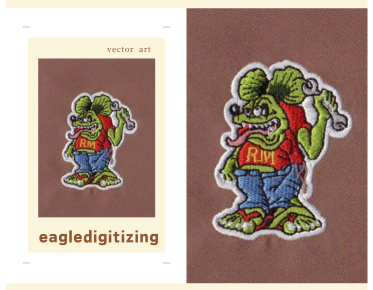
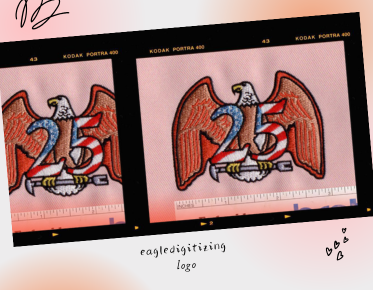
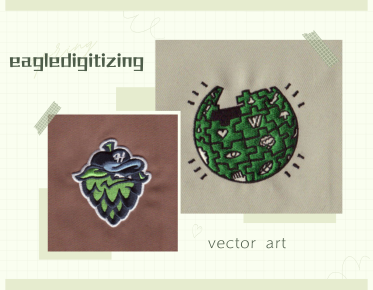
Embroidery is one of the clearest examples of why vector conversion matters. Stitching is not pixel printing. It is a physical process that translates artwork into thread movement, which means the design has to be clean, legible, and simplified enough to stitch accurately. A raster logo is not ideal for that environment because the small details, jagged edges, or blurred boundaries can create problems during digitizing. A vector logo provides the kind of clear outline that embroidery workflows require.
For businesses preparing apparel or promotional textile items, the vector source file can be further optimized so it becomes a vector artwork services output that supports stitch planning and production-friendly shapes. That does not mean every vector logo is automatically embroidery-ready, because some designs still need cleanup, simplification, or outline adjustments. But it does mean the file starts from a better place. The cleaner the vector, the more efficient the embroidery adaptation becomes.
This is where experienced providers like Eagle Digitizing become especially useful. Their vector-related services can help transform rough, low-resolution, or print-only artwork into cleaner production files that are easier to manage across print and decoration workflows. Businesses that need accurate logo redraws, cleanup, or conversion often rely on that kind of support when the original artwork is not suitable for production.
Decoration channels reward simplification and clarity
Embroidery, screen printing, vinyl cutting, laser engraving, and similar production methods all depend on artwork that can be interpreted cleanly by machines and operators. Vector files are easier to adapt because their shapes can be refined without visible degradation. A line can be thickened, a corner can be rounded, or a small detail can be removed while the logo still feels true to the original identity.
That control is particularly valuable when a design needs to be converted for merchandise, uniforms, or promotional gear. A logo that works on a website might have too many thin lines for thread. A vector version makes it easier to create a simplified production variant without losing brand recognition. This is one of the reasons so many production teams ask for vector first and raster second, rather than the other way around.
In practice, that means fewer failures at the sample stage and fewer surprises after production begins. The logo is not only easier to resize and recolor; it is easier to make production-safe across multiple decoration techniques.
Why Vector Files Improve Consistency Across Teams
Design, marketing, and production can all work from the same master
One overlooked advantage of vector logos is organizational. A vector master reduces confusion because everyone works from the same source of truth. Designers can refine the artwork, marketers can export social graphics, printers can prepare press-ready files, and production vendors can make output-specific adjustments, all from the same underlying logo. That consistency protects the brand from accidental distortions that happen when different departments use different low-resolution copies.
In larger organizations, file confusion often becomes a quiet source of brand inconsistency. Someone saves an old version, someone else stretches a JPEG, and suddenly the logo appears in several incompatible forms. Vector files dramatically reduce that risk because they are reusable and editable. The same source file can be archived, versioned, and repurposed over time without losing the fidelity of the original design.
This is one reason companies often invest in proper logo conversion early. A strong vector master becomes a brand infrastructure asset. It supports future campaigns, product lines, and channel launches without requiring repeated reconstruction. That kind of efficiency matters more and more as the brand expands.
Export flexibility supports modern digital and print ecosystems
Once artwork has been converted to vector, it can be exported into a range of formats and optimized for different environments. Teams often need AI, EPS, CDR, SVG, PDF, and related deliverables depending on the software or production partner involved. Having a vector source makes those exports more reliable because the artwork is not starting from a low-resolution raster base. It is already built in a way that supports clean translation into multiple delivery formats.
That is especially helpful when a project demands a Raster to Vector Conversion process before it can move into final production. Converting an image into editable paths gives the brand more options at the export stage, which in turn helps the artwork travel across platforms with less friction. The more flexible the master file, the easier it is to meet the technical requirements of different vendors and channels.
For fast-moving teams, this flexibility shortens turnaround. Instead of waiting for each new usage to be recreated, they can modify the vector and export the required version. That speed is one of the practical reasons vector files are so widely preferred in professional branding.
What Happens During Good Vector Conversion
Conversion is not just tracing; it is reconstruction
Many people imagine vector conversion as a simple outline trace, but the best results usually involve more than that. Good conversion often means rebuilding the logo so curves are smooth, edges are disciplined, text is legible, and small details are positioned with intention. This is why a careful conversion can have such a huge effect on the logo’s usability. A clean vector file is not merely a copy of the original image; it is a practical version of the logo that is better suited for real-world production.
That distinction matters because automatic tracing tools may capture the general shape of a logo while leaving behind rough edges, extra points, or awkward curves. A skilled conversion process smooths those issues and creates a file that can be edited later without frustration. Businesses often discover that the time spent cleaning a vector file is repaid many times over when the artwork needs to be resized, recolored, or adapted for another use case.
This is also where a professional workflow can be useful. Eagle Digitizing is known for handling vector conversions, logo redraws, cleanup work, and production-ready artwork preparation, which is valuable when a source image is too rough to use as-is. Their approach is often helpful for companies that need reliable artwork for print, apparel, or embroidery rather than a quick visual approximation.
Quality vector work reduces downstream fixes
When vector conversion is done well, the file becomes much easier to live with. There are fewer stray anchor points, fewer awkward curve transitions, and fewer hidden issues that show up only after the artwork is sent to print or decoration. That is the kind of detail that makes a logo feel easy to adapt because the underlying file is already organized for change.
In professional environments, this can prevent a long chain of rework. A clean vector asset can be updated quickly for seasonal palettes, special campaigns, packaging variants, and vendor-specific requirements. If the file is messy, every change becomes slower and riskier. That is why conversion quality is directly connected to flexibility.
Good vector work does not try to add unnecessary complexity. It aims for clarity. And clarity is what makes the logo easier to resize, recolor, and adapt in the first place.
How Businesses Use Vector Logos to Save Time
Fewer rebuilds mean faster launches
Time is one of the most important commercial benefits of vector conversion. When a company launches a new campaign, releases a product refresh, or prepares a regional adaptation, it needs artwork that can move quickly through the pipeline. Vector logos reduce the need for rebuilding because the same source file can be edited and exported in many ways. That shortens design cycles and helps teams hit deadlines without sacrificing quality.
This also helps smaller businesses that do not have a large design department. If a logo exists only as a flat image, every new application can become a mini restoration project. If the logo exists as a vector, the team can update colors, resize the layout, and prepare files with much less friction. The difference between “find a new version” and “edit the master file” is enormous when deadlines are tight.
For agencies and freelancers, that efficiency also improves client service. A vector logo makes it easier to produce fast revisions, seasonal variants, and channel-specific graphics without introducing errors. In a crowded market, speed and consistency can be a competitive advantage.
Cleaner archives make future work easier
Vector files are also valuable because they improve the quality of the brand archive. Instead of storing dozens of raster copies in different sizes and filenames, a business can maintain a smaller set of master vector assets and export derivatives as needed. That leads to cleaner asset management and better version control.
When a company later needs a AI raster to vector workflow for an old logo or an archive image, the existence of a proper vector master can transform an outdated brand file into something usable again. This is especially useful for legacy marks, acquired brands, or businesses that are refreshing their identity after years of working from low-quality artwork.
The more organized the archive, the easier it is to future-proof the brand. That is one of the quiet reasons vector logos are such an important investment. They make today’s work simpler and tomorrow’s work less expensive.
Common File Types and What They Offer
Different exports serve different production needs
Although the vector concept is central, different file formats still matter. AI files are useful for editable source artwork in many Adobe-based workflows. EPS files remain common in print and vendor environments. SVG files are widely used for responsive web graphics. PDF can serve as a handy delivery format when the artwork needs to be shared without depending on the same software ecosystem. A good vector master can support all of these outputs without losing quality.
That is why brands often ask for editable source files in addition to final artwork. They do not just want an image of the logo; they want a file that can evolve with the business. A vector file supports that evolution by giving designers and vendors the flexibility to choose the format they need while preserving the same underlying geometry.
When working with a service provider, it is useful to ask for source files, outlined text if necessary, and print-ready versions that match the intended output. That helps reduce file conversion issues later and makes the brand assets easier to manage across internal and external teams.
When cleanup matters as much as conversion
Sometimes conversion alone is not enough. Older logos may have rough edges, missing details, low-quality scans, or distorted typography that needs more than a basic trace. In those cases, cleanup becomes part of the vector process. A Vector Cleanup Service can help refine the artwork so the final file is more useful for print, decoration, and digital adaptation.
This is important because a vector file only delivers its full value if it is clean. An overcomplicated or poorly traced file can still be difficult to resize or recolor in practice. The best files are simple, accurate, and structured in a way that makes future changes easy. That is what separates a usable master asset from a merely converted image.
For businesses, this means that file quality should be judged not only by appearance but by editability. If a logo can be modified quickly and exported cleanly, it is doing its job as a vector asset.
Why Vector Conversion Supports Brand Adaptation Over Time
Brands evolve, and the logo must evolve with them
Every brand eventually faces change. New product lines appear. Campaign directions shift. Audiences expand. Even a subtle refresh can require updates to the logo, color palette, or layout system. Vector artwork makes those updates manageable because the logo is no longer locked into a single frozen version. It can be adapted for new requirements without sacrificing consistency.
This adaptability becomes especially valuable when the business operates across multiple markets or uses different vendors for print, embroidery, and digital work. A flexible logo system can be adjusted for each context while keeping a strong recognizable core. The brand remains coherent, but the output changes intelligently based on use case.
That balance between stability and flexibility is one of the defining strengths of vector design. It is not about changing the logo arbitrarily. It is about allowing the same identity to function well in a changing environment.
Future-proofing starts with a strong master file
Businesses that think ahead usually treat vector conversion as part of brand infrastructure, not just a technical fix. A logo that has been converted properly is easier to hand off to printers, agencies, franchise partners, e-commerce teams, and product manufacturers. It is also easier to archive for future use, which matters when the same logo needs to be revived years later for a reprint or a heritage campaign.
If the current artwork is only available as a small JPEG or a fuzzy PNG, every future use becomes harder than it should be. A vector master removes that bottleneck. It makes it easier to create new outputs, preserve the brand, and respond to opportunities quickly. That is why conversion is often one of the smartest early investments a growing company can make.
It also lowers the creative cost of experimentation. When the logo is flexible, teams can test different arrangements, colors, and production methods without fear of damaging the original asset. That gives the brand room to evolve in a controlled way.
Why Professional Vector Support Can Make the Difference
Not every source image is easy to convert well
Many logos begin life as screenshots, social media graphics, scanned documents, or compressed images sent through email over and over again. By the time a business needs to use them seriously, the artwork may be too degraded for direct production. That is when professional vector support becomes important. A skilled team can redraw the logo, clean up the geometry, and prepare a file that actually performs like a true brand asset.
Professional support matters because the goal is not just visual similarity. The goal is usability. A logo should be easy to resize, recolor, and adapt without building new problems into the file. When a conversion partner understands print, embroidery, and digital output requirements, the result is more useful from the start.
That is one reason many businesses look for services that specialize in logo redraws, vector artwork preparation, and output-specific formatting. These services are not simply about making the image look prettier. They are about giving the brand a clean, flexible foundation.
Production-ready files are the end goal
The most valuable vector deliverable is usually the one that is easiest to deploy. A strong file should be crisp, editable, and appropriate for the intended use. When a logo is being prepared for commercial printing, apparel decoration, signage, or digital publishing, the file should behave predictably in that environment. That is why production-ready output matters so much.
For many businesses, the most useful deliverables include clean vector artwork, outlined text versions, and files prepared for different color environments. When those elements are organized correctly, the logo can travel through the brand ecosystem with minimal friction. In practical terms, that means fewer delays, fewer corrections, and fewer disappointing outcomes from vendors.
It is also why a company like Eagle Digitizing can be a helpful resource when the artwork needs to be converted into a cleaner, more manageable format. Their services align well with the needs of businesses that want the logo to function reliably across multiple output channels, not just look good on a screen.
How to Think About Vector Logos as Brand Assets
They are tools, not just images
The biggest mental shift is to stop thinking of the logo as a picture and start thinking of it as a system. A raster logo behaves like a photograph of the brand mark. A vector logo behaves like a working template that can be resized, recolored, exported, and adapted again and again. That is the difference between a static asset and an operational one.
Once a business sees the logo this way, the value of vector conversion becomes obvious. It is not just about fixing a blurry image. It is about building brand flexibility. The logo becomes easier to maintain, easier to hand off, and easier to expand into new uses as the company grows.
This way of thinking also encourages better asset discipline. When the vector master is protected and used correctly, it becomes the stable center of the visual identity. Every derivative can be generated from it, which keeps the brand more consistent across all touchpoints.
Creative freedom increases when the file is technically sound
Designers often feel more creative when the file is well organized because they spend less time fighting technical problems. A clean vector file is easier to adjust, which makes experimentation more practical. Want to test a one-color version? Easy. Need the logo to sit inside a narrow layout? Simple. Need a version for a stitched jacket patch or a banner? The vector structure can support it.
That freedom is exactly why vector conversion has such a strong impact on real-world branding. It creates a smoother relationship between the idea and the output. The design can move from concept to application without losing quality along the way.
As more brands work across websites, marketplaces, packaging, social media, and physical products, that freedom becomes less of a bonus and more of a necessity. A logo has to do more work than ever before, and vector makes that work manageable.
Why the Same Logo Can Look Better Everywhere After Conversion
Consistency improves perception
A logo that appears sharp and balanced everywhere gives the impression of a disciplined brand. Viewers may not consciously know whether the file is vector or raster, but they do notice when a logo looks off. Blurred edges, awkward scaling, and inconsistent colors can make a brand feel less trustworthy. When converted to vector, the logo gains the polish needed to look intentional in every setting.
That consistency affects perception in subtle but important ways. A crisp logo on packaging suggests care. A clean logo on a website suggests professionalism. A well-produced embroidered logo suggests attention to detail. Vector conversion helps deliver all of those cues with one adaptable master file.
In competitive markets, these small signals matter. They shape how customers interpret the quality of the brand, even before they read a single word of copy. That is why investing in the right file format can have a bigger impact than many people expect.
Better files make stronger brand systems
When the logo is adaptable, the rest of the brand system becomes easier to build. Supporting graphics can be matched more closely, layouts can be more consistent, and campaign design can move faster. A clean vector logo often sets the standard for the rest of the identity system because it is the element that appears most frequently and across the widest variety of contexts.
That system-level effect is one of the strongest reasons brands should care about vector conversion. It does not only solve a file problem. It improves the whole visual ecosystem.
And because a vector file is inherently flexible, it gives the brand room to grow without replacing the core mark every time a new need appears.
Where Businesses Usually Start
Old logos, low-res files, and urgent production jobs
Most vector journeys begin with a problem. Maybe the company only has a pixelated logo. Maybe the old designer never supplied source files. Maybe a printer asked for an editable file the business cannot provide. Maybe the brand needs embroidery-ready artwork for a product launch. Those situations push businesses toward vector conversion because the existing image is not enough.
From there, the goal is usually the same: create a clean, scalable, editable version that can be used again and again. Sometimes that means a quick conversion. Sometimes it means careful redraw and cleanup. Sometimes it means preparing multiple output versions for different channels. Whatever the starting point, the destination is a file that is easier to manage and easier to deploy.
That is why services such as AI vector conversion are so relevant to modern brand operations. They help transform imperfect source material into flexible vector assets that can be used across design and production workflows. For teams with growing demands and limited time, that conversion can be the difference between a stalled project and a smooth launch.
Practical questions to ask before sending artwork out
Before converting a logo, it helps to think about where it will be used. Will it need to be printed at large size? Will it be stitched? Will it appear on a dark background? Does it need a one-color version? Should the text be outlined? These questions help define the right vector output and reduce the need for later revisions.
It also helps to know whether the artwork should be optimized for print, embroidery, or digital display first. Different uses can require different refinements, and a good vector workflow can account for those needs from the beginning. The clearer the intended use, the better the final file tends to be.
That planning mindset turns vector conversion from a reactive fix into a strategic move. Instead of asking for a file only when there is a crisis, businesses can build a ready-to-use asset library that supports future work from the start.
Looking Ahead at Brand Flexibility
The future belongs to adaptable assets
The way brands are used today is more fragmented than ever. A logo has to work in motion graphics, on mobile screens, in print campaigns, on physical products, and in all kinds of partner-managed environments. That reality makes adaptability essential. Vector conversion gives the logo the structural flexibility it needs to perform in those spaces without constant rebuilding.
As tools for automation, export, and AI-assisted production continue to improve, the importance of having a clean vector master will only increase. The more digital channels expand, the more valuable it becomes to have artwork that can scale, recolor, and adapt without losing quality. Vector is not just a better file type for today; it is a safer file type for the brand systems of tomorrow.
For businesses that care about consistency, speed, and professional presentation, the message is simple: a logo becomes easier to resize, recolor, and adapt because vector conversion changes the file from a fixed image into a flexible design resource. That flexibility is what allows a brand to stay recognizable while still meeting the demands of modern marketing, production, and merchandising.
And once a company has experienced how much smoother design work becomes with a clean vector master, the real question is no longer whether to convert the logo, but how soon it can be done and how far that one file can carry the brand next.