
Why Are Responsive Logos Becoming More Important Than Single Fixed Logo Versions in 2026?
Brand identity has never been more visible, more fragmented, or more unforgiving than it is today. In 2026, a logo is no longer just a mark that sits on a website header or a business card. It has to work inside a mobile app icon, a social avatar, a smartwatch notification, a podcast tile, a digital billboard, a merchandise tag, an embroidered cap, a printed box, a kiosk screen, a dark-mode interface, and a short-form video intro that lasts only a few seconds. In that kind of environment, a single fixed logo version begins to feel less like a full identity system and more like a rigid object that struggles to adapt. That is why so many brands are shifting toward responsive logo systems, and why even the most established companies are now rethinking the role of one static master mark.
The shift is not simply a design trend. It is a practical response to how people encounter brands now. Attention is smaller, screens are smaller, and the number of touchpoints has multiplied. A logo that once lived primarily on a website and stationery must now remain recognizable in tiny sizes, across multiple file formats, and in contexts where clarity matters more than decorative detail. In this setting, flexibility is not a luxury. It is part of the brand’s survival kit. Even when teams start with a traditional emblem, they often discover that the identity performs better when it has several carefully planned variations rather than one fixed shape used everywhere.
That does not mean fixed logos are disappearing. The full version of a logo still matters. It still carries history, balance, and visual authority. But in 2026, the full version is only one part of a larger family. The brands that win are the ones that understand hierarchy: a complete logo for formal spaces, a simplified symbol for compact spaces, and a stripped-down version for micro placements. This layered approach gives the brand more clarity, more consistency, and more control over perception.
The New Reality of Brand Visibility in 2026
The reason responsive logos have become so important begins with the reality of modern brand visibility. Brands no longer speak from a single stage. They appear in dozens of tiny moments throughout the day. A person may see a brand first as a social media profile image, then as an app icon, then as the corner of a video thumbnail, and later as a printed package arriving at their door. Each exposure has different size constraints, different backgrounds, different technologies, and different emotional expectations. A logo system has to feel coherent across all of them.
In earlier branding eras, designers could rely on a generous amount of space. Logos were often placed on letterheads, shopfronts, brochures, and websites where there was room to show the full mark. Today, that assumption no longer holds. Many of the most important brand encounters happen in miniature. If the logo includes too much detail, thin strokes, small text, narrow spacing, or decorative elements that collapse at small sizes, it becomes harder to recognize. The result is a brand that looks polished in one place and blurry or awkward in another.
Responsive logos answer this problem by treating recognition as the main goal rather than forcing every setting to use the same visual arrangement. A responsive system might feature a primary lockup, a secondary stacked version, a compact symbol, and a micro-mark. Each version is designed to keep the brand recognizable at its intended size and context. Instead of asking one logo to do every job, the identity system assigns the right asset to the right environment. That is a more realistic approach for 2026, when the number of environments keeps expanding.
This is also why many teams start paying closer attention to file preparation and vector discipline. A responsive identity has to be built on assets that can scale, simplify, and remain sharp in every application. Brands often turn to an eps vector conversion service when they need older artwork transformed into a format that can support multiple logo variations without losing quality. Once a logo is vector-based, designers can create responsive versions with confidence, knowing that resizing and reshaping will not damage the artwork.
Why Single Fixed Logos Struggle in a Multi-Device World
Single fixed logos were created for a different media environment. They were designed when the brand mark usually had one dominant display ratio and one expected use case. The old model assumed that the same artwork could be placed anywhere and still perform well. That assumption is weaker now. A logo that is beautiful on a desktop homepage can become unreadable in a narrow mobile header. A logo that is perfect on packaging may disappear when used as a favicon. A logo that works on a presentation slide may fail entirely when placed on a social profile circle.
The problem is not just size. It is also complexity. Many fixed logos contain multiple words, gradients, outlines, subtle shading, or intricate symbols. Those details can look refined in large applications but create serious technical headaches elsewhere. In small placements, detail becomes noise. In embroidery, detail becomes stitching trouble. In print, thin linework can break down. In digital environments, the wrong contrast can make the brand look weak or outdated. One version of the logo may still be “correct,” but it no longer serves the full range of brand requirements.
Brands also face an increasing number of user-generated contexts. Customers may tag products in social posts, vendors may place logos on co-branded materials, and partner platforms may display the brand in custom layouts. The more external parties use the identity, the more important it becomes to have a responsive system that can survive inconsistent placements. If a company only provides one fixed logo version, every adaptation becomes a compromise. If it provides a structured logo family, the brand remains more controlled and more legible.
This matters especially for printed and production-heavy applications. A logo that looks fine on screen can still fail once it is sent to a printer, a merch supplier, or a sign maker. That is where clean digital preparation is crucial. Many brands rely on vector graphics for printing because vector artwork preserves edges, keeps text sharper, and allows color separation to remain accurate across sizes. A responsive logo strategy is stronger when the source artwork is already prepared for real-world production, not just screen display.
What Responsive Logos Actually Solve
Responsive logos are often described in simple visual terms, but their value runs deeper. They solve problems of recognition, usability, production, and consistency all at once. The first and most obvious benefit is legibility. A responsive logo can shrink without turning into a blur of shapes and letters. The second benefit is adaptability. It can be reoriented for vertical, horizontal, square, or icon-only spaces without forcing awkward cropping or resizing. The third benefit is longevity. As channels change, the logo system can evolve without requiring a total rebrand.
Recognition at Any Scale
Brand recognition depends on the audience noticing and remembering a stable visual cue. At large sizes, a logo can use detail to build character. At small sizes, detail becomes a liability. Responsive logos preserve the core identity by removing nonessential elements as space decreases. That does not dilute the brand. It protects the brand from vanishing. If the symbol is strong enough to stand alone, it becomes more memorable, not less. If the wordmark can be simplified without losing meaning, then the entire identity becomes more versatile.
Better Performance Across Digital Interfaces
Digital interfaces in 2026 are highly varied. They include foldable phones, wearable devices, in-car displays, voice-assistant screens, interactive kiosks, and mixed-reality environments. Each one has different dimensions and different viewing distances. A fixed logo cannot intelligently adapt to all of them. A responsive logo can. It can drop a tagline in tiny placements, switch to a symbol in app environments, or use a compact lockup in narrow bars. This gives the brand a better chance of looking intentional wherever it appears.
Cleaner Production in Physical Media
Print, embroidery, and signage still matter enormously. Brands still need hangtags, boxes, labels, uniforms, banners, decals, and promotional items. In these channels, artwork quality makes a huge difference. Responsive logos reduce the chance that a supplier will have to compress a complex fixed mark into an unsuitable format. Instead, the brand can provide the exact version that works best for the production method. For apparel in particular, a simplified mark or a vector logo for embroidery can save time, avoid stitch issues, and produce a cleaner final result.
Why 2026 Accelerates the Shift
Several forces are making responsive logos especially important in 2026. One is the normalization of artificial intelligence inside design workflows. Another is the growing expectation that brands should behave dynamically without losing identity. Another is the increasing speed at which content is created, shared, and repurposed. A logo must be ready to travel through all of this without needing custom adjustments for every single placement.
AI-assisted design tools have made it easier to produce multiple variations quickly, but they have also raised the standard for polish. A brand can no longer get away with poor resolution or inconsistent lockups just because the team needed a fast turnaround. The market now expects both speed and quality. A disciplined AI vector conversion workflow can help teams move faster while still maintaining the line quality, spacing, and proportion needed for a strong logo family. What used to take many rounds of redrawing can now begin with a more accurate digital base.
At the same time, social platforms keep compressing visual attention. Profile images get smaller. Preview cards change shape. Stories and reels push logos into corners and overlays. A fixed logo can struggle in these conditions because it was never intended to function as a flexible system. Responsive identity design acknowledges that a brand must earn attention in micro-moments, not just in full-width layouts. That means the logo must stay readable even when the audience sees it for only a second.
There is also a commercial reason for the shift. A responsive logo system lowers friction between departments. Marketing can use one version, product teams can use another, and production teams can use a file that fits their medium. When everyone works from a coordinated system, fewer mistakes happen. Fewer mistakes mean fewer delays, fewer reprints, and fewer awkward brand inconsistencies. That is especially valuable for growing brands that operate across multiple markets and product categories.
The Role of Vector Artwork in Responsive Logo Systems
Responsive logos are only as good as the artwork behind them. That is why vector preparation matters so much. Vector artwork gives designers the freedom to scale, edit, and optimize without quality loss. It also supports production processes that depend on crisp outlines and editable paths. A logo built as a vector file can be expanded for signage, reduced for icons, and adapted for web or apparel with much greater flexibility than a flattened image.
When a brand begins with a low-resolution logo, the first challenge is often not design but recovery. Older marks may exist only as screenshots, JPEGs, or blurry PNGs. In those cases, teams may need AI raster to vector support to rebuild the logo into a usable structure. The result is not just cleaner artwork. It is a design asset that can actually support a responsive system. Once the logo has been converted into editable vector paths, designers can create variations for different sizes and applications more efficiently.
In practice, this is where professional support becomes valuable. Eagle Digitizing works with brands, agencies, printers, and apparel businesses that need scalable vector assets, logo cleanup, redraws, and production-ready files. Their service model is especially useful when a brand has an older or low-quality logo that needs to be transformed into clean vector artwork for printing, embroidery, or multi-format use. For teams that care about consistency, a reliable conversion process can be the difference between an identity that merely exists and one that actually performs across channels.
Many companies also need rapid access to editable formats like AI, EPS, and CDR so they can hand off artwork to vendors without delays. In those situations, the goal is not only to create a nice-looking file but to produce a practical asset that fits real production pipelines. Brands that need broader support often look for vector artwork services because those services can include redraws, cleanup, reformatting, and preparation for different end uses. Responsive logos and clean vector files are closely connected; one supports the other.
Design Principles Behind a Strong Responsive Logo Family
Good responsive logos do not happen by accident. They are built on a few practical design principles that help each version feel related without becoming cluttered. The first principle is simplification. As the logo gets smaller, nonessential detail should be removed rather than compressed. The second is consistency. The core shape, color, and proportion should still feel unmistakably like the brand. The third is hierarchy. Not every version needs equal visual weight, and not every placement deserves the same amount of information.
Start With the Core Recognition Point
Every logo has one or two features that make it memorable. It could be a symbol, a monogram, a letterform treatment, or a distinctive shape. A responsive system identifies that recognition point and protects it across versions. If the audience can identify the brand from a tiny icon, the logo family is doing its job. If the symbol collapses when reduced, the design needs refinement.
Remove Elements That Do Not Survive Compression
Taglines, thin separators, ornamental flourishes, and small details often disappear first. In a responsive system, that is not a failure. It is a decision. Designers remove elements that do not add value in small contexts, then reintroduce them when there is enough room. This gives the logo better control over legibility. The brand remains coherent because the same system guides every variation.
Use Color Intentionally
Color can support recognition, but it should not be the only thing carrying the identity. Responsive logos often need monochrome versions, reversed versions, and simplified palette options for printing or dark-mode environments. That is why many teams prepare multiple assets at the vector level. A logo that looks good in full color should also remain strong in one-color applications, because practical brand systems need both. Color can enhance the mark, but form must support the brand even when color is unavailable.
How Responsive Logos Improve Marketing Consistency
One of the biggest misconceptions about responsive logos is that they are mostly a design department concern. In reality, they improve marketing consistency across the entire organization. When a company has a clear set of logo variations, its content teams can move faster without creating ad hoc modifications. Social posts, product launches, packaging, event materials, landing pages, and ads can all use the right version from the beginning.
That consistency matters because brand memory depends on repetition. But repetition only works when the repeated visual is clean. If a logo is squeezed, distorted, or improperly resized, the audience does not receive the same cue each time. Over time, this can dilute the brand. Responsive systems protect repetition by making sure each touchpoint uses a version designed for that exact space.
It also improves collaboration with outside vendors. Printers, sign makers, digital agencies, apparel decorators, and promotional product suppliers all need files that behave correctly in their environment. When a brand provides organized logo variations, the vendor is less likely to make assumptions or improvise. This is especially important in production-heavy workflows where the final result depends on technical accuracy. A strong source file and a carefully chosen version reduce errors before they happen.
For many brands, the production side begins with a high-quality AI vector conversion or manual redraw that turns a rough image into a structured file. Once that structure exists, teams can generate print-ready versions, simplified embroidery formats, and web-safe assets from the same foundation. That is one reason responsive logos are becoming more important than single fixed versions: they connect brand strategy with operational reality.
Responsive Logos and the Embroidery Advantage
Embroidery has become one of the clearest examples of why responsive logos matter. A logo that looks excellent on screen may contain detail that cannot be stitched cleanly. Fine gradients, tiny letters, dense outlines, and delicate internal shapes can create trouble for digitizers and decorators. A fixed logo often needs significant simplification before it can be embroidered well. A responsive logo system already anticipates that need.
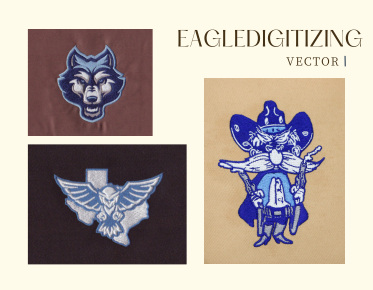
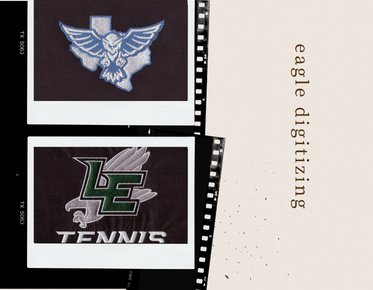
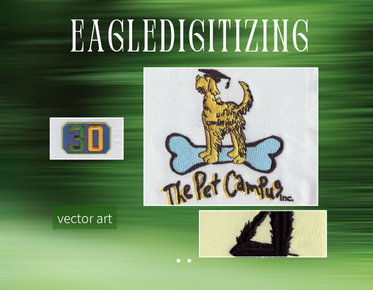
By preparing a version specifically suited to thread, stitch count, and fabric behavior, the brand avoids production issues and preserves quality. This is where vector preparation, cleanup, and simplification become essential. Eagle Digitizing offers services that help convert artwork into clean, usable vector-based assets and production-ready files that support embroidery and printing needs. For companies that place logos on uniforms, hats, jackets, and promotional apparel, a responsive logo system paired with clean vector artwork can prevent a lot of expensive trial and error.
Brands with apparel programs often need more than a direct logo conversion. They need the artwork to be optimized for the medium. That may involve adjusting line thickness, removing tiny text, isolating a monogram, or creating a simplified symbol version. If the original logo only exists as a low-quality image, a conversion step becomes unavoidable. In those cases, an AI raster to vector solution may speed up the first pass, but the best results still depend on careful refinement. The point is not to automate away design judgment; it is to make the identity more adaptable.
Why Responsive Logos Reduce Brand Risk
Brand risk is not only about a bad campaign or a poor message. It is also about visual inconsistency. When a logo is used improperly, the brand appears less reliable. A blurry mark on a product tag, a distorted logo in a marketplace listing, or a pixelated avatar in a customer review can quietly weaken trust. These may seem like small issues, but brand perception is built from small moments.
Responsive logos reduce this risk by making the appropriate version easier to use. Instead of forcing a team to resize a full logo in every scenario, the system already provides a version that fits. That means fewer distortions, fewer unreadable placements, and fewer mismatched colors. The organization also gains clearer rules around usage, which improves consistency across regions and departments. In larger brands, this can save time and prevent confusion during fast-turnaround launches.
Risk reduction also applies to legacy branding. Older logos may have been designed for print-first environments and later adapted for digital use without enough thought. A responsive redesign does not erase brand history. It modernizes the identity so it can survive new contexts. Many companies use the opportunity to clean up spacing, improve line balance, and create a more manageable asset library. Once those improvements are made, the logo becomes easier to govern and easier to deploy.
The Creative Balance Between Flexibility and Identity
Some brand leaders worry that responsive logos might make a brand feel less iconic. The concern is understandable. A single fixed logo can create a sense of permanence because it never changes. But permanence is not the same as relevance. A brand can remain recognizable while still adapting intelligently. In fact, the most effective responsive systems often feel more iconic because they are always shown in the right form for the situation.
The key is discipline. A responsive logo system should not become a collection of random substitutions. It should be a structured family with clear rules. Each version must feel related to the others. The symbol should still be the symbol. The wordmark should still use the same voice. The spacing, proportions, and color logic should all point back to the same identity. Flexibility without discipline becomes inconsistency. Flexibility with discipline becomes a strategic advantage.
This is where brand teams benefit from thoughtful logo development and vector preparation. A strong base file allows designers to redraw logo in vector form, simplify the structure, and create multiple applications without compromising the original idea. When needed, brands may also request vector graphics for printing to support packaging, signage, and merchandise. Those production-ready assets make the logo system much easier to manage across departments and vendors.
The Practical Workflow for Building a Responsive Logo System
For brands planning a redesign or an update in 2026, the workflow matters as much as the final look. A responsive system usually begins with an audit of where the logo currently appears. Designers and marketers identify every major use case: website, social, app, print, packaging, embroidery, signage, presentations, and partner platforms. From there, the team determines which contexts need a full lockup, which can use a simplified version, and which need only a symbol or monogram.
Once the use cases are mapped, the artwork is refined into a set of scalable assets. This is where vector structure becomes essential. Teams often need a clean source file before they can build out the responsive family. If the logo is old, damaged, or trapped in a poor-quality raster image, the first step may be recovery and cleanup. Many businesses use a conversion or redraw process to rebuild the logo into a vector foundation that supports future applications. That foundation can then be exported into various formats, from screen-ready files to print-ready and embroidery-ready versions.
Throughout the process, the brand should test each variation at actual sizes, not just on a designer’s large monitor. A logo can look perfect in a presentation deck and still fail in a phone UI or an embroidered patch. Testing should include grayscale, reversed backgrounds, extreme small-size conditions, and production simulations. The purpose is not simply to look modern. It is to make sure the identity works in the real world.
Teams often find that they need both technology and human judgment. AI tools can help speed up the initial reconstruction, especially in situations involving vector artwork services or image conversion. But human review remains crucial for spacing, balance, and brand expression. The best responsive systems are not generated automatically. They are designed carefully, with an eye for how people actually use brand assets.
What Brands Should Avoid When Going Responsive
As responsive logos become more common, a few mistakes appear again and again. One mistake is overcomplication. Some brands try to preserve too much detail across every version, which defeats the purpose of responsiveness. Another mistake is inconsistency. If each version feels like a different brand rather than a family, the system creates confusion instead of clarity. A third mistake is poor file management. If teams cannot easily find the right version, they may use the wrong one.
Another common issue is designing only for digital display and forgetting production. A logo that works on a website may still fail on packaging or apparel. Brands need to think about both worlds together. That is why vector readiness is so important. Good responsive systems are built from assets that can be reproduced accurately in print, embroidery, signage, and digital channels. Without that foundation, the identity is fragile.
Brands should also avoid treating responsive logos as a purely aesthetic exercise. The real purpose is functional performance. The question is not whether a logo looks trendy in a design presentation. The question is whether it remains recognizable, usable, and efficient across the places where the brand actually appears. If the answer is yes, the system is doing its job.
How Responsive Logos Support Long-Term Growth
One of the biggest advantages of responsive logos is long-term scalability. Growing brands rarely stay within the same channel mix for long. A business may begin with a website and social presence, then expand into packaging, retail, events, licensing, or international distribution. If the logo system is too rigid, every new channel becomes a redesign problem. If the logo system is responsive, growth becomes easier to manage.
That scalability also supports mergers, seasonal campaigns, co-branded launches, and product diversification. The brand does not need to reinvent itself each time it enters a new setting. It simply uses the version that fits best. This creates continuity during change, which is one of the most valuable qualities a brand can have. Customers may not consciously notice the flexibility, but they do notice the stability.
From an operations standpoint, a responsive system also reduces the burden on internal teams. Designers spend less time resizing artwork manually. Marketers spend less time hunting for the correct file. Vendors spend less time asking for a usable version. The result is a smoother workflow from concept to production. That efficiency matters even more in 2026, when speed is a competitive advantage and brand consistency is expected.
Responsive Logos and the Future of Brand Assets
The future of brand identity is not likely to be a single file sitting in a folder. It is more likely to be a structured ecosystem of assets that work together intelligently. Responsive logos are part of that evolution. They reflect a broader shift toward adaptable, context-aware branding that can live across physical and digital environments without breaking down.
As tools become smarter, brands will probably create more versions, not fewer. But the best brands will not create variations at random. They will build curated systems with clear logic, strong vector foundations, and production-ready files for every major use case. That means more attention to linework, file formats, size thresholds, and simplification strategies. It also means more collaboration between brand strategists, designers, production teams, and conversion specialists.
Services that support this workflow will become increasingly valuable. Brands that need editable files, cleanup, or logo conversion may continue to rely on experts who can prepare scalable artwork for different uses. Whether the need is a refined logo file, a cleaner print asset, or a better starting point for embroidery, the goal remains the same: preserve the identity while making it more useful. In that sense, responsive logos are not just a design choice. They are a business decision.
Why the Best Brands Are Already Thinking Beyond One Fixed Mark
By 2026, the most forward-thinking companies are already realizing that one fixed logo version is too limited for the realities of modern communication. The world has become too fast, too visual, and too technically varied for a single static mark to handle everything gracefully. Responsive logos provide the structure that modern brands need without sacrificing recognition or character.
They are more important than single fixed versions because they respect how people actually encounter brands today. They give design teams room to simplify without losing meaning. They give production teams files they can actually use. They give marketers a way to stay consistent across channels. And they give the brand itself a better chance of remaining clear, memorable, and trustworthy in every environment.
In the end, the question is not whether responsive logos are replacing fixed versions entirely. The real question is whether a brand can afford not to build a logo system that adapts. In a marketplace where every screen is smaller, every platform is different, and every second of attention counts, the answer is becoming increasingly obvious. What kind of identity will still feel strong when the next device, format, or channel appears—and is your logo ready for that moment?