
Responsive Logos Are Reshaping Brand Identity in 2026
Brand identity has always been about more than a symbol. It is the shorthand people remember, the visual cue that signals trust, and the design language that helps a company feel recognizable in a crowded market. In 2026, that idea is evolving faster than ever because logos no longer live in one fixed space. They appear on watch faces, app icons, storefront signage, social avatars, packaging, wearable screens, animated intros, and personalized digital environments. A logo has to work everywhere, and that reality is pushing brands toward systems that behave intelligently across contexts. The result is a new standard for identity design, one built around flexibility, clarity, and scalable vector graphics that preserve the same essence even as the shape changes.
Responsive logos are not simply a trend in visual design. They represent a strategic response to how modern audiences encounter brands. People no longer meet a brand only on a website or business card. They see it on a smartwatch notification, a short-form video thumbnail, a mobile checkout screen, a product tag, or a stitched garment. Each surface has different constraints, and the logo must adapt without losing personality. That is why brand teams in 2026 are redesigning not just the mark itself, but the whole logo ecosystem around it. The strongest identities now feel like living systems rather than static emblems.
This shift is also changing how businesses think about production. A responsive logo system only performs well when the source artwork is clean, editable, and built for scaling. Brands that once depended on flattened PNGs or low-resolution artwork are discovering that flexibility starts much earlier, at the vector stage. For many companies, working with a professional production partner becomes just as important as conceptual design. Services like Eagle Digitizing help brands prepare artwork in formats that can move smoothly from digital use to print, embroidery, and signage without losing precision or consistency.
Why Responsive Logos Have Become a Core Brand Priority
The modern logo has a demanding job. It must be instantly recognizable at a tiny size and still feel confident on a large-format banner. It has to remain legible in dark mode, light mode, grayscale, motion, and high-resolution print. It may need to shift from a detailed primary mark to a simplified icon, or from a wide horizontal layout to a compact stacked version, depending on the available space. This is where responsive thinking changes the rules. Instead of forcing one rigid shape into every environment, brands create a family of logo assets that communicate the same identity in multiple forms.
That approach reflects the way people actually experience design today. Attention spans are short, screens are small, and brand touchpoints are fragmented. A detailed emblem that looked elegant on a brochure twenty years ago might disappear in a mobile header today. Meanwhile, an ultra-minimal icon can feel incomplete when placed on packaging or signage. Responsive logo systems solve that tension by allowing the identity to collapse, expand, or simplify in a planned way. The logo becomes adaptable without becoming generic.
In 2026, this adaptability is no longer optional for most businesses. Startups need it because they move quickly between platforms. Consumer brands need it because they operate across ecommerce, social media, retail, and partnerships. B2B companies need it because they present in webinars, pitch decks, conference booths, and software dashboards. Every environment creates a different visual challenge. Responsive logos are reshaping brand identity because they provide a practical language for all of them at once.
The logo is now a system, not a single file
A traditional identity package usually delivered one primary logo and a few alternate color versions. A responsive identity behaves differently. It includes the full mark, a condensed mark, a symbol or monogram, monochrome options, dark-background adaptations, and often motion-ready versions. The design rules around spacing, color, and hierarchy matter just as much as the mark itself. In other words, the logo is no longer a single asset. It is a toolkit designed for consistency across changing environments.
This is where brands begin to understand the value of flexible production files. If the source artwork cannot scale, separate, or simplify cleanly, the entire responsive strategy falls apart. That is why many teams invest in a logo vectorization service before building out new logo variants. A vector foundation keeps edges sharp, allows precise editing, and makes it easier to export versions for web, print, and specialty production. In practical terms, it gives designers the freedom to build a responsive identity without fighting with low-quality source files.
Responsive logo design also encourages better brand discipline. Because the identity must function in several shapes and sizes, every element has to justify its presence. Decorative details that once lived comfortably in a static logo often need to be removed or refined. Spacing becomes more intentional. Typography becomes more deliberate. Color systems become more adaptable. The process pushes brands to answer a simple question: what is the minimum visual information needed to remain unmistakably ours?
How Brand Identity Changes When the Logo Can Adapt
One of the most interesting effects of responsive logos is that they make brand identity feel more human and situational. Instead of one rigid face, the brand has a family of expressions. On a full desktop header, it may appear in its complete form with a wordmark and symbol. On a phone screen, it might reduce to a compact icon. On a social profile, it may become a simplified mark with bold contrast. On merchandise, it may take a layout that suits stitching or embroidery. The brand is not changing its identity; it is changing how it introduces itself in different environments.
This adaptability also affects memory. People do not always remember every detail of a logo, but they do remember the structural cues: the shape, the proportions, the color relationship, the rhythm of the lettering, and the emotional tone. Responsive systems protect those cues while allowing the format to change. If the core logic is strong, the audience recognizes the brand even when the surface treatment shifts. That kind of consistency is one reason responsive logo design has become central to modern branding strategy.
There is another subtle benefit as well: responsive identity design helps brands stay relevant without requiring a full rebrand every time a new platform emerges. Instead of redesigning from scratch, companies can expand their existing system. They can add new responsive assets for motion, interfaces, campaigns, or niche product lines. This makes the brand feel current while preserving equity built over years. In a market where visual fatigue is real, this kind of flexibility can extend the life of an identity dramatically.
Minimalism is no longer the whole story
For years, many brands interpreted digital readiness as a push toward minimalism. Simpler shapes, thinner lines, and fewer details were seen as the safest answer to screen-based branding. But responsive logos in 2026 are proving that simplicity alone is not enough. The real challenge is not just making a logo smaller; it is making it intelligent enough to adapt. Some identities benefit from bold reduction. Others need modular elements, contextual variants, or motion cues to remain expressive. The best responsive systems are not stripped down versions of a bigger mark. They are thoughtfully designed identities with built-in logic.
That logic begins with strong production quality. When a logo is being refined for multiple formats, teams often need vector artwork services to convert rough artwork into editable, precise files that can support responsive use across platforms. Eagle Digitizing is often used for that kind of work because brands need clean outlines, accurate curves, and reliable output that can be reused by designers, printers, and decorators. The value is not only in converting artwork, but in making sure the artwork is usable for the many different versions a responsive brand now requires.
The rise of responsiveness has also changed the creative brief. Designers are no longer asked only to “make it look good.” They are asked to make it work in motion, in low space, in high contrast, in single color, and in environments where the user may see it for only a fraction of a second. That makes logo design feel more like interface design, with hierarchy and usability built into the concept from the beginning. The shape of the logo matters, but so does the behavior of the logo across contexts.
The Technical Foundation Behind Flexible Logo Systems
Responsive branding sounds conceptual, but the technical foundation is very concrete. Every version of the logo needs to be based on files that support resizing without pixelation, editing without distortion, and output across multiple media types. That is why vector artwork is the backbone of modern identity work. Unlike raster files, vectors retain sharpness at any size. That matters whether the logo is printed on a business card, displayed on a billboard, or adapted for a garment patch. The quality of the underlying file often determines whether a responsive identity succeeds or fails.
Brands with older logos often discover that the original artwork is trapped in formats that are difficult to scale or edit. In those cases, the best move is to rebuild the mark as a vector file before creating responsive versions. That can involve redrawing shapes, refining outlines, correcting uneven edges, and preparing alternate file types for different departments. A careful production partner can turn a blurry, outdated, or inconsistent logo into a flexible asset library that supports current marketing needs. This is where conversion and cleanup become part of brand strategy, not just file management.
For companies that need consistent output across merchandise, packaging, signage, and digital use, the need for properly structured files becomes even more visible. Responsive identity systems often depend on carefully prepared exports, including SVGs for web use, AI or EPS for design workflows, and print-ready versions for production teams. The more complex the brand ecosystem, the more important it becomes to maintain a disciplined file structure. Without that discipline, a responsive logo can become a collection of mismatched approximations rather than a coherent system.
Why vectors matter more than ever
Vector files are not just a technical preference. They are the bridge between creative flexibility and production reliability. When a logo needs to be expanded, simplified, recolored, or adapted to multiple surfaces, vector structure makes the process smooth. That is especially important when teams need to produce assets for websites, apparel, packaging, or large-format graphics. A reliable vector file allows the logo to remain crisp and editable through every variation.
Many brands also rely on specialized production support when they need precise output for specific applications. Eagle Digitizing works with logos, illustrations, and brand marks that need to be converted into clean vector artwork for practical use. Its services are especially useful for businesses that need artwork prepared for print, embroidery, or other production environments where clarity matters as much as aesthetics. In a responsive branding context, that kind of support helps turn a design concept into a usable system that can survive real-world application.
When a brand has multiple departments or external vendors handling the same identity, clean vector assets prevent inconsistency. Designers can create digital variants, printers can generate accurate outputs, and decorators can work from files that reproduce the logo with clarity. That consistency matters because responsive branding is only effective when every touchpoint feels connected. If the logo looks polished online but fails in print or on apparel, the identity begins to fracture. Vector-ready production keeps that from happening.
Responsive Logos Across Digital, Print, and Physical Surfaces
The most obvious place responsive logos show their value is digital. Websites, apps, and social platforms have limited space and dynamic interfaces. But the influence of responsive design goes far beyond screens. Print still matters, and physical products still matter. Packaging, signage, employee uniforms, event materials, vehicle graphics, and embroidered merchandise all place unique demands on a logo. A responsive identity must account for those formats from the start, not as an afterthought.
Print applications especially reveal whether a logo system has been designed with enough care. Fine lines may disappear. Tiny text may become unreadable. Color differences can shift the impression of the mark. A logo that looks elegant on a monitor may require adjustments before it can be used in brochures, labels, or posters. That is why brands increasingly plan for vector artwork for printing as part of the identity process. Print needs artwork that is both accurate and adaptable, and responsive branding only works when that production layer is fully considered.
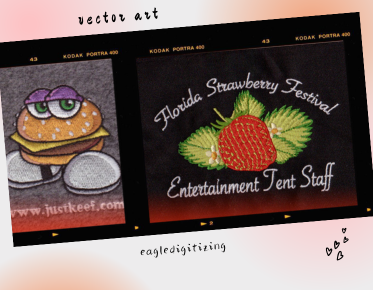
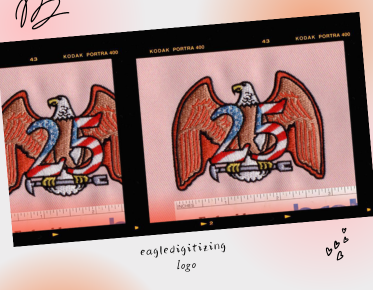
Physical applications create another challenge because they introduce texture, scale limits, and fabrication constraints. Embroidered logos, for example, cannot rely on fine details or overly thin letterforms. Fabric changes how a design behaves. Stitches need space. Curves need to be simplified. Small elements may need to be redrawn so the mark stays legible when sewn. Brands that ignore this reality often end up with merchandise that weakens the identity instead of reinforcing it. Responsive design helps prevent that mismatch by planning for alternate versions that fit the medium.
The embroidered logo problem is really a flexibility problem
A brand that can shift its logo gracefully for embroidery is usually a brand that has done the hard thinking already. It has considered contrast, stroke weight, spacing, and detail level. It has created versions that can survive on fabric, not just on a screen. That is why many companies seek out vector preparation for apparel and uniforms early in the process. The result is not only better production, but a more versatile identity overall.
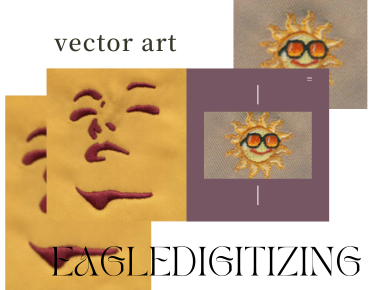
For apparel and decorated merchandise, the need for a vector conversion for embroidery becomes especially important. Eagle Digitizing supports that workflow by helping brands turn artwork into clean, production-ready files that work for stitching and other decorating methods. When a logo is prepared correctly, it can be translated into a format that preserves the brand’s look while respecting the technical limits of fabric. That is an essential part of keeping a responsive identity coherent across all touchpoints.
In 2026, audiences often encounter brands through products as much as through media. A branded jacket, cap, tote bag, or staff polo may function like a walking billboard. If the embroidered logo is too cluttered or poorly adapted, the brand loses visual authority. If it is well prepared, it strengthens recognition every time it is worn. This is one reason responsive logos are no longer a luxury reserved for big design-forward companies. They are becoming a necessity for any brand that wants to look deliberate everywhere it appears.
How AI Is Changing the Logo Adaptation Workflow
Artificial intelligence is making logo production faster, but speed is not the whole story. In many cases, AI tools are helping designers generate starter conversions, detect shapes, and streamline artwork cleanup. That does not eliminate the need for judgment. It simply means the workflow now includes more automation at the front end and more refinement at the end. Brands can move faster from concept to usable assets, but the final quality still depends on careful review, editability, and consistency.
This is especially true when teams are working from poor source files. A blurry JPG, a screenshot, or an old PDF may need to be reconstructed before it can support a responsive logo system. AI-assisted tools can help trace forms or interpret edges, but the result still needs to be checked by a skilled operator. Line quality, spacing, symmetry, and corner behavior all matter. Without cleanup, a file may look acceptable at a glance but fail once it is scaled or reproduced in a demanding environment.
Many businesses now combine automation with human-led refinement to get the best of both worlds. They use AI to accelerate the first stage and then rely on experienced vector specialists to perfect the result. Eagle Digitizing fits naturally into that workflow because it focuses on turning messy or incompatible artwork into clean assets that can be used across branding channels. The practical takeaway is simple: AI can speed things up, but it cannot replace the need for a responsive logo system built with production realities in mind.
Where automation helps most
Automation tends to be most useful when the brand needs many assets in a short time or has to modernize old files quickly. It can help identify forms, separate areas, and reduce manual labor on straightforward artwork. But once a logo becomes part of a larger responsive system, the details matter more than ever. Small inconsistencies can become visible in icons, mobile headers, or stitched applications. That is why many teams use automation as a support tool, not as the final authority.
Brands that want strong results often combine Vector Cleanup Service work with their broader identity refresh. That combination is powerful because it turns rough artwork into assets that are truly fit for use. Eagle Digitizing’s role in that process is to refine linework, smooth awkward edges, and prepare files that can support the demands of a responsive logo system. The outcome is artwork that feels polished instead of merely converted.
For marketing teams, the advantage is not just technical. It is operational. Once the logo system is clean and well organized, future campaigns become easier. New materials can be produced faster. Different vendors can work from the same source. Brand consistency becomes less fragile. In a year like 2026, when campaigns move across channels at high speed, that kind of reliability is a real competitive edge.
Responsive Logo Strategy for Growing Brands
Small and mid-sized businesses often assume responsive logo systems are only for large corporations, but that assumption is outdated. In reality, growing brands may benefit even more because they tend to move quickly across many channels with limited internal resources. A startup might need a logo that works on an app, pitch deck, landing page, social avatar, trade show banner, and onboarding kit within the same quarter. A responsive system gives that business a scalable way to stay coherent without redesigning the identity every time a new use case appears.
The smartest branding teams in 2026 are treating logo development as part of a larger operational strategy. They are building identities that can support online and offline growth, local and global expansion, product packaging, and team merchandising. That means the logo must be ready for more than marketing. It must support customer service materials, internal presentations, seller kits, and channel partner co-branding as well. The more places the brand appears, the more useful responsiveness becomes.
There is also a financial benefit. A logo system that has been planned well reduces the need for repeated redesigns, emergency file fixes, and inconsistent vendor outputs. Brands spend less time repairing the same problem and more time using the identity effectively. That is one reason production-ready vector work can be so valuable: it protects the investment in brand design by making the logo more reusable and more durable over time.
What growing brands should prioritize
Growing businesses should think about clarity, file quality, and adaptability before they think about decoration. A responsive logo should begin with a strong core mark, a well-defined simplified version, and a clean file structure that can be handed to different teams. From there, color systems, spacing rules, and alternate layouts can be developed. The goal is not to create endless variations. The goal is to create enough flexibility to handle real-world needs without weakening recognition.
In this context, services such as vector tracing service support can help transform incomplete artwork into practical branding assets. Eagle Digitizing is particularly useful when a brand needs to rescue an older logo or prepare a concept file for production. The point is not just conversion for its own sake. The point is to make the identity usable in modern workflows, where every version of the logo has to perform cleanly in a different environment.
Brands that get this right often discover that their visual identity becomes easier to manage, not harder. Because the system is built with flexibility in mind, new assets can be created without starting from zero each time. This reduces visual drift and makes campaigns look more unified. In competitive markets, that consistency can quietly build trust long before a customer reads a line of copy.
Common Mistakes Brands Make with Responsive Logos
One of the biggest mistakes is assuming that responsiveness means simply making the same logo smaller. In practice, that rarely works. A logo that is clear on a desktop homepage may become unreadable at small sizes if it contains too much detail. A symbol that looks strong in isolation may feel too generic when the wordmark is removed. Responsive design requires intentional decisions about what to keep, what to simplify, and what to separate into different versions.
Another common mistake is neglecting file quality. Many identity problems begin with low-resolution source art, poorly traced shapes, or inconsistent spacing. When these issues are carried into a responsive system, they multiply. Every new version inherits the flaw. That is why many brands benefit from professional preparation before rollout. A clean master file reduces downstream errors and allows the logo family to be built with confidence.
Brands also sometimes overcomplicate the system. In an effort to make the identity responsive, they create too many variants without clear rules. The result is confusion rather than consistency. The strongest systems are usually the simplest ones: a primary logo, a compact mark, a symbol, a monochrome version, and a few context-specific adaptations. The key is to define where each version is used and why it exists.
Why file discipline matters more than novelty
The temptation in logo design is often to focus on the visual reveal and overlook the file infrastructure behind it. But in 2026, the infrastructure matters just as much as the aesthetic. Brands that keep their assets organized, editable, and production-ready can move much faster when opportunities arise. They can launch campaigns, update packaging, and produce merchandise without being blocked by poor artwork. That operational clarity is one of the hidden strengths of responsive identity systems.
When teams need a eps vector conversion service mindset applied to their files, the goal is usually the same: create a reliable base that can be used everywhere without quality loss. Whether the source is a logo sketch, an old badge, or a flattened image, the conversion step is about preparing the mark for the next stage of brand life. Eagle Digitizing often supports this kind of work through clean recreation, precise outlining, and format-ready delivery that helps brands stay consistent.
In the end, novelty fades quickly if the logo cannot function under real pressure. Responsive branding rewards discipline. It rewards brands that think in systems, not just visuals. And it rewards teams that understand the quiet but important relationship between great design and well-prepared production files.
The Role of Responsive Logos in Brand Storytelling
Responsive logos are not only practical. They are also narrative tools. A brand with multiple logo expressions can communicate different moods without losing identity. A compact icon can feel modern and efficient. A detailed wordmark can feel established and authoritative. A monochrome mark can feel premium and restrained. When used with intention, these variations add depth to the story a brand tells about itself.
That storytelling effect becomes even more important in ecosystems where the brand interacts with users across many touchpoints. A person may first see the logo in a mobile app, then on a product package, then on a staff shirt, then on a trade show display. Each appearance contributes to their mental image of the company. If the logo system is responsive, those moments feel connected. If it is inconsistent, the brand feels fragmented. Responsive identity design gives companies a way to manage that narrative deliberately.
As brands become more content-driven, the logo also needs to coexist with animation, photography, and interactive design. It can no longer be treated as a static stamp placed on top of everything else. Instead, it participates in a broader experience. That means its proportions, contrast, and behavior have to complement the whole system. A strong responsive logo does not dominate every environment. It adapts to them while still standing out.
Responsive design and emotional recognition
People often think they recognize a logo because they remember its exact shape. In reality, recognition often comes from pattern, proportion, and repetition. Responsive systems preserve those signals while adjusting the details. That is why they can feel both fresh and familiar. The brand remains emotionally consistent even as the layout shifts. Over time, that kind of consistency can strengthen loyalty because the audience sees the brand as coherent and well managed.
For brands that want to explore more advanced adaptations, Vector Art Conversion Tips can be especially useful when planning how a logo should be prepared for multiple outputs. Eagle Digitizing’s work in this space helps businesses protect visual integrity while giving designers the freedom to build a richer logo ecosystem. The emphasis is always on usability as well as appearance, because a responsive logo only matters if it can be deployed correctly.
That combination of emotional familiarity and technical flexibility is what makes responsive logos so powerful in 2026. They help brands stay recognizable in a world where attention is fragmented and contexts change rapidly. They also create room for growth, because the identity can evolve without losing its core signal. That is a rare advantage in a crowded market.
Preparing for the Next Phase of Brand Identity
The future of brand identity is unlikely to move back toward rigid, one-size-fits-all logos. If anything, the opposite is true. As interfaces become more personalized and devices become more varied, brands will need even more flexible identity systems. Logos may adjust based on context, audience, or platform. They may animate differently in various environments. They may simplify more aggressively in some places and become more expressive in others. The logic of responsiveness will continue to shape the way identity is created and used.
That future places a premium on brand asset management. Companies will need organized systems for master files, exports, alternate versions, and production-ready artwork. They will need to think about how identity files are stored, updated, and shared across teams. They will also need partners who understand how brand marks travel from concept to final output. A brand that is ready for responsive design today is better prepared for the next wave of visual platforms tomorrow.
In practical terms, the brands that win will be the ones that combine creative clarity with production discipline. They will build identities that are easy to recognize and easy to deploy. They will understand when to simplify and when to preserve detail. They will make sure their logo works on a tiny screen, a premium package, and a stitched jacket with equal confidence.
Where brands go from here
As companies refine their identities for the coming years, they should think about responsiveness as an ongoing capability rather than a one-time project. A logo system should be designed to grow, revised with care, and supported by files that remain clean and current. That is where experienced production support becomes especially valuable. Whether a team needs artwork rebuilt, refined, or prepared for specialized output, the goal is always the same: keep the brand consistent while expanding its usefulness.
Services that handle vector artwork services can help brands turn static or low-quality files into assets that are ready for modern use. Eagle Digitizing brings that practical lens to logo preparation, making it easier for businesses to move from concept to execution across formats. In a world where responsive logos now sit at the center of brand identity, that kind of support can make the difference between a logo that simply exists and a logo that truly performs.
So the real question for 2026 is not whether your logo should be responsive. It is how far your brand is willing to let adaptability shape the way it is seen, remembered, and worn across every platform that matters. If the identity can flex without losing its character, what new kinds of brand experiences become possible next?