
Why Are Some Logos Better Suited for Badges or Patches Than Direct Stitching on Fabric?
In the vibrant world of branding and apparel customization, businesses, organizations, and creative individuals constantly seek the most impactful ways to showcase their logos. Among the most popular options are badges and patches, which serve as wearable emblems of identity, affiliation, and style. But a critical decision often arises: should a logo be applied directly onto fabric, or is it better created as a patch or badge before attaching? The core of this decision rests on a blend of design, technical, and aesthetic factors. Understanding why some logos excel as patches while others may fall short when stitched directly onto garments is key for achieving standout, long-lasting results.
The Intricacies of Logo Design for Textile Applications
Every logo is unique, not just in its visual identity but in its structural anatomy. Logos range from sleek, minimalist icons to intricate, multi-colored compositions. These differences have significant implications for how they are ultimately rendered in thread. For some, direct embroidery digitizing creates a seamless, sophisticated look directly on apparel. For others, however, detail loss and production issues can make badges and patches the more attractive option.
Understanding Badges, Patches, and Direct Stitching: What Sets Them Apart?
Badges and patches are decorative elements made separately—most commonly through studio embroidery, weaving, or other specialized techniques—before being heat-sealed, sewn, or adhered onto clothing or accessories. This allows the creators greater flexibility and control over the arrangement of threads, layers, and finishes. Direct stitching, on the other hand, means embroidering a logo right onto the fabric of a garment or product. Each method has distinct benefits and limitations, which are highly relevant depending on the design requirements.
Detail and Complexity: A Logo’s Friend or Foe?
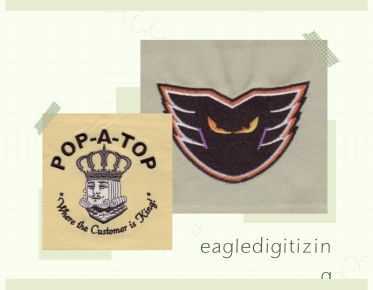
A pivotal difference comes down to the amount of detail and layering in a logo. For example, a company crest with ornate elements, gradients, and tiny text can challenge even the most advanced embroidery machines when stitched straight onto apparel. While powerful embroidery digitizing services can interpret many digital artworks into machine-readable files, there are limits to how finely threads can be layered before “muddying” the image or causing unsightly puckers in the garment. Patches, created separately and then affixed, can be stitched with denser detail and complex backgrounds on a stabilizing base that simply isn’t possible on a thin shirt or cap fabric.
Fabric Types and Their Impact on Results
The choice of base material is another decisive factor. Heavier fabrics, like denim jackets and canvas tote bags, can accommodate complex logos stitched directly. But lighter garments—such as silk blouses, sports jerseys, or breathable polos—may distort under dense threadwork, stretching or warping with every wash. A patch, built on a sturdy base, adds reinforcement and preserves the integrity of both logo and garment.
When Color Matters: Achieving Vibrancy and Consistency
Color is central to identity. Companies often invest heavily in developing custom hues; consistency matters. Direct stitching can sometimes limit color vibrancy because the color of the underlying fabric will often blend with thread colors. Badges and patches, however, start with a customized twill, felt, or woven base—selected to complement or fully match brand standards. Here, intricate embroidery digitization brings logos to life with exceptional color fidelity, layered textures, and even effects like metallic thread or 3D puff.
Flexibility and Efficiency in Mass Production
Handling hundreds or thousands of garments for a special event, employee uniform rollout, or promotional campaign? Patches offer unparalleled efficiency. They can be batch-produced and then attached as needed, streamlining inventory and reducing production bottlenecks. If a logo, slogan, or award designation changes, only the patch must be swapped—not the entire garment. This flexibility is a major reason that organizations from national scout troops to Fortune 500 companies employ patches for their evolving branding requirements.
Wear and Longevity: Patches as Protectors
Clothing items endure heavy wear, especially uniforms and sportswear. Directly embroidered logos, particularly those with dense stitching, can cause localized fabric stress and potentially lead to ripping or fraying over time. Badges and patches, thanks to their reinforced base and edge finishes, can greatly enhance longevity and durability. Furthermore, when garments eventually wear out, patches can be carefully removed and transferred, promoting sustainability while preserving the investment in custom branding.
Freedom in Shape, Finish, and Placement
Badges and patches can be laser cut into virtually any shape, with edge treatments ranging from classic merrowed edges to sleek heat-cut borders. Beyond circles and rectangles, logos can become shields, arrows, mascots, or stylized script—adding visual excitement and dimensionality. Direct stitching, on the other hand, is often restricted by the limitations of hoop sizes, fabric placement, and the need for clean, even stitching at garment edges.
Scenarios Where Direct Stitching Shines
Of course, direct embroidery remains a powerhouse for strong, simple logos—think bold text, uncomplicated icons, or single-color motifs. A direct stitched logo can imbue a garment with a premium, custom feel that’s hard to match. For high-end polos, business shirts, or minimal monograms, it’s often ideal. Top-tier digitizing companies in usa support designers in optimizing every pixel for flawless outcome on a multitude of fabric types.
The Role of Eagle Digitizing: Bridging Creativity and Technical Excellence
With over two decades of proven expertise, Eagle Digitizing stands at the intersection of art and technology in the embroidery sector. The team delivers a diverse array of services, from embroidery digitizing for left-chest logos and caps to jacket backs and promotional patches. Their skilled professionals consistently adapt to the complexities of detailed logo work, offering personalized revisions, fast turnarounds, and a dedication to customer satisfaction that small and midsize businesses rely on nationwide. Leveraging both advanced software and a craftsman’s eye, Eagle Digitizing’s meticulous attention to detail ensures vibrant, accurate, and robust results—whether your project calls for a sharp patch or a subtle direct stitch. Their solutions are designed not just for fashion brands but also for corporate gifts, event promotions, teamwear, and more, tailored to the evolving needs of the market.
Creative Trends Shaping Tomorrow’s Logo Applications
As fashion and branding continue their fast-paced evolution, the synergy between digital technique and tactile artistry grows ever stronger. Innovative developments in embroidery digitizing services in usa allow for seamless translation of digital creativity into embroidered reality. With increasing focus on sustainability, wearable technology, and personalization, the demand for logos that deliver both impact and flexibility is set to rise. Patches enable easy garment repurposing or recycling, while direct stitching is becoming ever more advanced with the latest software-driven precision.
Practical Considerations for Decision-Makers
If you’re tasked with selecting the best technique for your next apparel or branding project, start with a clear understanding of your logo’s complexity, intended garment type, and end-use scenario. Consult an experienced digitizing team early in the process; their insight can reveal potential challenges and solutions you might not anticipate. Don’t underestimate the benefits of well-produced badges and patches—particularly for multi-purpose, high-wear, or frequently changing applications. At the same time, recognize the refined appeal and tactile advantage of direct embroidery for certain items and settings.
A Forward-Looking Perspective: Innovation at the Heart of Embroidered Branding
The story of logos, badges, and direct embroidery is one of adaptation and innovation. As digitization pushes the bounds of what is possible in thread, creatives and brands alike are empowered with ever more choices in how their identity is seen, worn, and remembered. The interplay of tradition, technology, and visual storytelling will continue to define the market—offering exciting possibilities for those with vision and the partnership of the right experts. In the dynamic landscape of logo application, what new forms and functions might we see next? For anyone invested in leaving a lasting impression, staying close to these advances means staying ahead in the art and science of embroidered branding.