
Why Are Brands Paying More Attention to Whether Their Logos Stay Clear at Small Sizes?
In the digital world where visual elements dominate how audiences connect with brands, the clarity of a logo—no matter the size—has never been more vital. Walk down the street, scroll through any social media feed, or even peel back the corner of a business card, and you’ll see logos of all shapes and sizes, each vying for your attention. What sets the most memorable brands apart is not just their color or creativity, but their logo’s unyielding clarity, whether billboard-big or thumbnail tiny.
The New Digital Frontier: Micro-Branding in a Pixelated World
Years ago, a logo only needed to look sharp on a storefront sign or letterhead. Today, those boundaries have dissolved. Modern brands exist on Instagram profile pictures, mobile apps, smartwatch screens, product packaging, and favicon icons in web browsers—spaces rarely more than a few millimeters wide. Companies now recognize that vector art services empower them to create logos that remain crisp and unmistakable at sizes once deemed trivial. This shift signifies a broader understanding: your logo must perform perfectly across all digital touchpoints, or risk being diluted in consumers’ minds.
Minimalism and Versatility: Keys to Logo Longevity
At the heart of this focus is the concept of minimalism. The era of overly detailed, intricate logos is giving way to simplicity. Clean lines, bold sans-serif lettering, and limited color palettes rule the landscape. Why? Because the simpler the design, the more readable and adaptable it becomes at every scale. Minimalist logos don’t just look modern—they translate into universal icons that thrive from storefronts to smartphone screens.
Versatility is crucial for brands aiming to maintain consistency, no matter how consumers interact with their name. A logo that scales with clarity supports brand recognition instantly—not just for the web-savvy customer but also for those glancing at a product on a crowded supermarket shelf.
Why Do Logos Lose Clarity?
Logos often lose their clarity due to raster graphics limitations. Raster images are made of pixels, so when you scale up or down, pixelation and blurring become inevitable. This effect is magnified at small sizes, where complex details, thin lines, or subtle gradients start disappearing altogether. Brands want to avoid the risk of their logo becoming indecipherable as a tiny social media avatar or disappearing entirely on custom labels.
The Power of Vectorization Services
To combat the clarity problem, companies are turning to vector conversion service specifically designed to make brand assets scalable and future-proof. Vector files use mathematical equations to create shapes and lines, meaning they never lose quality, no matter the size. Branding teams, freelance designers, and marketing agencies are leveraging these services to ensure their identity is locked in crisp fidelity across any and all media.
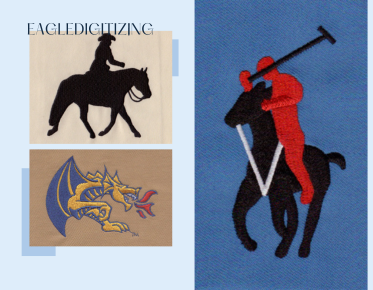
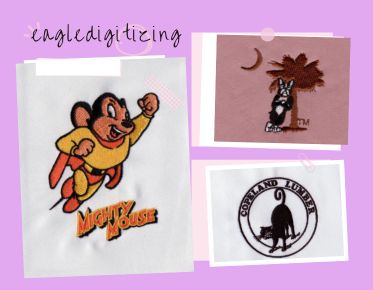
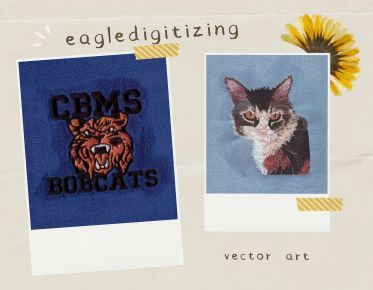
Leaders in this field, such as Eagle Digitizing, utilize the latest software and a team of specialists who understand how to adapt complex imagery into scalable asset forms. Whether for heat press printing, web use, or high-res banners, they make sure every brand gets the sharpest rendition possible while maintaining creative intent. This is especially valued by businesses ranging from custom t-shirt stores and embroidery services to marketing agencies and packaging companies, all of whom rely heavily on high-quality, adaptable branding materials.
Small Sizes, Big Impact: The Ubiquity of the Logo
Consider the smartphone home screen. App icons are rarely larger than a fingernail, yet they must stand out among dozens—sometimes hundreds—of competitors. Even a millisecond’s recognition time gain can lead to better brand recall, more app opens, or increased conversions. The rise of wearable tech like fitness trackers and smartwatches has only underscored the necessity for logos to look perfect on miniature displays.
In many cases, businesses also use micro-versions of their logos for favicons (the small icons in browser tabs) or social media avatars. Without careful design, these iterations risk muddling together, causing loss of trust and failing to communicate the brand’s value proposition effectively. This is why many brands commission artwork vectorization service to create multiple logo variants suited for various uses while ensuring every single version remains visually consistent and effective.
Advanced Techniques and Tools Shaping Logo Clarity
Advancements in design tools and the proliferation of digital platforms have fueled the demand for vector art conversion services. By leveraging modern software, brands can easily transition from raster to vector, achieving multiple export formats—SVG, EPS, PDF, and more—to guarantee clarity on both digital and print media. Service providers often include options like color separations for logos, enabling effective print on multiple materials while retaining vibrant hues and contrast, even at reduced sizes.
Such adaptability is important not only for massive corporations but also for small businesses—gift shops, sports teams, schools, and event organizers—ensuring their image projects professionalism everywhere it appears.
Accessibility, Personalization, and the User Experience
Another driver behind the focus on scalable, legible logos is inclusivity. Ensuring text and iconography remain readable at small sizes helps brands communicate more effectively with diverse audiences, including those with visual impairments. Personalization also plays a major role. As brands adapt their logos for special campaigns, holidays, or partnership events, the underlying vector file allows easy tweaks without harming quality.
In the world of eCommerce and print-on-demand, a logo needs to look flawless on everything from a mug to a 70-inch banner. This is why services such as Eagle Digitizing don’t just provide quick logo vectorization service—they also offer tailored solutions like background removal, color correction, and custom vectorization for any format or product application required. Clients praise the efficiency, high-quality results, and nearly perfect customer satisfaction rates of such specialist providers, especially for projects with tight deadlines that can’t compromise detail.
Practical Applications: From Print Shops to Digital-Only Brands
Whether you’re running a small print shop or managing a global enterprise, the reality is the same: logos travel across more mediums than ever before. Custom vector art services help bridge the gap between traditional signage and digital emojis, between laser-printed stickers and viral YouTube intros. Flexible, responsive branding is no longer a luxury—it’s vital for businesses that want to thrive amid constant visual competition.
From product boxes and clothing lines to vehicle wraps and corporate presentations, the ability to reproduce a logo in myriad scenarios is directly linked to a brand’s credibility and cohesion. For those seeking a seamless experience, companies like Eagle Digitizing stand out for their rapid turnaround and capacity to handle detailed, intricate vectorizations that scale up to the largest format without loss of nuance or vibrancy.
The Next Evolution: Logo Design in a Dynamic Ecosystem
As technology continues to evolve—think foldable screens, augmented reality interfaces, or ultra-high-resolution monitors—the challenge of maintaining logo integrity will only intensify. Brands must anticipate future needs, making scalable, simple, and flexible design a core principle of identity creation.
This means working with partners who offer comprehensive vectorization services and understand the balance between distinctiveness and adaptability. The emergence of AI-powered design tools and new vectorization software will only accelerate these standards, giving brands even broader reach and reassurance that their image shines at every pixel.
Actionable Insights: Building Enduring Visual Identities
Brands serious about their presence can benefit from regularly auditing their visual assets. Take time to evaluate how your logo looks across every format—digital and physical, macro and micro. If detail vanishes or legibility slips, consider engaging expert vectorizing service for a comprehensive refresh. Don’t overlook the value of color separations, variant development, and tailored outputs to suit every channel.
Rely on customer-oriented partners like Eagle Digitizing, known for understanding the need for speedy, reliable, and high-fidelity vector art. Their suite of offerings—raster to vector conversion, vector logo design, mockups, and advanced editing—caters to everyone from independent designers to multinational marketing departments. The best partners don’t just provide technical solutions; they become collaborators in protecting and amplifying your brand’s visual story.
Looking Forward: The Challenge and Opportunity of Small-Scale Branding
As digital devices grow smaller and screens become more central to daily life, brands are challenged to adapt their visual identities with unprecedented attention to detail. The logos that succeed tomorrow will be those conceived and refined through scalable design thinking—prioritizing clarity, flexibility, and the ability to look fantastic anywhere and everywhere. Companies that act today to future-proof their branding processes will hold a distinct advantage, ready to meet consumers’ eyes with sharp, vivid energy at any scale.
How will your brand meet the challenge of miniature marvels and maintain absolute clarity as technology shrinks the world? The opportunity is immense for those willing to invest in lasting, scalable design—securing their legacy for every logo, big or small.