
Why Can’t Print-Ready Vector Files and Social Media Display Images Be Used Interchangeably?
When it comes to digital design, the difference between print-ready vector files and social media display images is profound. It’s not unusual for new business owners, graphic design clients, and even some marketers to assume these files can be used interchangeably. After all, both display a logo, a banner, or a design on a screen and can easily be attached to emails or uploaded as files. However, this assumption often leads to unexpected quality issues, problematic marketing material, and time-consuming fixes. To truly understand why these formats serve unique purposes, one must first appreciate how vector and raster graphics work, how commercial printing standards vastly differ from web requirements, and why professional vector art services exist in the first place.
Designing for print and designing for digital platforms are fundamentally different tasks, each governed by distinct technical requirements and industry expectations. While a vibrant JPEG or PNG might look flawless on your Instagram feed, the same file likely won’t make the cut for a crisp, color-accurate brochure or a large-format banner. Using print-ready vector files for display images—or attempting the opposite—can undermine your branding, diminish the impact of your visual assets, and even affect the perception of your business’s professionalism. That’s why understanding the distinction isn’t just about technical accuracy; it’s vital for your brand integrity and marketing results. And if you’re searching for cost-effective ways to convert between these types, professional vector art services online have become more accessible than ever.
Understanding the Core: What Are Vector and Raster Files?
At the heart of the difference between print-ready vector files and social media display images is the way these images are constructed.
Vector Files: The Backbone of Print-Ready Graphics
Vector files—think AI, EPS, SVG, PDF, and CDR formats—are constructed by mathematical equations rather than pixels. The advantage here is scalability; a vector can be resized infinitely without any loss of quality. This makes vectors the gold standard for print, ensuring that logos on both business cards and billboards come out sharp, without jagged edges or blurriness. Vector files are also editable and often designed with printing specifications in mind, such as color separation for screen printing or spot-color management.
Raster Images: Optimized for Digital Displays
Raster or bitmap images (such as JPEG, PNG, or GIF) are made up of tiny squares of color, commonly known as pixels. These images are optimized for screens—websites, social media, mobile apps—because monitors display images in pixels. The trouble comes when you try to stretch a raster image beyond its original size: pixelation occurs, and your once crisp design becomes fuzzy. Raster images are often limited to RGB color space and lower resolutions suitable for fast web loading, making them less than ideal for professional printing scenarios.
Technical Differences: Resolution, Color Modes, and File Handling
A huge part of why vector conversion services are indispensable is the technical gap between raster and vector files. Print-ready files require a minimum resolution—often 300 DPI (dots per inch) or higher—to appear smooth when produced on paper, fabric, or merchandise. Social media images, in contrast, optimize for quick loading at 72 DPI, sacrificing print clarity for online speed. Color handling is another division: printing uses CMYK color profiles while digital displays run on RGB. Sending an RGB image to a professional print shop can lead to unwanted color shifts, dull tints, and inconsistent branding.
Furthermore, many commercial printers require files in vector formats, as these are easier for prepress adjustments, color separations, and ensuring fidelity across various substrates. Attempting to use a raster file—even a high-resolution one—for these processes often results in additional conversion costs or, worse, a rejected job.
The Dangers of Using Files Interchangeably
The potential pitfalls of treating print-ready vector files and social media display images as substitutes become evident at almost every stage of a marketing campaign. Imagine supplying your printer with a PNG logo that worked well for your Twitter profile; what you’ll likely get back is a pixelated, unattractive print that fails to represent your brand reliably. Conversely, if you try to upload a detailed EPS or AI file to your website without rasterizing it, browsers may not display the image at all, and your site’s performance could be affected.
Vector files are designed to interact with specialized commercial software, providing layers, editable paths, and print-accurate information (like bleeds and trim marks). Social media files are usually flat, single-layered, and compressed for quick viewing but are stripped of print-critical data. Confusing the two is a recipe for inconsistent visual presentation and costly do-overs.
Professional Solutions for the Modern Business
Modern marketing demands flexibility and cross-platform consistency—but this doesn’t mean a one-size-fits-all file solution is possible. Businesses looking for effective conversion between raster and vector must rely on specialized vectorizing services that bridge the gap. These services are more than just “file converters”—they involve re-drawing artwork, adjusting color modes, ensuring all graphical elements are suitable for press, and supplying files in all required formats.
This need has led to a rise in professional services that specifically handle raster to vector conversion, logo redesigns, and the crafting of marketing assets tailored for their end use. Such services are a worthy investment for anyone who values their brand’s visual identity.
Streamlined Vector Art Conversion: Eagle Digitizing’s Role
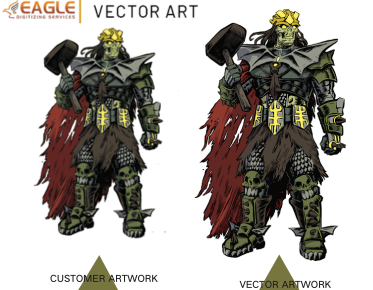
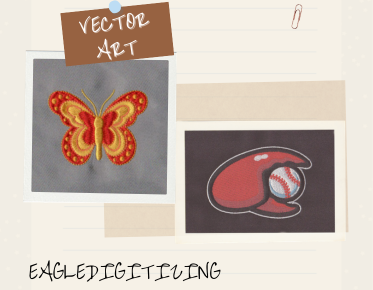
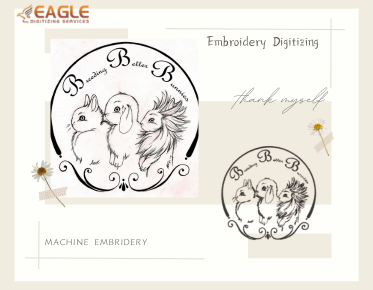
As the world of digital and print marketing becomes more interconnected, Eagle Digitizing has positioned itself as a leader in providing affordable, fast, and accurate vector art conversion services. The company excels in transforming client-submitted images—no matter how low quality—into sharp, scalable vector files suitable for any printing application. Eagle Digitizing harnesses a skilled, diverse team capable of delivering everything from simple raster to vector conversions to advanced color separations and graphic mock-ups.
Their approach is tailored to meet the demands of small to midsize businesses, print shops, apparel brands, and marketing agencies. Eagle Digitizing’s workflow ensures print-ready artwork within 2–24 hours, coupled with flexible, transparent pricing. Beyond just logo conversion, their services cover background removal, drop shadows, product graphics, and format flexibility (providing files in SVG, AI, EPS, PDF, DXF, and CDR, among others). The high customer satisfaction rate reflects their commitment to quality, with repeat clients ranging from custom t-shirt stores to large-scale marketing agencies.
Whether you run a local print shop, a design agency, or are an entrepreneur launching your new brand, partnering with a reliable vectorizing team like Eagle Digitizing can save time, minimize errors, and elevate the quality of your output.
Industries and Applications: When Vectors are Essential
Many businesses and creative professionals wonder what scenarios absolutely require professional vector files. Print shops, custom apparel brands, packaging supply companies, signage manufacturers, and marketing teams routinely rely on vectorized artwork for projects like t-shirts, cards, banners, decals, and advertising displays. Without true vectors, none of these applications can achieve the crisp lines and scalable detail expected by customers. Even industries invested in embroidery, sportswear, large format advertising, or event signage find their workflow streamlined with properly prepared, editable vector files.
Social media, on the other hand, calls for lightweight, fast-loading images that are visually engaging but typically disposable in context. The priorities here are not scalability or precision but color vibrancy and the ability to conform to numerous digital aspect ratios and size constraints. Trying to use a massive print-ready file on a social platform can cause unacceptable loading times, poor display results, and a general disconnect from the platform’s technical requirements.
Optimizing Conversion: Best Practices
If your business frequently repurposes designs for both print and digital media, establishing clear processes for file naming, version control, and asset management is crucial. Work with designers or agencies that understand the unique demands of each medium. Insist on master vector files for all logos and key branding elements so that you can always downsize or rasterize assets as needed. Only use web-optimized versions for social platforms.
Never simply save a raster as an EPS or PDF and assume it’s print-ready. Professional vector art conversion services can redraw your artwork, ensuring that it meets every requirement for both digital and print platforms. With rapid online ordering and short turnaround times, such specialized solutions are more practical than ever.
Looking Ahead: Evolving Demands and Smart Design Strategy
In an era of rapidly shifting branding environments and ever-more sophisticated design tools, the boundary between print-ready vector files and social media display images will continue to demand attention. As printing technology and online platforms evolve, so too will the requirements for artwork preparation, quality assurance, and conversion workflows.
Forward-thinking brands and organizations invest in robust asset management and consistently leverage expert services to maintain their visual integrity. As augmented reality, large-format printing, and new social media formats emerge, businesses that understand these foundational differences—and plan accordingly—will stay ahead in both efficiency and brand presentation.
Navigating the interplay of print and digital design requires both technical knowledge and insight. By recognizing that one file format simply cannot serve every need, marketers, business owners, and creatives can ensure their brand always looks its best—no matter where it appears. Are you ready to elevate your visual assets with professional care, or will the hazards of mismatched files hold you back as your brand grows?