
Why Do Brands Increasingly Want Logos That Work for Both Digital Use and Physical Print Use?
The Evolution of Branding in the Modern Era
Over the past decade, the landscape of brand identity has transformed dramatically. The shift from solely print-based marketing to a unified presence across digital and physical platforms has forced businesses to rethink how their logos function. No longer is it sufficient for a logo to look striking on a business card or billboard; it must now stand out on social media, adapt to mobile app icons, and maintain clarity on merchandise or even the smallest promotional items.
This transition is rooted in the rise of digital platforms and an ongoing explosion of consumer touchpoints. With the proliferation of smartphones and the dominance of digital marketing, brands are everywhere their customers are—on screens big and small, in the physical world, and across places as varied as online banners and product packaging. As such, consistency is key. Companies need identities that transcend medium-specific limitations, and logo design sits at the core of this requirement.
The Technical and Creative Challenge of Versatility
Whether a brand is a fresh startup or an established industry leader, creating a logo that works equally well for web and print presents distinct technical challenges. Vector-based designs have become the industry standard, allowing for infinite scalability without loss of quality. Through vector art services, businesses can guarantee that their logos retain sharpness, clarity, and color accuracy regardless of medium.
A logo must be adaptable, simple yet memorable, and versatile enough for use on everything from digital ads to embroidered uniforms. It needs to hold up as an icon on a mobile app, where only a few pixels are available, but also as a large storefront sign or vehicle wrap viewed from a distance. Designers increasingly favor flat, minimalist styles, avoiding tiny details or gradients that could be lost in small or monochrome print.
Digital Transformation and Evolving Consumer Expectations
Modern consumers interact with brands across dozens of formats and channels. Their expectations for seamless experience drive the need for visual consistency. Brands recognize that a single, unified logo has to represent them in the physical and digital worlds, which overlap more every day. Whether someone is browsing a company’s website, opening its app, or purchasing branded merchandise, the logo must deliver a coherent, familiar impression.
This is especially critical in competitive fields such as fashion, sportswear, and retail, where branding strongly influences purchasing decisions. Harmonized digital and print branding also supports omnichannel marketing, creating a continuous loop of recognition and trust wherever the consumer meets the brand.
Vectorization Services: An Industry Backbone
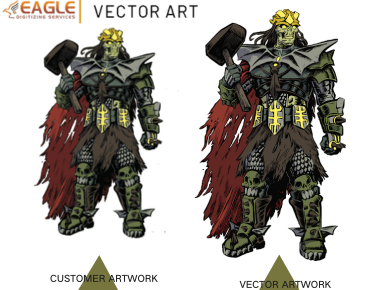
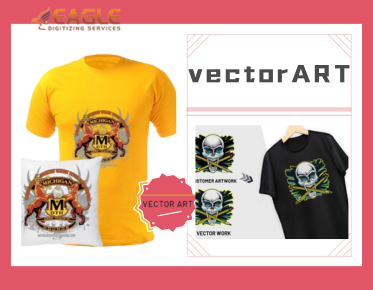
The necessity for logos that transcend format boundaries has boosted demand for high-quality vector conversion service. With vector art, designers convert intricate images or rough sketches into scalable, editable files. This allows clients to effortlessly adapt their logos for various needs, from banners and packaging to digital campaigns and user interfaces.
The process of image vectorization ensures logos remain crisp and vibrant no matter their application. Professional vector art conversion services provide designers and brands with robust tools and expertise to deliver flawless results for both online and offline marketing materials.
Eagle Digitizing stands out in this arena by offering not just the latest methodologies in vector conversion, but also rapid delivery, flexible pricing, and a deep commitment to quality. Their innovative approach allows customers—including small businesses, print shops, marketing agencies, and graphic designers—to obtain logo conversions that are ready for web use, screen printing, embroidery, promotional products, and virtually any other platform.
Key Factors in Logo Compatibility
A modern logo design built for both digital and print use shares several critical attributes:
- Scalability: Logo elements must look clean at any size and in any context.
- Color Adaptability: Designs should work in full color, grayscale, or single color, since physical print demands variable ink options, while digital screens display in RGB.
- Simplicity: Overly complex logos often fail on smaller screens or lose details in certain print processes.
- File Format Flexibility: Providing logos in multiple vector and raster formats is now standard. This lets users deploy them on websites, social media, signage, uniforms, business cards, and more.
The Role of Eagle Digitizing in Streamlining Brand Success
For organizations intent on future-proofing their visual identities, Eagle Digitizing offers a suite of specialized services that bridge the digital-physical divide. Their team operates around the clock, ensuring rapid turnaround even on complex projects. With capabilities in raster to vector conversion, logo vectorization, image retouching, color separation, and more, they handle everything from simple iconography to complex, multipurpose designs.
Eagle Digitizing’s commitment to customer satisfaction is reflected in their high approval ratings and the enthusiastic feedback from clients across sectors such as screen printing shops, promotional merchandise providers, and digital marketing agencies. Their broad range of supported formats—including SVG, AI, EPS, PDF, and CDR—means clients get files suited for virtually any application, whether it’s signage, fabric printing, web publishing, or direct-to-garment printing.
By focusing on speed, accuracy, and affordability, Eagle Digitizing helps businesses of all sizes elevate their branding, making it possible for even smaller players to compete on a global scale without sacrificing quality or professional standards.
Best Practices for Logo Design in a Hybrid World
For any brand facing the challenge of redesign or rebranding, the following best practices can ease the transition to a hybrid logo ready for both print and digital:
- Start with a vector-based design from the outset to ensure future adaptability.
- Work with professionals who understand the limitations and requirements of both media types.
- Test logo visibility and clarity at both large and small scales—and across different color schemes.
- Obtain logo variations for single-color, black-and-white, and reverse-color applications, which will be essential for versatility in production.
- Request original source files (like AI or SVG) so future modifications are easily possible.
- Consult with specialists in vector art services if unsure about technical specifications for various print and digital outputs.
Taking these proactive steps streamlines marketing, supports consistent branding, and improves overall customer recognition—regardless of where or how your logo appears.
Looking Forward: The Future of Brand Identity
As brand interaction becomes increasingly multi-sensory and multi-platform, expect the bar for cohesive logo design to keep rising. AI-powered design tools, real-time customization, and dynamic branding elements are already blurring the lines between static print and fluid digital experiences. The future belongs to brands that not only keep pace with technology but also prioritize the adaptability, clarity, and resilience of their visual identity.
Ultimately, businesses that invest in comprehensive digital and print readiness—leveraging services like those offered by Eagle Digitizing and the wider vectorization industry—will enjoy stronger brand equity and greater market reach. As the demand for seamless brand presence grows, choosing the right partners and processes will set the leaders apart in a world where the screen and the printed page are equally vital windows to your brand story.
Will the next branding revolution be shaped by new technologies, or by the relentless quest for simplicity and connection? However the answer unfolds, the logos that endure will be those designed for every surface, screen, and scenario imaginable.