
Why Can’t a Social Media Profile Image Usually Be Turned Directly into High-Quality Vector Artwork?
The digital world is dominated by visuals, and as such, images play a pivotal role in social media engagement and branding. Yet a common question arises when companies or individuals want to use their social media profile pictures for various promotional materials: why can’t these images be turned directly into high-quality vector artwork? The challenges associated with this conversion are numerous, grounded mainly in the fundamental differences between raster and vector graphics.
Understanding Raster and Vector Graphics
Most social media profile images are raster graphics. Raster images comprise pixels, tiny squares of color that together form a complete image. The resolution and detail of a raster image depend heavily on its pixel count. Enlarge a raster image, and the pixels begin to show, often resulting in pixelation and loss of quality.
Conversely, vector graphics are created using mathematical formulas defining paths and shapes through points, lines, and curves. This fundamental difference allows vector graphics to be scaled infinitely without quality deterioration, making them ideal for logos and other designs that need versatility across different sizes and formats.
The Limitations of Social Media Images
Social media platforms optimize images for web use, focusing on quick loading times and efficient use of bandwidth, which often results in lower resolution images. For example, Facebook and Instagram compress profile pictures, which may lose some intricate details in the process. When attempting to convert such low-resolution images into vectors, the reduced detail presents significant challenges.
Challenges in Converting Raster to Vector
Image to vector conversion involves vector tracing service, a process where software like Adobe Illustrator or Corel Draw traces the image to create paths but doing so with a low-quality or low-resolution image introduces challenges. These images lack detailed edges and nuances that software requires to produce a precise vector version. Furthermore, colors in a raster image might not translate accurately or smoothly to vector paths, leading to color banding instead of a gradient effect these images often possess.
The Role of Expert Vectorization Services
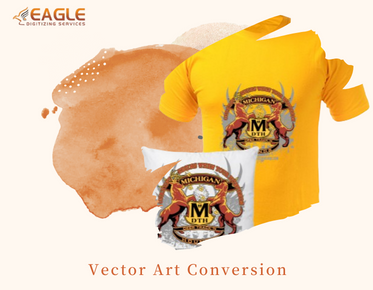
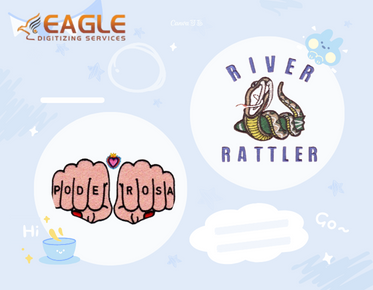
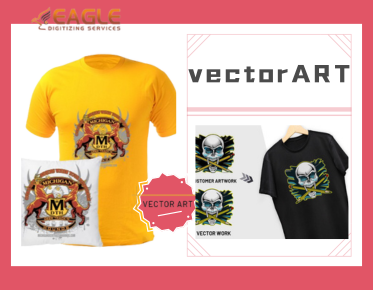
Professional vector conversion services can significantly aid in these scenarios. A company like Eagle Digitizing, renowned for its expert handling of raster to vector conversion services, provides detailed artwork solutions that assure quality. They skillfully trace images line by line to produce sharp, clean, and scalable images, equipped to handle intricate designs that retain the essence of the original artwork.
Technological Aids and Manual Proficiency
Vectorizing a complex image often requires a blend of automated tools and manual intervention. While software can handle simple shapes, the human touch is crucial in adjusting details that the software misses. Manual proficiency in this domain involves substantial expertise in using vector convertible software tools, a skillset often found within dedicated services.
The Undertaking of Color Accuracy
Color accuracy in vector conversions can be a complicated task, especially when dealing with multiple shades or complex gradients present in raster images. Many vector artists pay close attention to color segmentation, ensuring each detail is not just copied but translated into the vector space accurately. Vector conversion services such as vector art conversion services take deliberate measures to separate colors within layers, a feature typically employed in screen printing design to maintain quality and integrity across different production methodologies.
Options for Businesses Seeking Quality Vector Conversion
For businesses seeking high-quality vector images, investing in professional conversion services is often the most viable option. Companies like Eagle Digitizing not only offer vector conversion services but also provide tailored solutions according to specific client needs, ensuring the original image’s essence and quality remain intact across the conversion.
The intricate process of converting a social media profile image into a high-quality vector involves addressing challenges at various levels, especially when dealing with low-resolution, compressed images typically found on these platforms. As businesses continue to emphasize brand consistency and quality, finding reliable vector art services becomes crucial in transforming digital images into versatile and scalable assets for a myriad of applications.
Looking Forward: The Future of Image Conversion in Digital Branding
As technology advances, the possibilities for enhancing vector conversion processes will undoubtedly grow. Artificial intelligence and machine learning can potentially automate more aspects of conversion with greater precision, perhaps bridging the gap between raster limitations and the demands for high-quality vector outputs. This innovation revolution could make the quality vector conversion accessible and efficient, even for images with modest beginnings.