
Preparing One Logo for Social Media, Websites, Apparel, and Packaging
When it comes to branding, the power of a single, cohesive logo cannot be underestimated. As businesses expand their reach across digital media, physical products, and packaging, the challenge of preparing one logo for use on multiple platforms becomes increasingly complex. Each environment, from a tiny social media avatar to massive product packaging, carries unique technical and aesthetic demands. In today’s ultra-competitive marketplace, your logo is often the first point of contact between your brand and potential customers. Preparing your logo to shine consistently everywhere — social media, websites, apparel, and packaging — is a modern necessity that blends design intelligence with practical business strategy.
Understanding Logo Versatility
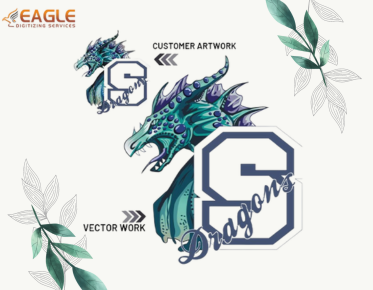
Your logo is more than just a beautiful graphic; it is the visual manifestation of your brand’s personality. To ensure that your logo is effective across platforms, it must be designed with versatility in mind. Versatility in this context means your logo looks great whether it’s printed on a t-shirt, displayed on a YouTube banner, or splashed across a cardboard box. This starts with the fundamentals of vector art services, which allow your logo to be resized infinitely without any loss in quality. A vector-based logo is the gold standard for ensuring sharp, crisp presentation, regardless of format or medium.
The Technical Foundation: Why Vector Matters
At the heart of cross-platform logo preparation is the process of vectorization. Unlike raster images, vectors are crafted with mathematical precision, making them scalable and adaptable. Relying on vector conversion service providers enables you to produce logos that can be adjusted to any size, from a favicon to a billboard, while maintaining color and detail integrity. This technical foundation is essential when your logo will appear on vastly different materials — fabric, plastic surfaces, digital displays, or even embroidered patches.
Optimizing Your Logo for Social Media
Social media platforms often require avatars and headers, each with their own aspect ratios and resolutions. The modern audience consumes information fast, so your logo must be instantly recognizable even at very small sizes. Here are a few tips for social media optimization:
- Simplify where possible: Overly complex elements disappear or become blurry at small scales.
- Test reversibility: Make sure it works on both light and dark backgrounds, as some platforms use varying background shades.
- Prepare square, round, and rectangular versions, as different sites impose different shape constraints.
- Ensure legibility: Any text or intricate detail should be readable, even when reduced to a 40x40 pixel avatar.
True experts in vectorizing service know how to prepare responsive logo kits that include all necessary social media formats for seamless branding every time your audience encounters your content.
Adapting for Websites: From Icons to Hero Images
Your website is the digital home for your business, and it’s an environment where your logo will be seen in various roles: as a favicon, part of your navigation, main header, and in association with banners or watermarks. Here, logo flexibility is critical. SVG formats are preferred for the web because they enable fast loading and crisp rendering on all devices, including Retina and 4K screens. SVGs are lightweight, interactive, and can be easily animated or color-customized through code, adding to your site's visual appeal.
Keep in mind accessibility: Your logo should be accompanied by descriptive alt text so screen readers can describe your brand to visually impaired users. Additionally, make sure the logo's color palette provides enough contrast against your website’s backgrounds for all users to recognize your brand immediately.
Apparel: Print-Ready Designs for Every Fabric
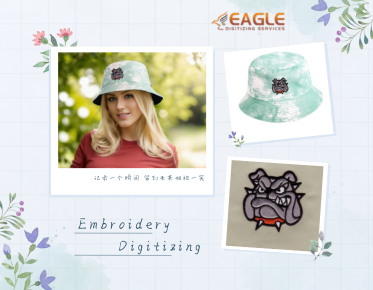
Apparel branding places special demands on your logo. The print process—be it screen printing, direct-to-garment, embroidery, or heat transfer—affects how your design translates onto fabric. High-resolution and meticulously separated color layers, as provided by high-quality vectorization services, ensure that your logo emerges with vibrancy and clarity on t-shirts, hats, jackets, and more. Techniques like embroidery also demand simplified, clean lines and often require raster-to-vector conversion for optimal thread path generation.
- Prioritize single- and two-color variations for cost-effectiveness and clarity.
- Avoid gradients and highly complex shadows, which can complicate embroidery and increase production time.
- Always review a physical proof or digital mockup before placing large orders.
Packaging: Unifying Your Brand on the Shelf
In the world of physical products, packaging is a silent salesperson. The logo printed on a product box, shopping bag, or shipping carton must stand out and drive instant recognition. Here, print processes often require specific file types like EPS, AI, or PDF. The logo files must be color separated, appropriately sized, and formatted for both digital and offset printing. Consistency of color and shape is crucial, as even subtle differences can dilute your brand identity.
Working with industry experts like Eagle Digitizing can streamline this process. Their team excels at preparing precise vector files, color separations, and production-ready artwork tailored for a broad range of media. Whether you need a logo mockup on a cardboard box or a digital banner for a product launch, their services cater to businesses of all sizes and industries, ensuring hassle-free and top-tier results every time.
The Professional Edge: Role of Eagle Digitizing
Securing consistency across all branding materials is easier with a specialized partner. Eagle Digitizing brings extensive expertise, offering not only vector conversions but also background removal, drop shadow creation, color adjustment, and product mockups. Their quick turnaround—often within just a few hours—paired with a 99.9% customer satisfaction rate and transparent pricing, makes them a provider trusted by thousands of businesses. From small print shops to national marketing agencies, Eagle Digitizing’s solutions cover everything from raster to vector conversion to advanced vector art for apparel, packaging, and promotional items.
Their service model—tailored for businesses looking for scalable, flexible, and quality-driven solutions—ensures that your logo is presentation-ready for any conceivable use, including those formats you may not even have considered yet.
Preparing Your Logo: Steps and Best Practices
- Design in Black and White First: A logo that works well in black and white will be stronger when color is added.
- Create Multiple Variations: Prepare horizontal, vertical, icon-only, and wordmark-only versions for flexibility.
- Export in Multiple Formats: Always have SVG, EPS, PNG, and JPEG versions at the ready.
- Establish Clear Space Guidelines: Maintain adequate “whitespace” around your logo so it isn't crowded by other elements.
- Retain Vector Masters: Always keep your original vector artwork safe and secure for future editing.
- Implement Responsive Logo Designs: These are logo variants optimized for display at different sizes and environments.
Common Pitfalls and How to Avoid Them
Even experienced designers sometimes bypass important details when preparing multi-use logos. Watch for these common missteps:
- Overcomplicating the Design: Complexity doesn’t equate to quality. Simple, bold logos adapt far better across platforms.
- Neglecting Color Conversions: What looks good on screen can differ greatly in print. Test your palette in CMYK for print and RGB for digital.
- Ignoring Minimum Size Requirements: Ensure all details remain clear at the smallest display size required.
- Relying on Raster Only: Using only JPEG or PNG files leads to blurry results when scaling. Always prepare true vector masters through professional image vectorization services.
Future-Proofing Your Brand with the Right Approach
Logo usage evolves with new media and customer touchpoints. Voice-activated systems, augmented reality, and the metaverse all hint at unpredictable display environments in the future. Businesses working with adaptable, expertly-vectored logos will be ready to dominate new platforms as they arise, ensuring their visual identity remains fresh and relevant regardless of where the brand appears.
In a landscape where digital and physical branding are converging, a future-proof logo is your best defense against obsolescence. Services like those offered by Eagle Digitizing stand at the intersection of art and technology, helping brands large and small stay one step ahead of industry trends.
Continuing the Branding Journey
With your logo properly prepared for every media environment, you can focus on building that crucial, emotional connection with your audience. Consider how emerging technologies, evolving consumer expectations, and new touchpoints could influence the way your logo is seen and experienced. What opportunities does dynamic branding unlock for your business? Are there trends in material science, digital platforms, or interface design that might inspire your next brand evolution?
By investing in comprehensive, forward-thinking logo preparation—and partnering with specialists in vector conversion service and digitization—you empower your brand to tell its story with clarity, consistency, and impact, wherever and however your audience encounters it.
.png "vector art service")