
Why Can’t a Social Media Profile Image Usually Be Turned Directly into High-Quality Vector Artwork?
The Nature of Raster Images in Social Media
Social media platforms predominantly use raster images due to their flexibility in handling a variety of visual content that is simple, colorful, and detailed. Raster images are composed of pixels, each holding specific color information. This pixel-based format makes it easy to create vibrant and complex images that are perfect for social platforms where photographic content is prevalent.
However, this format presents significant limitations when it comes to scalability. A key feature of raster images is that they lose clarity and sharpness when resized. This is particularly problematic when you consider converting these images into vector artwork, which needs to be scalable without any loss of quality. Vector images, conversely, are made of paths defined by mathematical expressions, allowing them to be scaled infinitely.
Challenges in Converting Social Media Images to Vectors
Turning a social media profile image directly into a vector artwork is challenging due to several reasons. Firstly, the resolution of most social media images is relatively low. Platforms compress images to minimize storage space and optimize load times. As a result, the details necessary for quality vectorization may not be present.
Secondly, because vectors are generated from mathematical paths, the original image's color gradients, shadows, and textures present in raster formats can be difficult to replicate precisely. Converters have to artificially reconstruct and translate these complex elements into clean, simple paths which can be extremely intricate and time-consuming.
The Process and Tools for Vectorizing Images
To convert raster to vector, specialized tools and software are required. These include Adobe Illustrator and CorelDRAW, which can trace paths and convert images line by line. This process often involves 'tracing' the image either automatically or manually. Manual tracing is frequently necessary to maintain precision and control over the final output, especially for complex images.
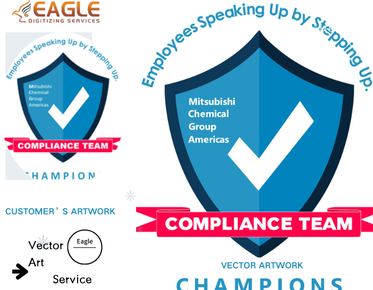
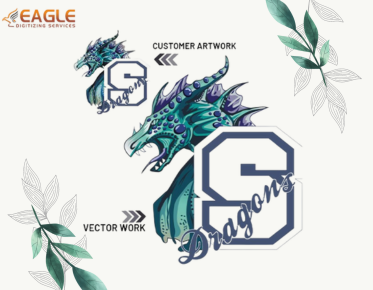
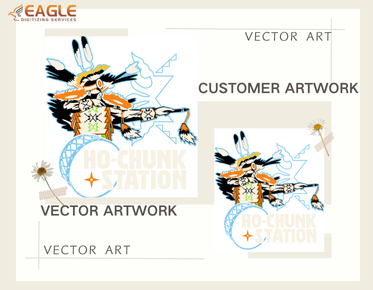
A meticulous process, image vectorization can benefit greatly from expertise. Services like Eagle Digitizing provide professional assistance in converting complex raster images into crisp vector graphics. Their services ensure that every detail is captured accurately, enhancing the quality of the final output.
Why High-Quality Vector Artwork Requires Expert Intervention
The successful conversion of social media images to vector format often requires expert intervention. Vector designers not only convert the image but also enhance and tweak the colors, refine the lines, and ensure the image meets professional and aesthetic standards. Platforms like Eagle Digitizing specialize in complex vectorization tasks, offering a range of vector conversion services tailored to client needs.
Additionally, customization is crucial in vector artwork. Each vector image needs to be adjusted to meet print requirements, which might include color separations, line adjustments, and ensuring the artwork adheres to specific design needs.
Valuing Quality in Vector Art Conversion
For businesses and individuals seeking to maintain high image quality, understanding the value of such services is essential. Not only does vectorization preserve the integrity of the original design, but it also ensures versatility for future use across diverse platforms and media—be it for embroidery, digital printing, or online display.
Platforms offering custom vector art services integrate this attention to detail with quick turnaround times, meeting both creative and commercial goals efficiently. The focus on customization, combined with state-of-the-art vectorizing techniques, sets apart amateur attempts from professional solutions in achieving top-notch vector artworks.
The Importance of Precision in Design
The conversion from a photographic raster image to a seamless vector graphic involves preserving the essence of the original while enhancing its design quality. Current trends in both technology and aesthetic preferences continue to drive innovations in the field, expecting ever-greater precision and realism in vector artwork.
As vectorization tools and techniques evolve, the future holds exciting prospects for achieving even more sophisticated and efficient conversion processes. Additionally, up-and-coming designers will find opportunities to push creative boundaries while adhering to higher standards in art vectorization.
Looking Forward: The Evolution of Vector Technology
The world of digital art and design is rapidly evolving. As we look to the future, we can expect advancements in software capabilities, leading to quicker and more precise vector conversions. Automating these processes further, without sacrificing quality, could revolutionize how individuals and companies approach vector artwork conversion.
Moreover, as businesses increasingly rely on high-quality visuals for marketing and branding, the demand for expert vector art services will continue to rise. This reliance will undoubtedly drive further innovation in vector technology, bringing us an era where maintaining the original image's integrity in vector form becomes more accessible to all.