
What details should be removed before embroidery digitizing?
Embroidery digitizing is an art form that involves converting artwork into a stitch file that an embroidery machine can read. This process requires precision and attention to detail to ensure the final product is accurate and visually appealing. To achieve this, certain elements in the original artwork may need to be adjusted or removed. Understanding these details is crucial for anyone looking to engage in or improve their embroidery digitizing skills.
Understanding Artwork Simplification
One of the primary steps in preparing an artwork for digitizing is simplifying the design. Complex and intricate details may not translate well into stitches, leading to a cluttered or unrecognizable final product. Simplifying involves removing these intricate elements to enhance clarity and focus on the essential parts of the design.
The Role of Colors in Embroidery Digitizing
Color variations can be a beautiful feature in digital designs but can pose a challenge in embroidery. Most embroidery machines have a limited number of thread colors to choose from, so reducing the color palette is often necessary. This doesn't mean compromising on the vibrancy of the design but rather focusing on having distinct and manageable color transitions
Background Removal
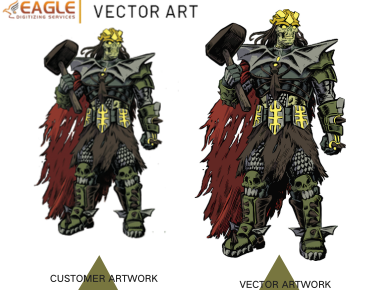
In many cases, the background of the artwork might not be needed for embroidery digitizing. Removing the background can help in focusing on the main design, making the digitizing process more straightforward. It is essential for creating vector art services online, where backgrounds are often left transparent to ensure versatility and focus on the subject.
Managing Fine Lines and Details
Fine lines and small details can often lead to embroidery issues such as thread pulls or breaks. It is important to examine the artwork and determine which fine lines can be incorporated without risking quality. In some instances, these lines can be thickened or simplified before the embroidery digitizing process.
Removing Unnecessary Text Elements
Not all text transfers well into embroidery. Fonts that are too small or ornate may lead to legibility problems. It’s recommended to remove or replace such text with simpler, more readable fonts that suit the embroidery process. Services like those offered by Eagle Digitizing can assist in choosing the right elements for suitability and aesthetics.
Cleaning Up Artwork
To ensure a smooth digitizing process, cleaning up any artifacts or noise from the original artwork is beneficial. This involves tidying up any stray marks or blemishes that don't add value to the design. In detail-oriented services like online vector conversion, elimination of such elements ensures a crisp and clear output.
Focusing on Essential Elements
Embroidered designs need to be discernible from a variety of viewing distances. Therefore, focusing on the core elements of the design is crucial. This focus ensures elements are bold and clear, leading to an end product that effectively communicates the intended image or message.
The Benefits of Professional Vectorization Services
Enlisting the expertise of professional vectorizing services can greatly enhance the readiness of your artwork for embroidery digitizing. Companies like Eagle Digitizing offer full-service solutions including vector conversion, ensuring every project is handled with precision and expertise, resulting in a high-quality output suitable for a wide array of applications. Their commitment to efficiency and attention to detail make them a valuable partner in achieving embroidery success.
As embroidery digitizing continues to evolve, maintaining a focus on simplicity and clarity while leveraging the assistance of professional services can ensure high-quality and lasting embroidered pieces, irrespective of the project's complexity or scale.