
Why Businesses Need Vector Files for Scaling Their Brand
In the dynamic world of digital branding, businesses need to stay ahead by leveraging modern tools and techniques that offer precision and scalability. Vector files have emerged as an indispensable resource for businesses aiming to establish a consistent and scalable brand image. This blog explores why vector files are critical for brand scaling and how businesses can benefit from their unique attributes.
The Power of Scalability in Branding
Scalability is a cornerstone of effective branding. It ensures that a brand maintains its visual integrity across various platforms and sizes—from business cards to billboards. Vector files, distinguished by their mathematical precision, offer infinite scalability without quality loss. Whereas bitmap images pixelate when resized, vector graphics retain their sharpness and clarity, making them the ideal choice for applications ranging from digital displays to printed materials.
Maintaining Consistent Visual Identity
A consistent visual identity is crucial for brand recognition. Vector files assist in maintaining this consistency by enabling seamless adjustments to logos, graphics, and other visual elements as they appear on diverse platforms. This adaptability ensures that whether it's a website banner or a product packaging, the brand’s elements appear uniform, enhancing recognition and trust among consumers.
Efficiency in Design and Production
Incorporating vector files into the design workflow enhances efficiency significantly. Designers can swiftly modify elements, change colors, and experiment with different configurations without starting from scratch. This flexibility is facilitated by vector art services that provide tools and expertise for transforming simple designs into comprehensive branding strategies. Not only does this save time, but it also reduces the cost associated with redesigning complex graphics.
Adaptability Across Various Media
One of the greatest advantages of vector files is their versatility across different media types. They can seamlessly transition from digital formats suitable for web and television to print formats needed for posters and flyers. This cross-platform adaptability ensures that businesses do not need to create separate files for each medium, thus simplifying logistics and reducing file management complexities.
Ensuring Brand Integrity with Vector Logo Conversion
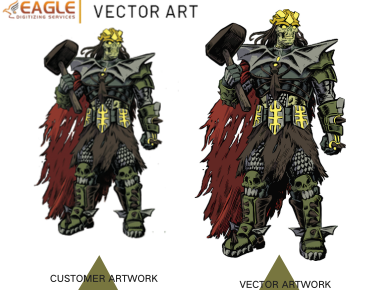
Vector logo conversion is a critical process for businesses aiming to uphold brand integrity. By converting logos into vector format, brands can ensure high-quality reproduction regardless of the output size. Reliable vector conversion services are instrumental in providing these high-fidelity outputs. This process aids in upholding the company's visual identity across multiple platforms, enhancing the brand’s visibility and prestige.
The Role of Expert Services in Vector File Creation
For businesses that lack in-house resources to create vector files, outsourcing to expert services can be beneficial. Companies like Eagle Digitizing specialize in vectorization and digitizing services, offering a range of options that include raster to vector conversion, vector tracing, and more. The professional quality and quick turnaround time these services provide are particularly advantageous for businesses requiring efficient and reliable solutions for scaling their branding efforts.
Strategic Advantages for Small to Medium Enterprises
While multinational corporations benefit from a uniform visual identity, small to medium enterprises (SMEs) can gain strategic advantages from vector usage. The cost-effective nature and flexibility of vector conversion tools make it accessible even to smaller businesses, ensuring they can compete on a visual level with larger competitors. This technological leverage can position SMEs more favorably in a crowded market.
Future Trends: The Increasing Role of Vector Graphics
As technology advances, the role of vector graphics in digital media is poised to grow. This trend is driven by the increasing demand for high-quality graphics across digital advertising, interactive media, and virtual reality. Businesses investing in vector files today are building a foundation for future-ready branding strategies. Engaging illustrators and designers who specialize in these graphics will become a staple for maintaining competitive edge in today’s digital landscape.
Exploring New Dimensions: Beyond Traditional Uses
While vector files are conventionally used for logos and graphical interfaces, their potential extends beyond. High-quality vector images are becoming essential for applications in augmented reality, AI-driven design tools, and personalized customer experiences. These emerging fields highlight the importance of vector graphics as more than just a format but as a core element of brand innovation. Businesses should explore how vector graphics can integrate into new technologies to create unique customer interactions.
As businesses consider their growth strategies, incorporating vector files not only aligns with preserving brand integrity but also opens up new opportunities for expansion and market differentiation. Embracing the power of vector files can thus be a decisive factor in achieving and maintaining a strong, adaptable, and forward-looking brand in today’s competitive business environment.