
Why the Same Vector File Produces Different Results at Different Print Shops
Vector files are lauded for their scalability and precision, making them ideal for various printing applications. However, a common issue arises when the same vector file yields different results at different print shops. These variations can be perplexing and frustrating for both the designer and the customer. Understanding why these discrepancies occur is vital to ensuring that your print jobs meet your expectations, regardless of where they are done. This article explores the key reasons behind these inconsistencies, providing insights into the complex world of vector file printing.
Understanding Vector Files
A vector file is a digital image created using mathematical equations instead of pixels. This allows for infinite scalability without quality loss, a feature highly desirable in printing. Common formats for vector files include EPS, SVG, AI, and PDF. These files are essential in many industries such as screen printing, digital printing, and promotional products. However, the translation of vector data to physical prints can vary due to several factors.
The Role of Software and Equipment
One of the primary reasons for differing print results is the software and equipment used by print shops. Different versions of the same vector software might interpret the file differently, leading to variations in output. Additionally, print shop equipment varies widely; some printers may use older or less advanced vector graphics converters, affecting the print quality and color accuracy. The calibration and maintenance of these machines also play crucial roles in determining the final output.
Color Management Challenges
Color management is another critical aspect that can influence print results. Vector files often include precise color data that must be accurately replicated during printing. However, discrepancies in color calibration between different print shops mean that a file might appear more vibrant or muted depending on the settings. Some print shops might not fully manage color profiles, leading to unexpected results when the vector file's colors are translated into a physical medium.
Differences in Printing Techniques
Various printing techniques can also result in different outputs. For instance, screen printing, digital printing, and laser engraving services each have unique processes and limitations. A vector file designed for one printing process might not yield the same results under another. Understanding which technique best suits your design is essential. Collaborating with the print shop can help ensure they use the appropriate method for your specific vector file.
Quality of Vector Conversion
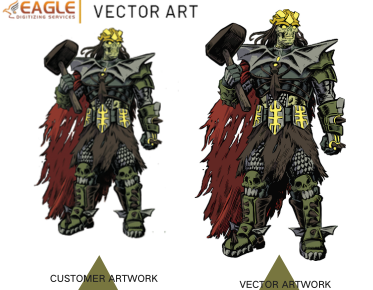
The quality of vector conversion plays a fundamental role in the final print outcome. At Eagle Digitizing, our focus is not only on creating scalable vectors but also on providing precise and detailed vectorization that captures the nuances of the original design. Our vector art services are crafted to work efficiently across various printing platforms, minimizing discrepancies and enhancing the reliability of prints. We ensure high-quality results by utilizing advanced techniques and software to keep the fidelity between digital design and physical output.
File Preparation and Expertise
The expertise of the personnel handling the file also significantly impacts the print quality. Inexperienced operators may not interpret the vector data correctly, leading to issues such as incorrect layering, misalignment, or unintended bleeding. It's essential to ensure that the individuals responsible for preparing the files for print are skilled in both the software and printing techniques. Service providers like Eagle Digitizing emphasize the importance of experience and skill in handling vector conversion services, thereby minimizing potential errors and delivering consistency.
Conclusion: Enhancing Print Consistency
To achieve consistent print results from your vector files across different print shops, consider these adaptive strategies: ensure your vector files are universally compatible by checking them on multiple platforms; select print shops with a strong track record and updated equipment; and collaborate closely with the printer to align on color profiles and printing techniques. By understanding these critical aspects, you can mitigate variances and achieve the desired visual quality in your printed materials. The pursuit of precision in vector file printing reflects a broader commitment to delivering impeccable design and customer satisfaction.