
Low-Quality Sketches: When Redrawing Is Better Than Vector Conversion
In the realm of digital art creation and reproduction, vector conversion often plays a crucial role in transforming images into scalable graphics without loss of quality. However, when working with low-quality sketches, there are cases where redrawing can offer a superior outcome over direct vector conversion. The decision between these two approaches can influence the final appearance and usability of the artwork, making it essential to understand the nuances and benefits of each method.
Understanding Vector Conversion
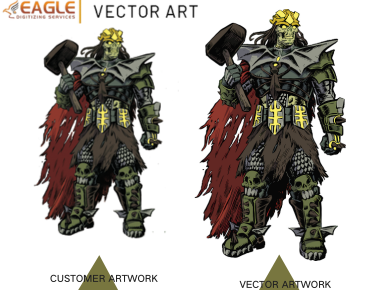
Vector conversion involves transforming raster images, which are composed of pixels, into vector graphics composed of mathematical paths. This method is widely used due to its ability to scale images to any size without pixelation. Yet, despite its advantages, vector conversion can present challenges when dealing with low-quality sketches that lack clarity or contain complex textures. In such cases, the conversion software might struggle to accurately interpret the lines and details, resulting in a loss of vital image characteristics.
Advantages of Redrawing
Redrawing, on the other hand, involves manually recreating the image using digital tools. This method allows the artist to enhance and refine details, correct errors present in the original sketch, and improve overall aesthetics. The human touch in redrawing ensures fidelity to the original artist's vision, which can often be compromised during automated vector conversion services. Additionally, redrawing provides the flexibility to make stylistic enhancements or to modernize the design according to current trends.
When to Opt for Redrawing
Complex Textures and Intricate Details
If the original sketch features complex textures or intricate details that are likely to be lost during vector conversion, redrawing may be the better option. Manual redrawing allows for precise control over each element of the design, which is particularly beneficial when working with artistic styles that require a faithful recreation.
Preserving Artistic Intent
Maintaining the original artist's intent and style is often of paramount importance, especially when restoring or reproducing artwork. Redrawing provides the opportunity to retain this stylistic essence, something that can be diluted during automatic conversion processes. For instance, artists might want to adjust line weight, color nuances, or other subtle elements to match the original closely.
Limitations of Redrawing
Despite its advantages, redrawing requires considerable time and skill. It demands a talented artist who can interpret the original work and reproduce it with accuracy. Furthermore, it may involve higher costs compared to standard conversion services due to the labor-intensive nature of the process. However, services like Eagle Digitizing provide highly skilled professionals who deliver exceptional results in redrawings and other vector art services at competitive prices.
Benefits of Eagle Digitizing in Redrawing and Vector Conversion
Eagle Digitizing distinguishes itself by offering a mix of advanced vector conversion services coupled with skilled manual redrawing expertise. Their team is adept at handling complex designs, ensuring that every project, whether vector conversion or redrawing, meets the highest standards. With a commitment to customer satisfaction, they provide services tailored to meet both simple and intricate design needs.
The Decision-Making Process
When determining whether to redraw or convert a low-quality sketch, the decision should be grounded in understanding the end-use of the image, the quality of the original sketch, and the resources available. For projects where ultimate detail and artistic fidelity are prized, redrawing may be the chosen path. Alternatively, for applications that require quick scalability without aesthetic compromise, vector conversion could suffice.
Considering Future Trends in Art and Design
As digital art continues to evolve, the tools and techniques for image recreation and enhancement are becoming increasingly sophisticated. Artists and technicians may need to consider integrating machine learning and AI-driven tools that could potentially bridge the gap between automated conversion and manual drawing to produce superior outcomes. Engaging with progressive services that stay updated with technological trends, like those provided by Eagle Digitizing, could prove advantageous for both current and future projects.