.png "vector art service")

What Makes a Vector File “Production-Ready” vs “Visually Acceptable”
Understanding Vector Files
In the world of digital graphics, vector files are instrumental across various applications because of their unparalleled scalability and precision. Unlike raster images, which are made from pixels, vector graphics are constructed using mathematical formulas, allowing them to be resized without compromising quality.
Visually Acceptable Vector Files
Visually acceptable vector files are those that meet aesthetic standards when displayed on screens or printed within a limited scope. They appear clear and sharp, capturing the viewer's attention. However, these files may not be optimized for all kinds of production processes. Their focus is primarily on the visual appeal over precision or conformity to strict production specifications.
Such files are often sufficient for digital marketing purposes or online presentations where stringent format and color consistency aren't as critical. However, if these files are incorrectly structured, they might pose challenges during printing processes, where specific requirements like color separations and precise lines are essential.
The Essentials of Production-Ready Vector Files
Production-ready vector files are developed with manufacturing processes in mind. These are meticulously crafted for applications where the design will be reproduced using precise tools and materials. Key characteristics of production-ready files include:
- Layering and Color Separation: Each color is clearly defined on separate layers, allowing for accurate reproduction in printing processes like screen printing.
- Rigorous Adherence to Specifications: The file aligns with exact specifications required by manufacturers, including dimensions, cut paths, and tolerance levels.
- Optimal Formatting: These files are usually available in industry-standard formats like AI, EPS, and PDF which are compatible with various production technologies.
- Error-Free Graphics: There is a high degree of detail in error detection and correction during the preparation of these files to ensure flawless output in production settings.
Factors Influencing Production Readiness
A vector file's readiness for production is determined by its detail orientation and technical composition. Elements such as path hierarchy, anchor points, and alignment must be precise. Additionally, the ability to trap colors and manage overprints are crucial for seamless production outputs. It’s imperative that these files undergo rigorous quality checks to ensure their readiness.
Use Cases: When Visual Appeal Isn't Enough
For projects involving detailed engravings, large format prints, or complex product packaging, being merely visually acceptable doesn’t suffice. These scenarios demand production-ready vectors that guarantee fidelity post-production. Any deviation can lead to substantial errors in the final output, impacting both cost and quality.
Integrating Eagle Digitizing Services
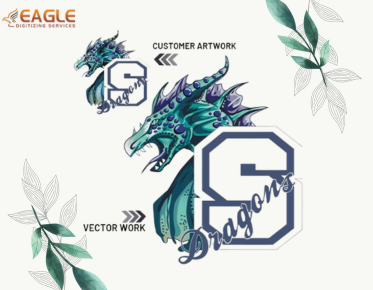
Eagle Digitizing offers extensive vector conversion services tailored to both visually acceptable and production-ready standards. The team’s expertise encompasses converting complex raster images to vectors, ensuring that every detail aligns with manufacturing protocols while also meeting aesthetic requirements. Businesses can leverage Eagle's services to transform their graphics into versatile production-ready assets that maintain appeal across various media.
The Seamless Combination of Aesthetics and Precision
While visually acceptable vectors prioritize appearance, production-ready files focus on function. By striking a balance between these two standards, vector graphics can achieve flexibility - maintaining aesthetic integrity while being robust enough for any production challenge they might encounter. As technology and design needs progress, understanding the balance and distinction between visual appeal and production readiness will empower graphic designers and manufacturing professionals alike.
As the demand for high-quality vector graphics continues to rise, how prepared are you to ensure your designs meet both visual and production standards?