
Why Vector Files Created for Screen Use Fail in Physical Printing
In the realm of graphic design, vector files hold a distinct place due to their scalability and precision. However, vector images created for digital screens often encounter challenges when used for physical printing. Understanding these issues is crucial for designers who wish to ensure that their designs look just as impressive on a physical product as they do on a digital screen.
The Nature of Vector Files
Vector files, unlike raster images, are created using mathematical equations to define lines, points, and curves. This allows for infinite scalability without the loss of quality. Common vector file formats include SVG, AI, and EPS. While vector files are ideal for logos and other scalable graphics, their application can vastly differ depending on whether they are used for digital screens or physical prints.
Differences Between Digital and Print Vector Files
One of the core reasons vector files created for screen use face issues during physical printing is due to the color profiles. Digital screens typically use RGB color models, which are based on light, while printing utilizes CMYK color models, based on ink. Converting between these two modes can result in color discrepancies. This conversion can alter the true appearance of colors, leading to unexpected color outputs on the final printed product.
Moreover, the resolution settings for digital and print usage also differ. While screens usually work with a lower resolution (72-96 DPI), printing requires a higher resolution (usually 300 DPI or more) to ensure clarity and detail. This distinction is crucial, as a vector image designed for screen use, when printed, might exhibit undesired blurriness or pixelation if not properly adjusted.Vector conversion service provider
Challenges in Printing Screen-Designed Vectors
When a digital-first vector file is prepared for printing, several technical elements must be altered. This includes outlining all fonts to avoid any font substitution issues during printing, which can sometimes occur if a printer does not support specific fonts embedded in the image file. Additionally, ensuring that all lines and strokes are appropriately scaled and converted is vital to avoid any mismatches between the expected and printed design.
The choice of colors and gradients within vector files also plays a significant role in their printing success. Subtle gradients and specific hues may translate poorly from screen to print, leading to a flat or muted appearance. Designers need to understand how certain colors will appear when rendered with ink and adjust their designs accordingly, often using test prints to verify their output before mass production.
Role of Vector Art Services
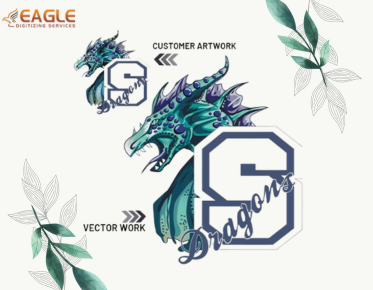
Services like those provided by Eagle Digitizing become indispensable when transitioning vector designs from screen to print. With expertise in converting and optimizing vector files, these services can manage the technical aspects of this transition. They offer solutions such as raster to vector conversion, ensuring that designs maintain their integrity across different mediums. Additionally, Eagle Digitizing provides tailored vector art services that accommodate both complex and simple tasks, assuring high standards in the final graphic's quality and precisionvector art services online
Best Practices for Preparing Vector Files for Printing
To minimize issues during the printing process, designers should adhere to best practices, such as using CMYK color settings from the start, ensuring all graphics and text are correctly scaled and outlined, and conducting comprehensive proofing to catch any discrepancies before final production. Leveraging professional services to convert, trace, and optimize vector images can substantially augment the quality of print-ready graphics. These efforts collectively enhance the continuity between digital designs and their physical printed counterparts.
Exploring Future Solutions
As technology grows, advancements in color science and printing technology are expected to bridge the gap between digital and print vector files. Improved software and equipment might allow for better color accuracy and higher fidelity when translating designs from screen to print. Simultaneously, ongoing developments in vector conversion tools could simplify the conversion process, reducing the margin for error online vector conversion.
By understanding the intricacies of vector file conversion and staying informed about emerging technological trends, designers can continue to create stunning visuals that retain their vibrant color and precise design, whether viewed on a screen or printed on a product.

.png "vector art service")