
How to Design Lightweight Vector Logos with No More Than 50 Anchor Points for Digital Applications
Understanding Vector Logos
Designing vector logos involves creating images that are not made up of pixels but rather paths defined by mathematical expressions. A vector image can be scaled infinitely without losing quality, making it ideal for digital applications like app interfaces, websites, and print materials. However, ensuring these logos have no more than 50 anchor points presents a unique challenge for designers looking to maintain simplicity and performance.
Importance of Keeping Anchor Points Minimal
Anchor points define the curves, angles, and lines within a vector graphic. The more anchor points a logo has, the more complex it becomes, which can affect how smoothly it renders on different devices. Having a minimal number of anchor points is crucial for maintaining the performance and scalability of these logos while ensuring they remain lightweight and efficient for various digital platforms.
Tools and Techniques for Creating Concise Logos
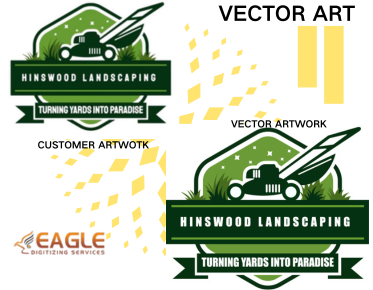
To design logos with restricted anchor points, you should use tools that allow precise control over each element. Applications like Adobe Illustrator and CorelDRAW offer powerful options for reducing complexity by simplifying paths. Among these tools, Eagle Digitizing stands out by offering specialized services such as raster to vector conversion and precise vector tracing to help minimize anchor point usage while delivering high-quality design outputs. Their service includes the ability to convert detailed images into elegant, simple designs that are well-suited for digital landscapes.
Guidelines for Designing Lightweight Logos
When crafting lightweight logos, start by conceptualizing the logo on paper or digitally without direct reference to the number of points you'll use. This initial phase should focus on broader shapes and forms. Next, employ digital tools to digitize your concept, gradually refining the complexity. Utilize features like pathfinder functions to merge shapes and remove unnecessary points. Services from Eagle Digitizing incorporate advanced techniques which include vector tracing and path simplification, ensuring your digital creations are both visually striking and efficient.
Practical Steps in Vector Logo Design
Begin by using simple geometric shapes that can be easily combined or altered. Leverage symmetry and repetition to create visually appealing designs without the need for multiple anchor points. Integrate flat design principles which focus on minimalism and functionality – emphasizing simplicity in elements, and encouraging designers to communicate ideas directly and unobstructed.
Additionally, designers should pay close attention to typography, opting for typefaces that complement the logo's simplicity without introducing excessive detail that could balloon the anchor point count. The expert work provided by Eagle Digitizing, which allows for custom tailoring of vector logos to meet this minimalistic requirement, ensures that the final product is both distinctive and functional across all desired formats.
Why Choose Professional Vector Services?
Opting for professional services like those offered by Eagle Digitizing not only enhances the quality of the final output but also ensures a seamless adaptation of your logo across different platforms. Professional vectorization guarantees the retention of intricate design aspects while keeping anchor points minimal, providing clarity and precision in digital representation.
Eagle Digitizing offers exclusive vector conversion facilities at competitive prices with a quick turnaround, targeting small to midsize businesses and catering to various industries such as screen printing, promotional needs, and digital content creation. Their dedication to efficiency, quality, and customer satisfaction can significantly aid in achieving a balance between aesthetics and functionality.
Encouraging Innovation in Vector Design
As technological advancements continue to pave the way for more dynamic and immersive digital experiences, the need for optimized graphics in applications intensifies. By mastering the art of creating lightweight vector logos with minimal anchor points, designers can stay ahead in delivering high-performance graphics that meet contemporary digital needs.
As we move forward, examining how these innovations influence design trends will be crucial. Designers should consider how evolving software tools and methodologies can amplify creativity and efficiency in vector graphic design, ensuring that every point within a logo serves a distinct purpose and enhances digital communication.