
How is AI-driven Vector Conversion Improving Accuracy and Speed for Designers?
In today's fast-paced design industry, the demand for efficiency without sacrificing quality is more pressing than ever. AI-driven vector conversion technology is at the forefront of these advancements, offering transformative benefits for designers across the globe. This technology is tackling one of the most time-intensive processes within the design workflow: converting raster images to vector formats. Through AI, designers are seeing improvements not only in the accuracy and precision of converted images but also in the speed and efficiency of conversion processes.
The Evolution of Vector Conversion
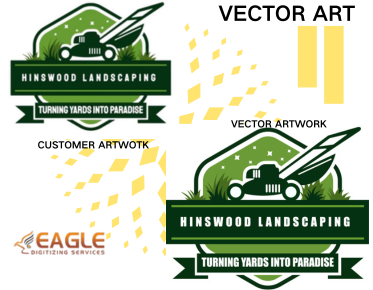
Traditional vector conversion is labor-intensive, requiring meticulous attention to detail as designers manually—often painstakingly—trace images. However, AI-driven vector conversion services provide automated solutions that replicate this detailed work much faster than any human could achieve. By learning from vast datasets and recognizing common patterns, AI tools can convert complex designs with greater precision and less manual intervention, significantly reducing the turnaround time for design projects.
Enhancing Accuracy through AI Intelligence
One of the primary benefits of AI in vector conversion is the enhanced accuracy it brings. AI algorithms are trained to recognize and replicate fine details that might otherwise be missed during manual conversion. For instance, intricate patterns and subtle gradients that are often distorted in traditional conversions can be accurately reproduced with AI. These advanced vector conversion services not only maintain the integrity of the original artwork but also improve the quality of the output.
Increasing Speed and Efficiency
Speed is a critical factor for designers who must adhere to tight deadlines in a competitive market. AI-driven tools can rapidly process large volumes of work without compromising on quality, allowing designers to complete projects more efficiently. The use of AI reduces the need for manual retouches, as the initial output is often closer to the designer's vision. Furthermore, services like Eagle Digitizing are known for their quick turnaround time, processing orders within 2-24 hours, which is a testament to the time-saving capabilities of AI technologies in vector conversions【4:0†source】.
Impact on the Design Workflow
AI-driven vector conversion not only impacts the technical aspects of design but also transforms the overall workflow. With mundane tasks now automated, designers can allocate more time to creative work, exploring new concepts and enhancing existing designs. The increased efficiency facilitates greater experimentation, pushing the boundaries of design innovation.
AI and the Future of Vector Art Services
The emergence of AI in vector conversion heralds a new era for vector art services. As technology continues to evolve, we can expect further improvements in speed, accuracy, and the breadth of capabilities that AI solutions can support. Future advancements are anticipated to enable more personalized and customized conversion processes, adapting to individual designer styles and preferences.
The synergy between human creativity and machine efficiency will likely set new standards for design quality and productivity in the years to come. As AI continues to develop, it poses intriguing questions about the potential for even more profound innovations in design processes. What new horizons will AI-driven vector conversion open for designers as the technology becomes even more sophisticated?