.png "vector art service")

Addressing challenges encountered when working with complex contours and details in graphics
Working with complex contours and details in graphics can often present unique challenges for designers and artists. The intricacy involved in such tasks requires both a keen eye for detail and a mastery of advanced digital tools. As the digital art landscape evolves, having a comprehensive understanding of how to efficiently manage such complexities can set your work apart.
Understanding the Complexity
The first step in addressing the challenges of complex graphics is fully understanding the nature of the graphic's complexity. Factors contributing to this complexity might include the number of layers within a graphic design, the intricacy of paths and shapes, and the nuance needed for shading and texture. Artists must carefully consider how these elements combine to create a piece that is both visually appealing and feasible to produce. Here, using tools such as vector art services online can be instrumental in achieving clarity and precision in design.
Vectorization as a Solution
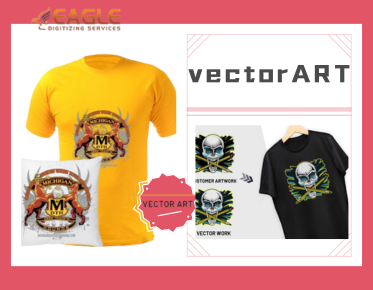
One effective solution for managing complex graphics is vectorization. Unlike raster graphics, which rely on pixels, vector images use paths defined by mathematical expressions, allowing them to be scaled infinitely without losing resolution. This characteristic is particularly beneficial when dealing with intricate designs as it ensures sharp edges and clean lines. Moreover, tools providing vector conversion services are invaluable for converting complex raster designs into vectors, maintaining quality across various outputs.
Advantages of Using Professional Services
Businesses like Eagle Digitizing specialize in converting intricate designs into clean, scalable vectors. They offer a comprehensive range of services that include everything from raster to vector conversion to color separation. Their expertise allows for a precise translation of complex designs into vector form without compromising on the original artwork's essence or detail. With top-notch proficiency and advanced software, such professional services enhance the efficiency of handling complex graphic designs.
Artistic Control and Creative Expression
While technical tools and services provide substantial support, the artistic process remains inherently creative. Balancing technical precision with artistic expression requires not only the right tools but also creativity and practice. Leveraging technological capabilities with platforms dedicated to image vectorization services can help preserve the integrity and creativity of the original design while accommodating technical necessities.
Future of Graphic Solutions
As technology continues to advance, the future of graphic solutions will likely see the integration of AI and machine learning to further facilitate the creation of complex designs. These tools promise the potential for automating processes that currently require manual intervention, potentially speeding up project timelines while improving accuracy. For designers, understanding the evolving toolset and continuing to hone their craft will remain essential in navigating upcoming developments.
Conclusion: Enhancing Inherent Skills with Technology
Solving the challenges presented by complex contours and details in graphics involves a synergy of creative skill and technological support. As digital tools for vector art conversion become more refined and accessible, artists are better equipped to bring intricate designs to life. This collaboration not only elevates their artistic vision but also ensures the delivery of impeccable quality to their audience. What new advancements do you foresee in the realm of graphic design, and how will they transform the way we understand and create digital art?
This HTML document provides a comprehensive exploration of the challenges and solutions related to working with complex contours and details in graphics, offering insights into current methodologies and future prospects in the field.