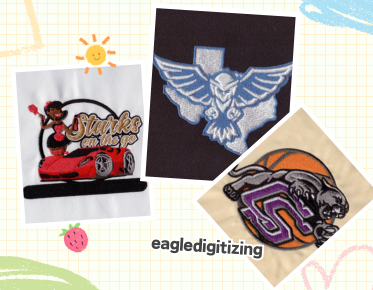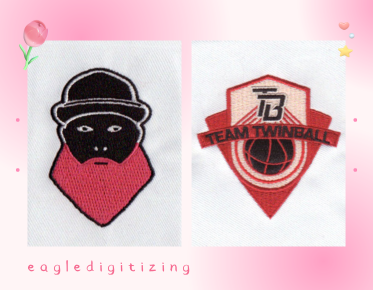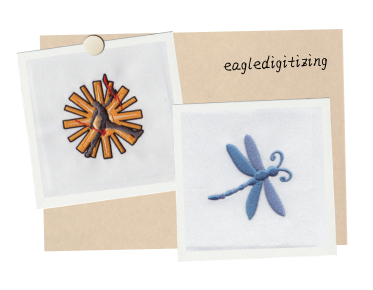

Why complex logos are better suited for patches or badges rather than direct embroidery
When a brand invests in visual identity, every line, curve, and color choice is supposed to tell a story. But the moment that artwork moves from a screen into thread, the rules change. A logo that looks polished in a vector file or on a mockup may become crowded, distorted, or visually diluted once it is stitched directly onto fabric. That is why embroidery digitizing for patches often becomes the smarter path for intricate emblems, small type, layered illustrations, and heavily detailed insignias. Patches and badges create a controlled surface where the artwork can breathe, while direct embroidery has to fight against fabric movement, stitch density, and size limitations.
This does not mean direct embroidery is inferior. It is simply a different medium with its own strengths. Clean corporate marks, simple wordmarks, and minimal icons can look exceptional when stitched directly onto polos, hats, jackets, or uniforms. The issue appears when a logo asks too much of the thread. Thin outlines, tiny lettering, gradients, shadows, multiple color transitions, and delicate internal details all become difficult to reproduce cleanly. At that point, a patch or badge is not a compromise; it is often the best way to preserve the original design intent.
For brands, sports teams, clubs, and fashion labels, this distinction matters because a logo is more than decoration. It is recognition, consistency, and perceived quality. If the embroidered version looks cluttered or unfinished, the audience may not consciously know why it feels off, but they will sense that the product is less refined. Choosing the right application method early prevents that disconnect. It also reduces revision cycles, production waste, and disappointment when the final garment arrives.
Why embroidery behaves differently from printed or vector artwork
Artwork on a screen can rely on precision that thread cannot always match. Pixels and vector paths can render hairline details, soft gradients, and nearly invisible separations between elements. Embroidery, on the other hand, transforms design into physical movement. Every stitch has width, every thread has thickness, and every direction change affects the look of the final piece. Even the best Logo Digitizing process must translate a two-dimensional image into a sequence of machine instructions that respect the fabric, needle, and thread. That translation is powerful, but it is also restrictive.
One of the most common misunderstandings is assuming that all logo detail is equally visible once embroidered. In reality, detail competes with scale. A logo that is eight inches wide on a jacket back has more room to breathe than the same design reduced to a chest placement or cap front. The smaller the reproduction area, the more every line has to be simplified. This is why a design that works beautifully on a presentation board may require serious adaptation before it can be sewn onto apparel. The question is not only whether the logo looks good, but whether it remains recognizable after simplification.
Another challenge is texture. Thread reflects light differently from ink or digital color, which means that fine distinctions can disappear in certain lighting conditions. A detailed illustration may seem vibrant on screen but become visually heavy when stitched in dense satin columns or fill stitches. That is especially true when several close colors sit side by side. The embroidery machine can replicate color blocking well, but it cannot create the same smooth transitions that a printed or digital version can. A patch or badge gives designers more room to preserve the visual hierarchy without forcing every element into a tiny stitched footprint.
When a design asks too much from the machine
Some logos are simply too intricate for direct embroidery because they pack too many elements into too little space. Think of a crest with a shield, banner text, crown, motto, laurel branches, fine border work, and a miniature symbol in the center. On paper, that structure can look elegant. On fabric, it becomes a balancing act. If the digitizer reduces every detail to fit the embroidery field, the artwork can lose its sense of proportion. If the digitizer enlarges the logo to preserve clarity, the logo may no longer fit the intended placement. Patches and badges solve that tension by providing a dedicated canvas that can be made larger, more stable, and more visually controlled.
Complexity also shows up in negative space. Logos with tiny gaps between letters or intertwined shapes may look sophisticated as artwork, but embroidery can fill or collapse those spaces once stitches are packed together. This is one reason thin serifs, micro text, and ornamental lines frequently become troublesome. When the finished piece is expected to endure repeated washing, stretching, and abrasion, those fragile details are the first to suffer. By converting the artwork into a patch or badge, the brand gives the design a structured border and a more forgiving production path.
Why patches and badges preserve detail better
Patches and badges create separation between the artwork and the garment itself. That separation matters because it lets the design be produced on a stable backing, often with more generous size, cleaner edges, and a more predictable finish. Instead of stitching directly into a stretchy fabric that moves under the needle, the design is built as a standalone emblem. This stability allows for sharper outlines, stronger contrast, and a better reading of complex shapes. In many cases, it also helps the artwork look more premium, because the patch becomes a deliberate object rather than a fragile imitation of printed art.
For brands that value precision, a patch can behave like a miniature display frame. The merrowed border, embroidered edge, or heat-cut finish creates a boundary that keeps the logo visually contained. That boundary is especially useful for detailed badges, heritage-style insignias, motorcycle club emblems, military-inspired marks, and commemorative pieces. These designs often depend on layered identity: a central icon, surrounding text, decorative flourishes, and a strong outer shape. When built as a patch, each layer can be balanced more deliberately. The result is often cleaner than direct embroidery, even if the artwork itself is highly complex.
There is also a tactile advantage. A patch can introduce material choices that enhance the perceived value of the design. Twill, felt, leather, chenille, and woven-style finishes each create a different personality. While direct embroidery is confined to thread on garment fabric, a patch can combine different textures in a single piece. That flexibility is useful for brands that want an emblem to feel collectible, official, vintage, or fashion-forward. In other words, the patch is not only about clarity; it is also about aesthetic range.
Badges offer structure where embroidery needs restraint
Badges are especially effective when a logo needs to communicate authority, membership, or exclusivity. A badge feels intentional. It says the logo was designed to stand on its own rather than simply sitting on the garment as an afterthought. That matters for hospitality uniforms, school apparel, club merchandise, and brand collections where presentation is part of the value proposition. The badge format naturally supports framing, layered stitching, and cleaner compositional symmetry. For detailed artwork, that structure can be the difference between a clear emblem and a crowded patch of thread.
Another reason badges work so well is that they can be produced in quantities and attached to multiple product types. A single badge concept can be used on jackets, bags, hats, and outerwear without redrawing the logo for every garment. This consistency is difficult to achieve with direct embroidery alone, because different fabric weights and placement zones often force different stitch settings. The patch route helps unify the brand appearance across various products while protecting the integrity of the original design.
Where direct embroidery starts to struggle
Direct embroidery is a strong choice for straightforward logos, but its limitations become obvious when the artwork includes tiny lettering, gradients, highly detailed illustrations, or dense internal structures. Stitching threads have width. That width may seem small, but on a compact logo it can consume a surprising amount of visual space. Once the machine begins to move, every angle change and overlap becomes part of the final image. The more complexity the logo carries, the more likely it is that the embroidery will need simplification. Simplification is not always bad, but too much of it can erase what made the logo distinct in the first place.
Fabric behavior is another constraint. A polo, for example, is not the same as a structured cap front or a heavy denim jacket. A thin knit can stretch during stitching, while a curved cap panel forces the design to adapt to a very specific surface. That is why many production teams treat placement-specific work as its own discipline. A logo that works on a flat left chest may require a different approach on a curved cap panel or a large back panel. Direct embroidery can handle these conditions, but only when the art is already suitable for those environments. Detailed logos push those limits quickly.
Even the most skilled production teams know that not every logo should be forced into stitches. Good results depend on choosing the right application for the right artwork. In the same way that a painter chooses between canvas and mural wall, apparel decorators choose between direct embroidery, patch construction, and badge production. The value is not in insisting on a single method. The value is in matching the method to the design’s real-world demands.
Size, stitch density, and readability
Readability is often the first casualty of overcomplicated direct embroidery. Small text may lose legibility because the stitch count becomes too dense for the available area. Thin outlines may disappear because thread does not behave like ink. Tiny symbols may merge into surrounding shapes once underlay and top stitches overlap. A logo that looked balanced in the artwork stage may become visually noisy after digitizing, especially if the size is reduced for a cap front, sleeve, or chest placement. The issue is not the quality of the machine. It is the nature of turning fine graphics into textured thread structure.
That is why designers and production teams often evaluate a logo through the lens of placement-specific requirements. A design intended for a jacket back has more room than a sleeve emblem. A design intended for the center of a cap may have to be dramatically simplified compared with the original concept. The more the original art depends on fine detail, the more direct embroidery becomes a compromise. Patches or badges allow the artwork to keep its character while avoiding some of the most punishing scaling issues.
How digitizing decisions shape the final result
Before thread ever touches fabric, the artwork must be translated into a machine-readable stitch file. This is the point where production quality is often won or lost. Good digitizing considers stitch direction, density, underlay, pull compensation, sequence, and fabric response. Bad digitizing can make even a simple logo look inconsistent. That is why proper preparation is so important for both direct embroidery and patch production. Custom Embroidery Digitizing Services are especially valuable when the logo has nonstandard shapes, multiple versions, or unique placement needs, because they allow the design to be adjusted for the real conditions of production rather than copied blindly from the artwork file.
Many businesses assume digitizing is just file conversion, but it is really a design translation process. The digitizer has to decide what the machine should emphasize, simplify, compress, or separate. That means a detailed logo may not fail because the artwork is bad; it may fail because the stitch map was not adapted to the garment and the production goal. A patch often gives the digitizer a more forgiving framework because the shape, border, and backing can support better control over the final appearance. The design becomes easier to organize when it is not fighting the garment surface at the same time.
This is why experienced decorators often assess the complexity of a logo before choosing the production method. Some projects are obvious direct-embroidery candidates, while others are immediately better suited to an emblem, badge, or patch. The sooner that decision is made, the fewer revisions are needed later. It also helps the brand avoid frustrating approval cycles where the artwork looks good in mockup but loses too much character in stitches. The right decision starts with the right digitizing strategy.
Why machine-ready files matter
For embroidery production, a file is not just a file. It is the instruction set that tells the machine how to move, where to start, where to stop, and how much thread to place at each stage. If the structure is wrong, the result will show it. That is why high-quality DST File Digitizing matters so much in professional workflows. A clean stitch file can reduce puckering, improve edge definition, and keep design elements stable during stitching. When a logo is complex, this becomes even more important because there is less room for error.
File preparation also affects turnaround and production consistency. When a logo is intended for repeated orders, seasonal collections, or multiple garment types, the machine file must be reliable across different setups. A well-prepared patch file can be reused more easily than a direct embroidery file that has to be adjusted for every fabric change. That kind of flexibility makes a big difference for companies that want a consistent branded look across uniforms, merchandise, and promotional apparel.
Brand categories that benefit most from patches and badges
Not every brand needs the same approach, but certain categories benefit especially strongly from patches and badges. Heritage brands often want a rich, detailed emblem that feels established and collectible. Sports teams want identity marks that can be seen clearly from a distance and applied across multiple products. Outdoor and workwear brands may want sturdy emblems that can handle abrasion and repeated use. Fashion labels often use patches to add a premium, layered texture that feels intentional rather than purely functional. In all of these cases, complexity is not a weakness; it is part of the brand language. The patch simply protects that language better than direct embroidery can.
Uniform programs are another major example. When a company requires dozens or hundreds of garments with the same mark, consistency becomes critical. A complicated direct-embroidered logo may vary slightly depending on fabric, placement, or machine conditions. A patch can minimize those differences because the emblem is constructed once and then attached wherever needed. That consistency is one reason corporate buyers often prefer professional best online embroidery digitizing service options when they want a polished result without investing in in-house production complexity. They need a process that protects the brand across every order.
Badge-style branding also works well for commemorative products. Anniversary collections, event merchandise, club memberships, and special edition apparel often call for a design that feels more like an object than a simple decoration. A badge can carry meaning in a way that direct embroidery sometimes cannot, especially when the logo includes dates, slogans, seals, or symbolic details. The badge becomes part of the story, which is exactly what many brands want when they create limited-run items.
Caps, jackets, and left chest placements
Some placement zones are more challenging than others. Caps are curved and often small, which makes them a poor home for logos packed with fine detail. Jacket backs allow more space, but highly detailed art can still lose clarity if the stitch count becomes too dense or the color transitions are too numerous. Left chest placements are among the most common locations for corporate branding, yet they are also one of the smallest. When a logo is complex, these zones often force tradeoffs that can compromise the artwork. That is why production teams frequently recommend simplifying the embroidery or turning the design into a patch or badge when the logo has too many moving parts.
This is also where placement-specific planning becomes valuable. A logo that would be too complex for a cap front might work wonderfully as a jacket badge or sleeve patch. A detailed crest that feels crowded on the chest could appear crisp when made larger as an emblem. The point is not to avoid embroidery; it is to place the logo where it can succeed. In practice, that often means choosing the format that supports the original design rather than forcing the design to match the limitations of the format.
Material choices that improve the patch advantage
Once a logo is moved into patch or badge form, the brand gains access to materials and finishes that can elevate the final result. Twill offers a classic embroidered look with better structural control. Felt introduces softness and heritage character. Leather and leatherette create a premium or rugged feel. Woven patches can preserve smaller details by using finer threads and tighter construction, while printed or sublimated badge elements can capture gradients and micro details that thread alone cannot represent. These options allow a complex logo to keep more of its original personality.
The border matters too. A patch border frames the design and creates visual discipline. It can make a dense logo feel more refined by separating the emblem from the garment background. That boundary is one of the biggest advantages over direct embroidery, especially for logos that contain many nested elements. The border tells the eye where to start and stop, which improves legibility and perceived quality. In many cases, that framing effect is exactly what makes the patch look more premium than stitching the same artwork directly into fabric.
Attachment method matters as well. Sew-on patches can feel permanent and durable. Iron-on patches offer convenience for certain applications. Velcro-backed badges are excellent for tactical apparel, uniforms, and interchangeable identity systems. Adhesive-backed styles may support temporary or specialty use. The choice depends on the garment and the purpose, but all of them preserve the design in ways direct embroidery cannot. For complicated logos, that flexibility is often the difference between a one-size-fits-all compromise and a smart brand solution.
Complex artwork and premium presentation
Luxury is often about control. A patch or badge gives the brand more control over edge definition, contrast, and texture. That control can make a logo feel more valuable even before the wearer notices the details. A carefully constructed emblem on a jacket, cap, or tote bag can signal craftsmanship and deliberation. When a logo is already complex, this premium presentation becomes a way to celebrate the design rather than simplify it into something unremarkable.
At the same time, good presentation is not only about appearance; it is also about durability. A well-made patch can outlast a direct embroidery approach when the garment fabric is unstable or the design contains fragile details that would otherwise distort with wear. For brands that want both style and resilience, the patch format often becomes the best middle ground between visual ambition and practical production.
How Eagle Digitizing supports this production logic
Many businesses do not need a long technical explanation when they bring in a logo. They need a partner who can look at the artwork, understand the intended use, and recommend the right stitch strategy. That is where Eagle Digitizing fits naturally into the workflow. Their service approach is useful for brands that need online logo conversion, custom file preparation, and stitch planning for complex placements. Whether the end product is a garment, a patch, or a badge, the priority is the same: translate the artwork into something that actually works in production.
Because patch and badge projects often involve multiple layers of decision-making, a responsive digitizing partner matters. The logo may need simplification for a cap, enlargement for a back piece, or refined stitch sequencing for a left chest emblem. It may need a different handling of borders, fill directions, or small text. Fast communication and careful file preparation reduce the chance of production surprises. In that sense, the value is not only in the file itself, but in the judgment behind it.
For companies comparing providers, the right best online embroidery digitizing service is the one that understands both decoration aesthetics and machine limitations. That combination is essential when a logo is too detailed for direct embroidery and needs to be reimagined as a patch or badge. It is not enough to convert the image. The file must support clean manufacturing, repeatable results, and the brand’s visual standards.
From concept to stitch file
At the file stage, the goal is to protect the meaning of the artwork. That means deciding which lines matter most, which details can be simplified, and which parts of the design require extra space. A patch project may still need technical adjustments, but it typically offers more room for those adjustments than direct embroidery does. A strong digitizing process respects the original logo while reshaping it for the realities of thread, fabric, and production volume. This is why many teams turn to professional support instead of relying on automated conversions alone.
Complex logos demand more than a quick upload and a generic output. They demand an understanding of the garment, the intended use, and the production constraints. The more a brand values its identity, the more important it becomes to preserve that identity through proper digitizing. That is especially true when the logo will be repeated across a collection, a uniform program, or a merchandise line. Consistency is easier to maintain when the file is built with a clear production strategy from the beginning.
Why patches and badges can lower risk and increase consistency
One of the most practical reasons to choose patches or badges for complex logos is risk reduction. Direct embroidery on apparel involves fabric stretch, hooping variation, placement differences, and machine behavior. Each of those factors can affect the look of a difficult design. A patch reduces those variables by moving the detailed artwork onto a more controlled base. That does not eliminate production requirements, but it does make the process less vulnerable to garment-specific problems. For brands ordering in volume, that stability can be extremely valuable.
Consistency is important not only for quality control but also for customer perception. When uniforms, retail products, or promotional items all look the same, the brand appears organized and intentional. If a logo is too detailed for direct embroidery and ends up looking different from one garment to the next, that consistency is lost. Patch production helps keep details steady because the emblem itself is created once and then attached, rather than being rebuilt from scratch on every item. That efficiency supports both visual quality and operational reliability.
Cost can also play a role. Although patches may require an upfront investment in construction, they can become cost-effective when the same emblem is used across multiple products. The more complex the artwork, the more likely direct embroidery will need repeated adjustments or sample revisions. Those extra steps can add time and expense. A carefully planned patch or badge program can simplify future orders by standardizing the emblem and reducing fabric-specific redesign work.
Where custom planning saves money
Custom planning pays off when a logo will be used in several contexts. For example, a company may want the same identity mark on polos, softshell jackets, bags, and hats. If the logo is too intricate for direct embroidery, forcing it into every placement can create inconsistent results and repeated digitizing work. A patch can unify the presentation across products and reduce the number of file variations needed. That kind of operational efficiency is one reason many buyers seek Custom Embroidery Digitizing Services when they need a reliable long-term branding solution.
Cost efficiency is not just about cheaper production; it is about reducing avoidable rework. A patch-based approach may also lower the risk of rejecting samples, redoing files, or reordering misaligned pieces. In a busy production environment, those savings matter. The best value is often the method that prevents problems before they begin.
When direct embroidery is still the right choice
It would be unfair to frame direct embroidery as a fallback option. In many situations, it is the best choice. Minimal logos, short wordmarks, monograms, and simple icons can look extremely sharp when stitched directly onto apparel. The raised texture of thread adds depth and authenticity that many brands love. In those cases, the simplicity of the logo is part of the strength. A straightforward left chest emblem or a clean cap mark can project confidence without needing additional structure.
Direct embroidery also excels when the design is intentionally minimal. If the brand wants a low-key, refined look, the clean texture of stitched thread on fabric may be preferable to a patch. The decision should always be guided by the design itself, not by habit. Some logos deserve the garment-integrated appearance of embroidery. Others deserve the protected presentation of a patch or badge. Good decoration is about choosing the form that best serves the art.
That is why a smart production partner looks at the whole picture. Fabric type, placement, logo detail, expected wash cycles, and brand personality all influence the best method. A thoughtful recommendation is often worth more than a one-method sales pitch. If the logo is simple, direct embroidery may be ideal. If the logo is complex, a patch or badge will often protect the integrity of the design far better.
Decision checkpoints for businesses
Before approving a production method, businesses should ask a few practical questions. Does the logo contain very small text? Does it rely on gradients or shading? Does it have thin lines or nested shapes? Will it be used on multiple garment types? Does the final product need a premium, collectible, or official look? If the answer to several of these questions is yes, a patch or badge may be the wiser route. That does not mean the logo cannot be embroidered directly, but it does mean the decoration should be evaluated carefully before production begins.
For many buyers, this evaluation happens only after a sample looks disappointing. A better approach is to review the design early and decide whether the artwork will hold up as direct embroidery or benefit from a separate emblem format. That early decision saves time, preserves quality, and helps the brand avoid unnecessary compromise.
A practical workflow for complex logos
The most efficient workflow starts with a clear look at the logo itself. First, assess the artwork at the size it will actually appear on the garment. Then identify the elements that are likely to fail at thread scale, such as micro text, thin borders, or dense internal shapes. After that, decide whether the brand wants a direct embroidery result or a patch or badge that can preserve more detail. Once that choice is made, the digitizer can build the file around the right production method rather than trying to rescue a bad fit later.
From there, the workflow becomes much more predictable. The file is prepared, a sample is reviewed, and any necessary refinements are made before bulk production begins. If the design is going to be repeated across multiple products, that sample phase is especially important because it confirms how the logo behaves in real conditions. A good patch sample can reveal border issues, color balance, backing choices, and attachment details before the full run starts.
This process is also where the right support partner helps. A production-focused team can anticipate which layouts need simplification, which placements need special handling, and which finishes are best for the logo’s intended use. Whether the goal is promotional wear, retail merchandise, or staff uniforms, the same principle applies: complex logos need a method that protects their identity instead of compressing it beyond recognition.
Why companies keep returning to experienced digitizers
Experienced digitizers understand that the job is not just technical. It is strategic. They know when a file should be optimized for stitches and when the design itself should be rethought as a patch or badge. That judgment becomes more important as logos grow more elaborate. When businesses work with a partner that offers reliable file preparation, clear communication, and fast turnaround, they can move from artwork to production with far less uncertainty.
For that reason, many brands prefer a team that can handle both straightforward and complex requests, from standard logos to intricate emblems and multi-placement apparel programs. In busy production cycles, that kind of reliability matters as much as price. The ideal provider does not simply deliver a file; it helps preserve the brand image in a way that will survive real-world wear.
The future of brand decoration favors flexibility
As branding becomes more experiential, companies are looking for ways to make logos feel more tactile, collectible, and adaptable. That trend benefits patches and badges because they allow a logo to become an object with character instead of only a stitched mark on fabric. The same emblem can work as a uniform identifier, a retail accessory, a commemorative piece, or a premium fashion accent. That flexibility is especially valuable in a market where brands want to move between practicality and storytelling without redesigning everything from scratch.
At the same time, embroidery itself continues to evolve through smarter software, better file handling, and more refined production methods. The challenge is no longer whether thread can create beautiful results. It can. The challenge is knowing when thread should be asked to do the work directly and when the design deserves the extra structure of a patch or badge. The brands that understand that distinction will be better positioned to present their logos with clarity, durability, and style.
In the end, a complex logo is not a problem to be hidden. It is an asset that needs the right stage. Direct embroidery can be perfect for clean, simple marks, but when the artwork becomes dense, detailed, or highly symbolic, a patch or badge often tells the story more faithfully. If the goal is to make a logo look intentional, readable, and premium across many products, why force it into a format that strips away the very details that make it memorable?