
Why Should Brands Consider Vector, Print, Embroidery, and Packaging Compatibility Before Redesigning a Logo?
The Modern Logo: More Than Just a Visual Identity
In today’s hyper-competitive marketplace, a logo is far more than a decorative mark—it’s a distilled representation of brand values, customer promise, and visual storytelling. Yet, with the increasing demands for omnichannel presence, brands need to look beyond aesthetics when planning a logo redesign. Whether it’s a crisp digital display, a screen-printed t-shirt, an embroidered patch, or a sophisticated product package, one logo must now work across countless surfaces and mediums. This intersection is precisely where the importance of vector art services online emerges, enabling seamless transition between digital and physical worlds.
Understanding Vector Art and Its Vital Role
What Makes Vector Logos Indispensable?
Vector graphics are composed of mathematical paths, points, and curves rather than pixels. This digital structure allows logos to be scaled infinitely, remaining razor-sharp whether shrunk for a business card or enlarged for a billboard. Brands opting for vector art conversion services gain flexibility and efficiency—critical advantages in a world where a logo must be instantaneously ready for web, print, merchandise, and large-format applications. A pixel-based logo quickly reveals its limitations as soon as the application moves beyond a screen.
Print Readiness: From Flat to Physical
The Pitfalls of Ignoring Print Compatibility
Many brands have discovered too late that a visually captivating digital logo can spell disaster in print. Colors may shift, gradients disappear, fine details vanish, and resolution issues can arise, impacting everything from business cards to banners. Professional vectorizing services ensure that each element of the logo can be neatly separated, color-matched, and adjusted as needed. This foresight streamlines communication with printers and significantly reduces costly surprises during print production.
Embroidery: Stitching Your Brand Into Memory
Technical Constraints and the Importance of Compatibility
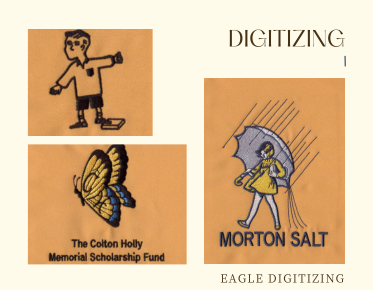
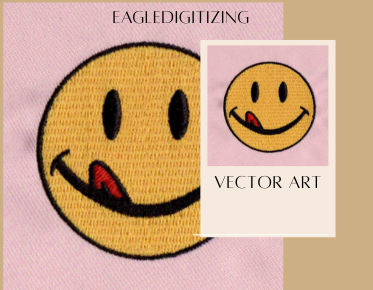
Embroidery is an evocative way to bring a logo to life, adding tactility and luxury to everything from uniforms to premium merchandise. However, embroidery introduces its own set of constraints: limited thread colors, minimum line thickness requirements, and the need to simplify gradients and fine detail. Logos that are not initially designed with embroidery in mind often need costly and time-consuming rework. By considering embroidery during redesign—and leveraging vector files that convert easily to stitch data—brands preserve fidelity and consistency across all touchpoints.
Packaging: The Unseen Complexity Behind Unboxing
Cutouts, Foils, Finishes, and Material Considerations
Packaging is a brand’s emissary on the shelf and in the customer’s hands. Beyond looking good, a logo must adapt to structural changes like die-cuts, embossing, foil stamping, and a range of substrates—from paperboard to plastics, textiles to metals. A vector-based logo, with well-defined layers and scalable elements, ensures smooth adaptation to these complex requirements. Well-prepared vector files also support efficient collaboration with packaging suppliers, reducing error rates and production lead times.
Vector, Print, Embroidery, and Packaging: Why Holistic Compatibility Matters
Preventing Fragmentation Across Touchpoints
A logo's true power lies in consistent recognition across every customer interaction. Brands that overlook the relationship between these mediums risk fragmentation and diluted impact. If a logo is updated for one channel but not optimized for another, brand presence becomes inconsistent—and customer trust can waver. Engaging expert vector art design services enables brands to enforce alignment from digital files to physical delivery.
The Strategic Advantage of Professional Vector Services
Eagle Digitizing: Empowering Brands for Omnichannel Success
In this evolving landscape, professional providers like Eagle Digitizing operate at the forefront of logo compatibility. With a commitment to delivering fast, reliable, and premium-quality vector artwork, Eagle Digitizing helps clients of every size—from small print shops and fashion brands to large marketing agencies—prepare their logos and artwork for every possible surface. Their expertise spans raster to vector conversion, color separation, background removal, and even graphic mockups. The value of such services is felt not only in stunning results but also in the efficiency, confidence, and peace of mind they offer to clients aiming for perfect outcomes on every project.
Eagle Digitizing’s broad experience means clients benefit from the cumulative knowledge of thousands of successful projects. This guarantees not only technical quality but also tailored advice, fast turnaround, and unwavering reliability—without hidden fees or surprises. Their services are especially suited for those operating with tight deadlines or seeking to maintain impeccable brand display, whether for simple logo updates or advanced packaging projects.
Common Pitfalls and Smart Solutions
Learning from Real-World Brand Experiences
Too often, organizations embark on logo updates only to find that their design files can’t be adapted as needed. Imagine launching a major campaign with a gorgeous new logo only to realize it’s unusable for embroidery, or that print results fall short of digital vibrancy. These missteps result in lost time, budget overruns, and missed opportunities for brand reinforcement. Proactive engagement with vector conversion services transforms logo assets into truly universal brand tools, saving countless hours and dollars down the road.
Guidelines for a Future-Proof Logo Redesign
Best Practices for Brand Owners and Designers
To safeguard a logo’s future flexibility, every step of the redesign process should include:
- Building logo files as vectors from the outset
- Testing the logo at drastically different scales
- Accounting for embroidery constraints—avoiding excessive detail, using solid colors, and considering minimum stitch widths
- Preparing color-separated, printer-ready files
- Considering packaging implications: whether the logo will be embossed, foiled, or need to adapt to various box shapes and materials
- Consulting with trusted providers or services for feedback before final approval
Beyond a Visual Mark: The Logo as a Brand Platform
Integrating Technology, Tradition, and Touch
Logos now serve as both ambassadors and adhesive for brand presence everywhere. By recognizing the interplay between vector art, print, embroidery, and packaging, brands can eliminate the friction often experienced in production. Investing in proper digital asset creation—through professionals adept in vector art design services—ensures the logo stands as a powerful, adaptable asset year after year.
Rethinking Redesign: Toward a Smarter Brand Future
As the competitive landscape continues to evolve, the convergence of digital and physical branding will only deepen. The rise of new printing techniques, sustainable packaging materials, and personalization possibilities makes logo versatility more vital than ever before. A future-ready brand is one that anticipates change, insists on cross-medium compatibility, and anchors every creative decision in practical execution.
When embarking on your next logo redesign, ask whether your design is just beautiful—or truly built for everywhere. How could reimagining your process enhance not just what your customers see, but what they experience across touch, print, and every digital horizon?