
Is Vector Artwork Becoming a Production Tool, Not Just a Design Tool?
The use of vector art services has evolved significantly over the years. Initially, vector graphics were primarily seen as tools for designers, aiding in the creation of logos, illustrations, and other graphic content that needed to be scalable. However, recent trends indicate a shift towards vector artwork being used increasingly as an essential production tool, not just within the realm of design.
The Evolution of Vector Artwork
Traditionally, vector artwork has been utilized for its ability to produce clean and scalable images, which are integral in fields such as graphic design and digital illustration. Its ability to maintain quality at any size makes it particularly useful for logos and print materials. However, as industries recognize the benefits of vector artwork beyond design, its applications have expanded.
Vector Artwork in Production Processes
Today, vector graphics are pivotal in various vector conversion services that translate designs into production-ready formats. This transition has been driven by the vector's precise control over color separation, which is critical in screen printing, laser cutting, and embroidery.
Streamlining the Production Workflow
Modern production facilities require precise and accurate digital representations that can be easily adapted to numerous media outputs. Vector artwork's adaptability makes it an ideal candidate for these needs. By employing vector artwork, industries such as fashion, textile manufacturing, and packaging can ensure that designs are optimally realized, maintaining the integrity and detail of the original concept through the production stages.
Case Study: Eagle Digitizing
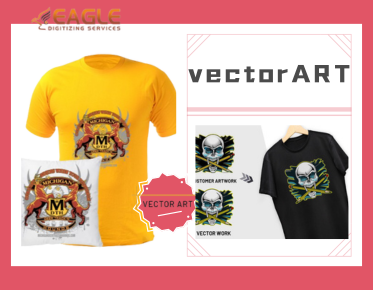
Companies like Eagle Digitizing exemplify the integration of vector artwork into production. Initially offering raster to vector conversion and vector tracing, Eagle Digitizing now includes a broad range of services such as graphic mockups on products and image retouching. Their expertise allows businesses to convert raster images to vector files for various applications, including heat press printing and web services, without compromising on quality【4:2†Vector Services.json】.
The Future of Vector Artwork in Production
As technology advances, the role of vector artwork in production is likely to grow. The enhanced capabilities of vector software will continue to blur the lines between design and production, providing more comprehensive solutions that streamline processes from initial concept to final product. The shift towards greater use of vector files in digital media, alongside traditional print media, is expected to keep expanding as industries look for more efficient ways to scale and reproduce art precisely.
With the versatility and precision that vector artwork offers, it's not hard to imagine a future where vector files become the standard across more industries beyond design and print. How might emerging technologies like AI and automated production systems further integrate vector artwork into production workflows? Only time will tell, but the trajectory seems set for vector artwork to hold a central role in the evolving landscape of industrial production.
.png "vector art service")