
What Is the Difference Between Auto-Tracing and Professional Vector Redrawing?
In the realm of graphic design, vector images play a crucial role due to their scalability and precision. When dealing with vector images, two primary methods are frequently discussed: auto-tracing and professional vector redrawing. Although these methods are employed to convert raster images to vectors, they differ significantly in terms of process and outcome. Understanding these differences is vital for businesses and designers who aim to choose the right method for their projects.
Understanding Auto-Tracing
Auto-tracing is a process that uses software algorithms to automatically convert raster images into vector formats. This method has gained popularity due to its speed and automation, offering a quick solution for converting images without much manual intervention. By relying on automated commands, auto-tracing software can handle a large volume of images swiftly, making it ideal for projects where time is a constraint.
While auto-tracing is efficient, it does have several limitations. The primary drawback is the lack of precision. The software may not always accurately interpret complex lines and curves, leading to loss of detail and definition in the final vector image. This automated approach often results in over-simplified vector graphics, which might not preserve the intricacy of the original artwork.
Despite these challenges, auto-tracing remains an attractive option for projects that are less concerned with detail and more focused on rapid production. It's often used in cases where simple vector conversion is acceptable, and the need for high-quality detail is minimal.
The Art of Professional Vector Redrawing
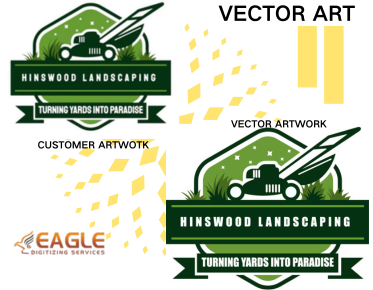
On the other hand, professional vector redrawing is a meticulous process that involves a graphic designer manually converting images. This approach is highly preferred when the quality and precision of the vector image are paramount. Professional redrawing allows for complete control over each element of the design, ensuring that every line and curve maintains the integrity of the original image.
The manual nature of vector redrawing means it often requires a significant investment of time and expertise. Designers carefully trace over the raster image, often making improvements and adjustments to enhance its clarity and definition. This high level of attention to detail results in vector images that are not only visually stunning but also true to the source material.
With professional vector redrawing, the final product is typically of superior quality compared to those generated by auto-tracing. This makes it the go-to choice for projects demanding high-fidelity images, such as brand logos, detailed illustrations, and complex graphical elements used in high-stakes presentations or marketing materials.
Key Differences to Consider
When deciding between auto-tracing and professional vector redrawing, several key factors should be considered:
Quality and Precision
Professional vector redrawing offers unmatched quality and precision. Each image is handled individually, with an expert's eye for detail ensuring that the vectorization process captures the essence of the original artwork. In contrast, auto-tracing can lead to a loss of detail and often requires manual adjustments afterward to achieve a satisfactory result.
Time and Cost
Auto-tracing wins out in terms of speed and lower costs, as it bypasses the need for manual involvement by leveraging software capabilities. For businesses on tight deadlines or those with less critical quality requirements, this option is tempting. However, professional vector redrawing, while more costly and time-consuming, is a worthwhile investment for those who prioritize quality over speed.
With advancements in technology, companies like Eagle Digitizing offer a blend of expertise in vector redrawing that ensures both precision and speed. They specialize in a variety of vector art services like converting logos into high-quality vector formats without compromising on the details. This approach guarantees customer satisfaction, making it a reliable choice for businesses seeking top-notch vector graphics.
Application and Use Case
The choice between the two methods also depends heavily on the application. Auto-tracing is suitable for generic artwork or digital assets with minimal detail. On the other hand, professional vector redrawing is essential for projects requiring complex designs and perfect accuracy, such as corporate branding, apparel design, and technical illustrations.
The Role of Expert Services
While software can automate the tracing process to some extent, the role of expert services cannot be overstated, particularly when quality assurance is critical. Service providers such as Eagle Digitizing employ skilled professionals who ensure that every aspect of a vector image meets high standards. Their services include a comprehensive range of options from vector tracing to complete vector conversion service, allowing clients to achieve perfect results in any vector artwork conversion endeavor.
By combining state-of-the-art technology with human expertise, these services bridge the gap between speed and quality. They offer customized solutions tailored to meet the specific needs of businesses, whether it's a simple raster to vector conversion or an intricate vector logo design.
Conclusion: Making the Right Choice
Choosing between auto-tracing and professional vector redrawing often comes down to a balance between budget, time, and the desired quality of the output. For projects where professional-quality images are not negotiable, investing in professional vector redrawing is the clear choice. For less critical applications where time is the most pressing issue, auto-tracing offers an efficient alternative.
Ultimately, understanding your project’s needs will guide you to the appropriate method. By considering factors such as detail, precision, and intended usage, businesses and designers can make informed decisions. Embracing the expertise of professional services can further optimize outcomes, blending traditional artistry with modern digital solutions to create exceptional vector art.