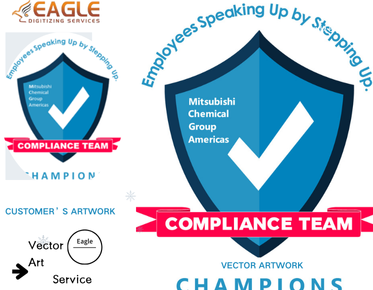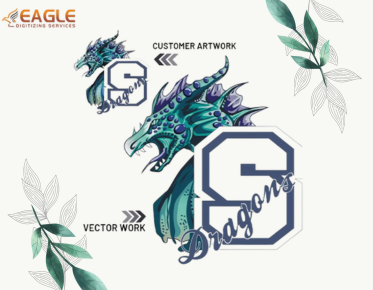

Why Do Some Raster Logos Convert Poorly into Clean Vector Files?
Converting raster logos into vector files is a common necessity for designers and businesses alike, allowing for scalable, print-ready designs without a loss of image quality. Despite its importance, some raster logos convert poorly into clean vector files. This issue can be attributed to various technical and intrinsic challenges inherent to the conversion process itself. By understanding these challenges, businesses and designers can better navigate the process of vector conversion and improve the quality of their output.
Understanding the Fundamental Differences
The primary difference between raster and vector images lies in their structural composition. Raster images are composed of pixels, tiny squares of color that together form an image. These image types are particularly suited for detailed and complex imagery, such as photographs, but suffer when resized due to pixelation. Conversely, vector images are composed of paths defined by mathematical equations, allowing them to scale infinitely without a loss of clarity. This contrast sets the stage for some of the difficulties encountered during conversion.
Common Challenges in Raster to Vector Conversion
Quality of the Original Raster Image
The quality of the original raster image plays a significant role in the outcome of a vector conversion. Low-resolution images lack the detail necessary to produce an accurate and clean vector image. For example, when working with a low-quality .jpg file, the conversion software may struggle to interpret pixel data accurately, leading to a vector with misaligned or missing detail.
Eagle Digitizing can assist with enhancing image quality before conversion, offering raster to vector services that ensure higher resolution and greater detail capture, albeit within the limits of the initial file's quality.Complexity and Detail of the Logo
A logo's inherent complexity is a further obstacle. Intricate designs with subtle color gradations or fine lines may not translate effectively into vector format. This is because vector paths can struggle to replicate these delicate features without creating overly simplified or distorted renditions of the original design.
Color and Gradient Issues
While vector formats are excellent for solid colors and simple gradients, they can struggle when tasked with replicating complex color variations and intricate gradients found in some raster images. This can result in a vector output that appears flat or inconsistent compared to the original logo.
Services such as Vector Magic offer advanced color optimization techniques to tackle this issue, potentially improving gradient representation in vector artwork.
Techniques to Improve Conversion Outcomes
Pre-Conversion Enhancements
To maximize the success of a raster to vector conversion, ensure that the original file is of the highest possible resolution. Steps such as retouching, enhancing contrast, and minimizing noise can significantly improve the conversion outcome.
Using Professional Vectorizing Services
Although there are many software options available for vector conversion, using professional services such as those provided by Eagle Digitizing can significantly ameliorate issues typical of automatic conversions. Their expertise in handling complex designs ensures that each detail is meticulously captured and translated into a vector format. This expertise is often pivotal for logos requiring a high level of precision and fidelity to the original design.
Manual Vector Tracing
In some cases, manual vector tracing can be the most effective way to ensure accuracy in the vector conversion of a complex logo. Skilled designers trace over raster images, utilizing software like Adobe Illustrator, to create vector paths that closely match the original design. While this process is labor-intensive, it often yields the highest-quality results.
The Role of Software and Tools
The choice of software plays a crucial role in the quality of vector conversions. Programs such as Adobe Illustrator, CorelDRAW, and Affinity Designer each offer robust vectorization tools capable of handling a variety of logo designs. Selecting the right tool based on specific design needs can alleviate some of the issues faced during conversion.
For those seeking robust tools, options like VectorMan provide extensive services tailored to various design complexities, ensuring that vector conversions meet even the most demanding expectations.
Looking Forward in Vector Conversion Techniques
As technology advances, we can expect improvements in both software capabilities and automated conversion processes. Machine learning and AI-powered tools are starting to show promise in intelligently discerning detail and producing more faithful vector renditions. This technological progression suggests a future where even the most intricate raster logos can be effortlessly and accurately converted to vector formats.
For businesses and designers currently grappling with vector conversions, maintaining awareness of these technological advancements and utilizing professional services where applicable can greatly enhance the quality of their logo designs.
What future advancements do you anticipate in the realm of digital conversion technology, and how might these innovations impact the design industry?