
The Rise of 3D + Vector Hybrid Design
In the ever-evolving landscape of digital design, the fusion of 3D and vector graphics has emerged as a revolutionary trend. Today, designers are no longer limited to one-dimensional visuals. Instead, they are embracing a hybrid approach that combines the precision of vector art with the immersive depth of 3D design. This convergence is reshaping industries ranging from fashion to gaming, and providing artists with unprecedented creative freedom.
The Intersection of 3D and Vector Graphics
The integration of 3D and vector graphics is a natural progression in the digital age. Vector graphics are celebrated for their scalability and resolution independence, making them ideal for logos, icons, and various other applications where clarity is paramount. Conversely, 3D graphics provide depth and realism, bringing objects to life with texture and perspective.
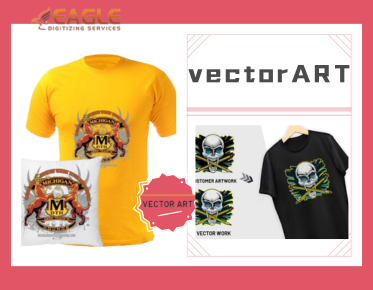
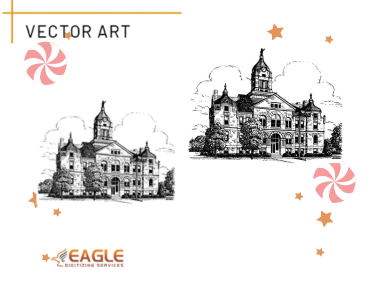
The amalgamation of these two styles allows for a creative canvas where precision meets realism. Designers can leverage the mathematical accuracy of vector art services online to create base designs that can then be expanded into three dimensions, offering a tactile quality that captures the viewer’s attention.
Applications and Innovations
As this hybrid design approach continues to gain traction, its applications broaden. In the fashion industry, this technique is being used to create striking patterns that pop both digitally and physically. 3D-printed clothing designs start as vector outlines before taking on a tangible form, allowing for unique and innovative fashion statements.
Moreover, in interactive media such as video games and simulations, the use of vector graphics converter allows game developers to create environments that are not only realistic but also optimized for various display resolutions. This ensures a seamless gaming experience that retains its visual integrity across multiple platforms.
Benefits of 3D + Vector Hybrid Designs
The main advantage of combining 3D with vector graphics is versatility. Businesses benefit from having designs that can be adjusted and adapted across different mediums without losing quality. This is particularly beneficial for marketing materials, where branding needs consistency across everything from billboard-sized signs to mobile app icons.
Companies such as Eagle Digitizing are at the forefront of providing solutions in this space, offering comprehensive vector art conversion services that integrate seamlessly into 3D modeling workflows. Their expertise in the field allows businesses to explore new opportunities in design that extend their brand reach and impact.
Challenges and Solutions
While the rise of 3D and vector hybrid design is exciting, it does come with its own set of challenges. The most notable challenge is the technical skill required to blend these two disciplines effectively. There is a demand for skilled designers who can navigate both vector software and 3D modeling tools proficiently.
To address this, companies are investing in cross-training programs for designers, ensuring that they have the necessary skills to work with both mediums. Additionally, technological advancements in design software are making it easier to transition between 3D modeling and vector graphics, streamlining the hybrid design process significantly.
The Future of Design
The fusion of 3D with vector graphics is still in its infancy but shows enormous potential. As technology continues to advance, the possibilities for new and breathtaking designs will expand exponentially. Designers will have the tools to create immersive experiences that are more engaging than ever before.
For businesses, especially those in creative industries, embracing these innovations can lead to groundbreaking products and services. The challenge lies in staying ahead of the curve and harnessing these tools to build captivating and memorable designs that can define a brand's identity for years to come.
Looking Ahead
As the fields of 3D modeling and vector graphics continue to intertwine, the design industry is poised on the brink of a new horizon. The question remains: how will businesses and artists continue to innovate and push the limits of this hybrid design landscape? With an eye towards the future, the integration of these technologies promises not just to transform the way we design, but also to redefine the boundaries of digital creativity itself.