
How Vector Complexity Directly Affects Printing Costs
The printing industry has seen significant advancements over the years, and one of the critical aspects that influence printing costs is vector complexity. Understanding the relationship between vector graphic intricacies and the resulting expenses can help businesses and artists make informed decisions when preparing artwork for printing. This article delves into how vector complexity impacts printing costs and explores ways to optimize designs for cost-efficiency.
Understanding Vector Complexity
Vector graphics, unlike raster images, are composed of paths defined by mathematical expressions, which makes them infinitely scalable without loss of quality. However, the complexity of these vectors can vary greatly. Simple vectors consist of basic shapes with limited color palettes, while complex vectors may contain intricate details, multiple colors, and advanced effects such as gradients, shadows, and layers. This complexity directly correlates with the resources required to process and print these files. When discussing vector art services, it's essential to consider these factors to avoid escalating costs during production【4:3†Vector_keywords.json】.
The Role of Vector Conversion Services
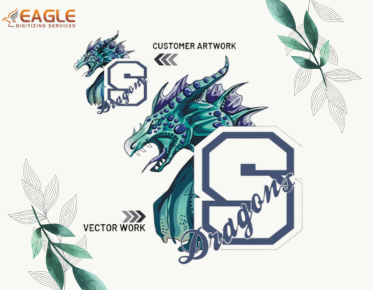
Businesses often rely on professional vector conversion services to optimize their graphics for printing. Companies like Eagle Digitizing offer raster to vector conversion, ensuring that even highly detailed artwork retains clarity and balance in every print. Services include vector logo conversion and vector art design, which help streamline the process by turning bitmap images into scalable vectors, suitable for any printing format【4:5†Vector_keywords.json】.
Impact on Printing Costs
The complexity of a vector file can affect printing costs in several ways. First, complex vectors require more computing power to process. High-resolution designing tools must interpret the paths and colors accurately, sometimes necessitating multiple software solutions, which can drive up overhead costs. Second, intricately designed vectors can slow down the printing process because the printer must execute each path carefully to maintain fidelity to the original design. These factors result in higher labor and machine time, thereby increasing overall costs.
Optimizing Vectors for Cost-Efficiency
To minimize costs while maintaining high-quality prints, it's crucial to optimize vector graphics. One strategy is simplifying the design by reducing unnecessary details and consolidating the color palette. Employing techniques like vector color separation, where each color is isolated into layers, can help maintain quality while cutting down printing time. Eagle Digitizing excels in providing these solutions by offering efficient and flexible pricing models. They ensure no hidden charges and provide a quick turnaround without rush fees【4:1†Vector Services.json】.
Considerations for Choosing a Service Provider
Selecting the right vectorization service provider can significantly influence printing efficiency and costs. A service that offers expertise in handling complex designs and provides honest pricing calculations is imperative. Eagle Digitizing, for example, boasts a team skilled in the latest techniques and applications for vectorizing artwork, allowing them to process orders rapidly and reliably. With client satisfaction as their priority, businesses can leverage their skills to ensure precision and high-quality outputs【4:0†Vector Services.json】.
Future Trends in Vector Printing
As the printing industry continues to evolve, emerging technologies might present new ways to handle vector complexity. Innovations in automated vector optimization and AI-driven design tools may reduce manual effort, streamline printing processes, and further cut down costs. Businesses should stay informed about these advancements and consider integrating such technologies to remain competitive and cost-efficient.
Ultimately, understanding how vector complexity affects printing costs is crucial for anyone involved in producing printed materials. By selecting the right service providers and optimizing vector designs, substantial savings can be achieved without compromising on quality.