
Why Minimalist Vector Designs Are Harder to Print Than They Look
Minimalist vector designs are often appreciated for their clean lines and simple elegance. However, these very qualities that make minimalist designs visually appealing also pose unique challenges when it comes to printing. This post dives into the intricacies of why seemingly simple designs can become complicated in the printing process.
Understanding Minimalism in Vector Design
Minimalist vector design focuses on the use of simple and clean lines. The designs often rely on negative space, limited color palettes, and elementary shapes to convey meaning or aesthetic value. This approach involves stripping away the non-essential, but in printing, what is left must be handled with precision.
Vector art services often focus on these minimalist designs because of their widespread use and appeal. But even within this simplicity lies a complexity that requires special consideration in the transition from digital to physical.
Technical Challenges in Printing Minimalist Vector Designs
One of the primary challenges of printing minimalist vector designs is maintaining precision. Every line and shape must be perfectly rendered, as even minute errors can disrupt the entire visual harmony. This precision becomes especially difficult to maintain on different printing media and using varied techniques.
Furthermore, minimalist designs often use a limited color palette, which, while simplifying the design, increases the risk of color inconsistency across prints. Techniques such as vector color separation become more critical to keep color output consistent with the designer's intent.
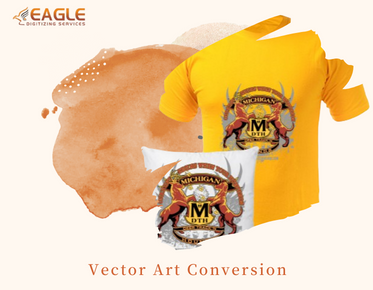
Printing on various materials can introduce additional challenges. For instance, printing on fabric for custom t-shirts, a popular use for minimalist designs, can result in ink absorption issues that affect line definition and overall appearance.
Vector Conversion and Its Role
Converting raster images into high-quality vector graphics is essential for ensuring that minimalist designs are print-ready. This conversion involves outlining every detail of the image, ensuring scalability without loss of quality. Companies like Eagle Digitizing offer reliable vectorization services that guarantee precision and quality in the printed output.
Material and Print Medium Considerations
The print medium can greatly influence the final outcome of a minimalist design. For example, smooth paper can faithfully reproduce a minimalist vector design, whereas a textured surface may not capture delicate details as effectively. Thus, understanding the interaction between the ink and material is fundamental.
Additionally, screen printing, laser printing, and digital printing each present unique challenges and benefits for minimalist designs, highlighting the importance of selecting the appropriate technique for the task at hand.
Design Complexity Hidden in Simplicity
The irony of minimalist vector designs is that their simplicity often masks the underlying complexity involved in their reproduction. Every line requires perfect execution, and any imperfection becomes glaringly obvious. Thus, services that specialize in vector art conversion help bridge the gap between design and printing by offering precision beyond what is visible.
Conclusion
In conclusion, while minimalist vector designs may appear straightforward, the path from digital design to printed product is fraught with challenges. The meticulous attention required to maintain the integrity of these designs calls for expertise in vector conversion and printing techniques. As technology and techniques continue to evolve, the future holds promise for overcoming these challenges. If you are considering creating a minimalist design for print, it is wise to consult with experts who can navigate these intricacies and deliver flawless results.
This HTML document is structured to provide a thorough overview of the complexities involved in printing minimalist vector designs, with a focus on challenges, techniques, and the importance of choosing the right services, all while including natural placements for hyperlinking key concepts.
.png "vector art service")