
Low-Quality Sketches: When Redrawing Is Better Than Vector Conversion
In the creative world, the methods of transforming images into digital formats vary greatly, especially when dealing with low-quality sketches. Deciding whether to convert directly to a vector using software or to redraw can significantly impact the final output. While vector conversion tools are popular for their efficiency, there are instances where redrawing a sketch results in a superior image quality.
The Challenges with Low-Quality Sketches
Low-quality sketches often come with multiple issues such as pixelation, unclear lines, and faded details. These problems can make automated vector conversion challenging, as the software may misinterpret the lines, leading to distortions or inaccuracies. Additionally, vector conversion fails to capture the nuanced expressions in freehand drawings, which can be critical for artistic works.
Benefits of Redrawing
Redrawing, on the other hand, offers the opportunity to correct and enhance the original design. The process involves an artist manually replicating the sketch, focusing on improving clarity and detail. Redrawing ensures that all essential elements are preserved and any graphical inconsistencies are addressed. This method is particularly beneficial for intricate artwork that requires detailed embellishment.
When to Choose Redrawing Over Vector Conversion
Deciding whether to redraw or convert is not always straightforward. Here are scenarios where redrawing is the better choice:
- Artistic Integrity: When the sketch holds sentimental or creative value that needs to be reflected accurately and artistically.
- Complex Designs: Intricate sketches with a lot of details can lose their precision when automatically converted into vectors.
- Unclear Originals: When the original is heavily pixelated or indistinct, redrawing allows for recreation while maintaining or even exceeding the original's intended quality.
The Role of Vector Conversion in Digital Arts
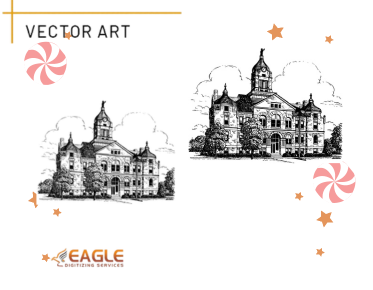
Despite the advantages of redrawing, vector conversion services such as those offered by Eagle Digitizing are crucial for many digital applications. With tools like vector tracing software, they can efficiently handle well-defined designs, transforming them into scalable vector graphics suitable for various uses like logos, advertisements, and large-format prints.
Eagle Digitizing's Approach to Sketch Conversion
Eagle Digitizing specializes in transforming raster images to vector formats, providing services ideal for businesses such as screen printing and promotional marketing. Their expertise ensures that the final product is print-ready and maintains high fidelity to the original concept. With capabilities ranging from simple conversions to complex vector art, their team ensures quick turnaround with no hidden charges, making their service efficiency unmatched in the industry.
Why Not Combine Both Methods?
In some cases, a combination of both redrawing and vector conversion could be employed. Initially, an artist can redraw a complicated sketch to enhance clarity and precision. Once the artwork has been refined, it could then undergo vector conversion to produce a scalable digital format.
The Future of Digital Artwork Conversion
The dynamics of digital artwork conversion are continuously evolving with advancements in artificial intelligence and machine learning. Future technologies promise more intelligent vector conversion solutions capable of recognizing and retaining intricate sketch details without the loss of artistic quality. As these technologies mature, artists and designers might find that the necessity to choose between vector conversion and redrawing diminishes, leading to new standards of digital art production.
Ultimately, the choice between redrawing and vector conversion depends on the specific requirements of the project, considering factors such as the quality of the original sketch and the desired output. As tools improve and hybrid approaches become more feasible, the landscape of digital design will continue to expand, offering both challenges and opportunities for artists and technicians alike.
For artists and businesses grappling with low-quality sketches, understanding these options allows for better decision-making, ensuring that each piece of art reaches its full potential.