
What Makes a Vector File “Production-Ready” vs “Visually Acceptable”
When it comes to vector graphics, the terms "production-ready" and "visually acceptable" might seem interchangeable to the untrained eye. However, understanding the nuances that differentiate these two categories is crucial for designers, clients, and manufacturers who are keen on achieving high-quality outcomes. The demarcation line between a production-ready vector file and a visually acceptable one involves a myriad of considerations, from the technical to the aesthetic.
Understanding the Basics of Vector Files
Vector files, defined by mathematical equations rather than pixels, offer infinite scalability without loss of quality. They are the go-to format for logos, print media, and any other application where scalability and precision are paramount. Common formats include AI, EPS, PDF, and SVG files, each offering unique advantages for specific applications.
The creation of vector graphics often involves vector art conversion services, which transform raster images into vector format. This conversion ensures that the graphics maintain crisp lines and sharp colors, essential for any professional use.
What is a “Visually Acceptable” Vector File?
A visually acceptable vector file looks good on screen and fulfills the designer’s aesthetic requirements. This is the kind of file you might use in drafts, concepts, or simply to convey a visual idea to a client. The textures, gradients, and overall design can create an immediate impression, aligning with the brand's style and aesthetic vision. However, these files may not meet the stringent demands of printing or large-scale applications where more detail is crucial.
For example, the gradients used in these files might not convert well in different devices or printing processes. Issues can arise when advanced effects used in visually acceptable art meet the real-world requirements of a physical product. Here, what looks brilliant on a computer screen may prove problematic in production.
Defining “Production-Ready” Vector Files
Production-ready vector files go beyond meeting visual expectations; they meet practical demands. These are the files you send to the printing shop or the manufacturer. They must be formatted correctly, typically with specific layers, color separations, and attention to detail that ensures the image will render correctly across different applications and materials【4:0†Vector Services】.
In technical terms, a production-ready file leaves no room for error. It adheres to industry standards, ensuring that every element, from color to typography, will print exactly as intended, whether on a t-shirt, signage, or product packaging.
Components of a Production-Ready File
1. Correct File Format and Resolution
The file formats, such as EPS, AI, and PDF, are chosen not just for their scalability, but for how they interact with different software and printing equipment. A typical production-ready file also needs resolution specifics. While vectors are inherently resolution-independent, setting appropriate guidelines ensures that additional elements or bitmap graphics within the vector file adhere to necessary standards.
2. Color Accuracy
Color management plays a significant role in production readiness. Files must often be converted from RGB to CMYK to ensure accurate color reproduction in printing. Some vector services offer color separation services to manage this conversion for professional printing needs【4:0†Vector Services】.
3. Detailed Paths and Layers Management
Managing paths and layers effectively reduces misinterpretation in the printing process. Each element of the design needs to be appropriately layered and organized so that adjustments can be made without affecting the overall integrity of the design.
The Role of Experts in Crafting Perfect Vector Files
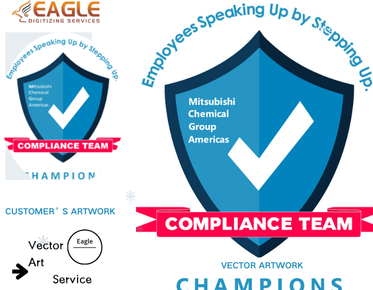
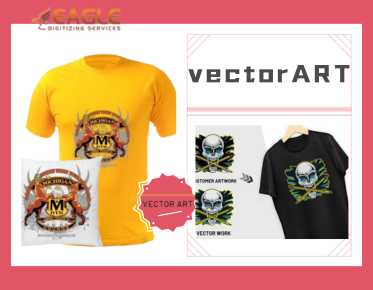
The transition from visually acceptable to production-ready often requires the touch of professionals skilled in vector conversion services. Companies like Eagle Digitizing offer extensive services that cover everything from basic vectorization to complex image manipulations and color corrections, ensuring that each file is tailored to meeting the precise demands of production.
Eagle Digitizing excels in providing services for vector art services online, aided by a dedicated team equipped to handle everything from logo vectorization to intricate design adjustments, ensuring that your files are not only ready for print but optimized for any medium【4:0†Vector Services】.
The Future of Vector Art: Bridging Aesthetic and Production Needs
As technology advances, the gap between what's visually acceptable and production-ready grows narrower. Innovations in software continue to simplify the transition, offering designers more tools and functionalities to prepare files that are as robust in production as they are beautiful on a screen.
For businesses, understanding these distinctions enable better communication and expectations setting with designers and manufacturers, leading to smoother project executions and less room for error. Moving forward, the collaboration between cutting-edge vector tools and expert services will remain pivotal in elevating vector graphics to new heights.
In an ever-evolving industry, one should consider how embracing such advancements can not only streamline engraving and printing processes but also foster more dynamic and creative visual communication. A world where every visual is both stunning and seamlessly integrated into the production line might not be far off.